 Phone: 954-208-3500
 info@bestwaterheater.com
Phone: 954-208-3500
info@bestwaterheater.com
info@bestwaterheater.com
Phone: 954-208-3500
info@bestwaterheater.com
 Phone: 954-208-3500
info@bestwaterheater.com
Phone: 954-208-3500
info@bestwaterheater.com

Including filter system and high-performance Musty Taste and Odor filter.



A musty taste and odor in your tap water can make you second-guess a drink straight from the faucet, even when the water looks clear. Many Harbor Beach homeowners describe the smell as earthy, damp, or like wet cardboard, and it can show up in drinking water, ice, and even steam from showers. These off-odors usually come from natural organic compounds rather than a single obvious contamination event, and when the musty taste sticks around it can affect coffee, tea, and cooking water too.
Musty taste often comes from compounds produced by algae and microbes in source water—things like geosmin and 2-MIB—which people can detect at extremely low concentrations. It can also result from decaying plant material, biofilm inside household plumbing, or seasonal shifts that change how water is treated and distributed. In Harbor Beach’s humid subtropical conditions these kinds of quality issues can be more noticeable, and while a musty odor isn’t always a health hazard, it is an annoyance that’s worth fixing rather than simply covering up.
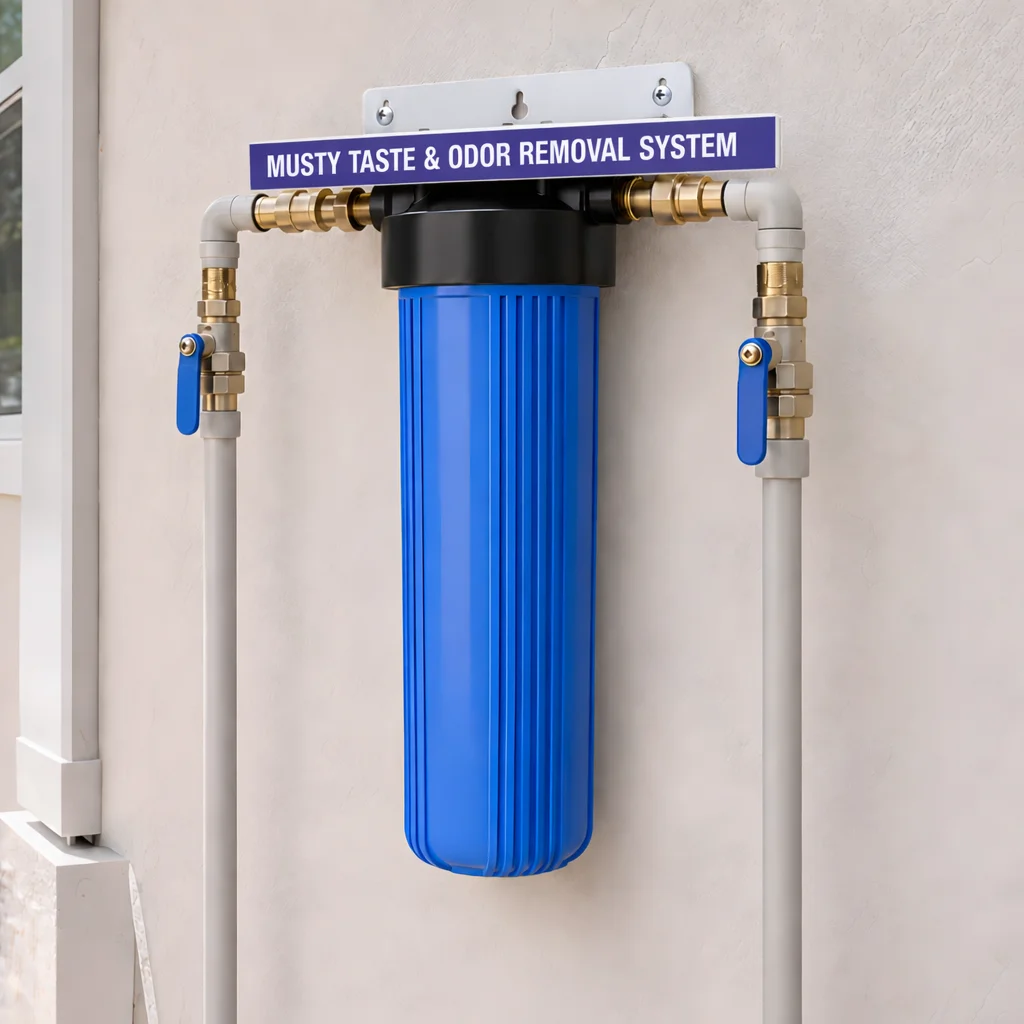
To address musty taste and odor throughout a Harbor Beach home, a whole-house activated carbon filter is typically the single most effective option. Activated carbon adsorbs the trace organic molecules—like geosmin and 2-MIB—responsible for earthy, stale smells and tastes, and when installed at the main water entry it treats every tap so odors don’t follow you into showers, laundry, or the kitchen. This whole-home approach offers more consistent results than pitchers or point-of-use devices.
A correctly sized whole-house carbon system gives the contact time needed to capture odor-causing organics while preserving good flow for daily use. Because musty taste and odor can originate from multiple sources, carbon is selected for its broad effectiveness against many taste- and odor-related organics rather than a single compound. Mr. Pure Water can help Harbor Beach homeowners choose the right carbon media and tank size, and recommend prefiltration where sediment or plumbing biofilm might reduce carbon performance—also keeping in mind coastal salt-air can increase corrosion risk for outdoor components.
 954-208-3500
 info@bestwaterheater.com

