 Phone: 407-214-2646
 info@bestwaterheater.com
Phone: 407-214-2646
info@bestwaterheater.com
info@bestwaterheater.com
Phone: 407-214-2646
info@bestwaterheater.com
 Phone: 407-214-2646
info@bestwaterheater.com
Phone: 407-214-2646
info@bestwaterheater.com

Including filter system and high-performance Musty Taste and Odor filter.



A musty taste and odor coming from your taps can make you second-guess everyday water use, even when it looks clear. Many Narcoossee homeowners describe the scent as earthy, damp, or like wet cardboard, and it can show up in drinking water, ice, and showers. These odors usually come from naturally occurring organic compounds rather than a general “dirty water” problem, and when they linger they can affect coffee, tea, and cooking water too.
Often the culprits behind musty taste are compounds produced by algae and microbes in source water—things like geosmin and 2-MIB that people notice at very low concentrations. Decaying vegetation near sources, biofilm inside pipes, or seasonal shifts that change how water is treated and distributed can all contribute. In Narcoossee and the greater Osceola County area, where homes use a mix of municipal supply and private wells, evaluating the source and testing can help determine whether the issue is a water-quality nuisance or something that needs treatment rather than just masking.
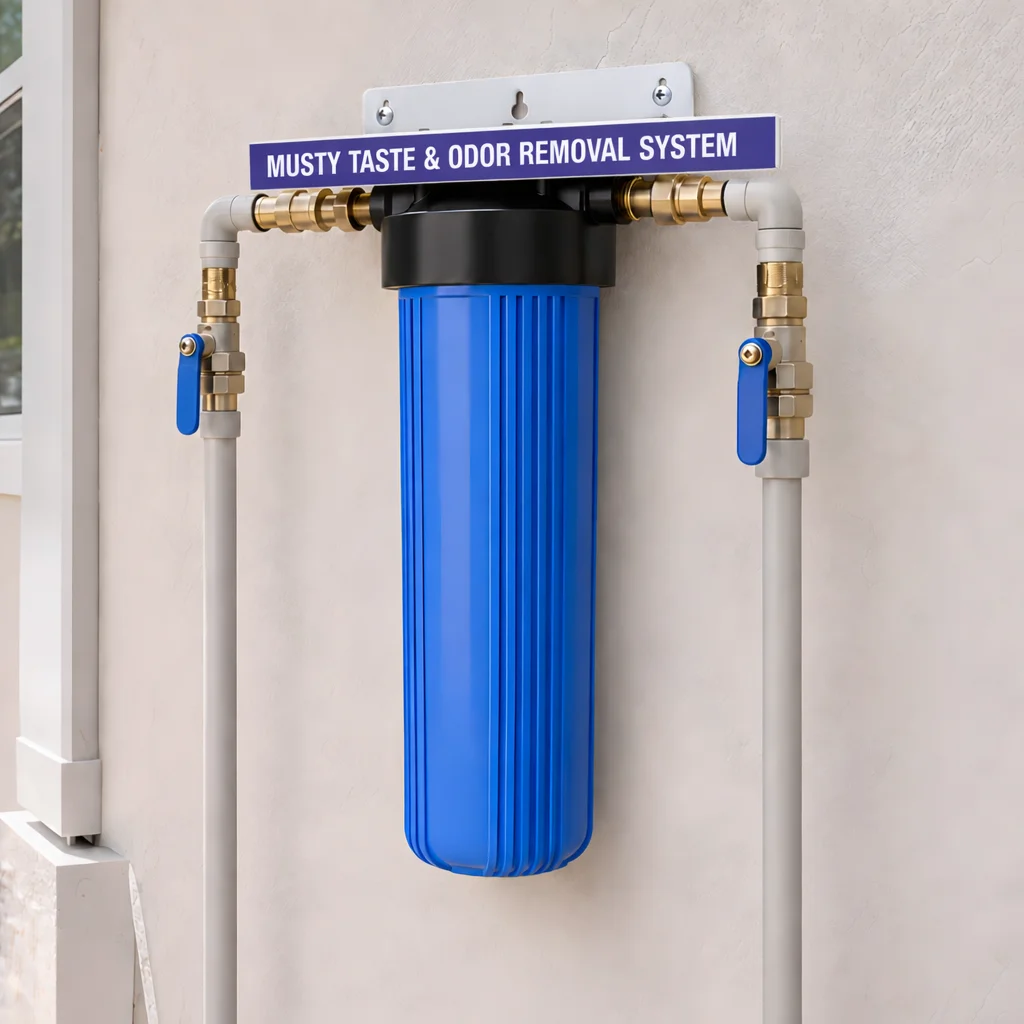
To reduce musty taste and odor throughout the house, a whole-house activated carbon filter is generally the most effective single-filter choice. Activated carbon adsorbs the trace organic molecules responsible for musty odor and musty taste, including earthy-smelling geosmin and 2-MIB, and when installed at the point of entry it protects every tap in your Narcoossee home—showers, laundry, dishwashers and drinking water—much more reliably than pitchers or faucet attachments.
A correctly sized whole-house carbon system gives enough contact time to capture odor-causing compounds while keeping good flow for daily use. Because musty taste and odor can stem from several sources, carbon is often chosen for its broad effectiveness against many taste- and odor-related organics rather than a single molecule. Mr. Pure Water can help Narcoossee homeowners pick the right carbon media and tank size for a moderate-hardness local supply, and recommend prefiltration if sediment, well minerals, or plumbing buildup could reduce carbon performance.
 407-214-2646
 info@bestwaterheater.com

