 Phone: 407-214-2646
 info@bestwaterheater.com
Phone: 407-214-2646
info@bestwaterheater.com
info@bestwaterheater.com
Phone: 407-214-2646
info@bestwaterheater.com
 Phone: 407-214-2646
info@bestwaterheater.com
Phone: 407-214-2646
info@bestwaterheater.com

Including filter system and high-performance Musty Taste and Odor filter.



A musty taste and odor from the tap can make you hesitate before drinking or cooking, even when the water looks clear. South Port homeowners often report an earthy, damp, or wet-cardboard smell that can show up in ice makers, coffee, and shower steam. These stale or musty notes usually come from naturally occurring organic compounds rather than an obvious “dirty” appearance, and when they linger they can affect everyday tasks like making tea or washing produce.
Musty taste and musty odor are frequently caused by compounds produced by algae and microbes in source waters — think geosmin and 2-MIB — which people can detect at very low concentrations. Other contributors include decaying plant material, biofilm inside pipes, or seasonal shifts that change treatment or distribution conditions. While a musty smell isn’t necessarily a health emergency, it is a water quality concern that can diminish the enjoyment of your water; in South Port it’s better to investigate and treat the source than to just mask the smell.
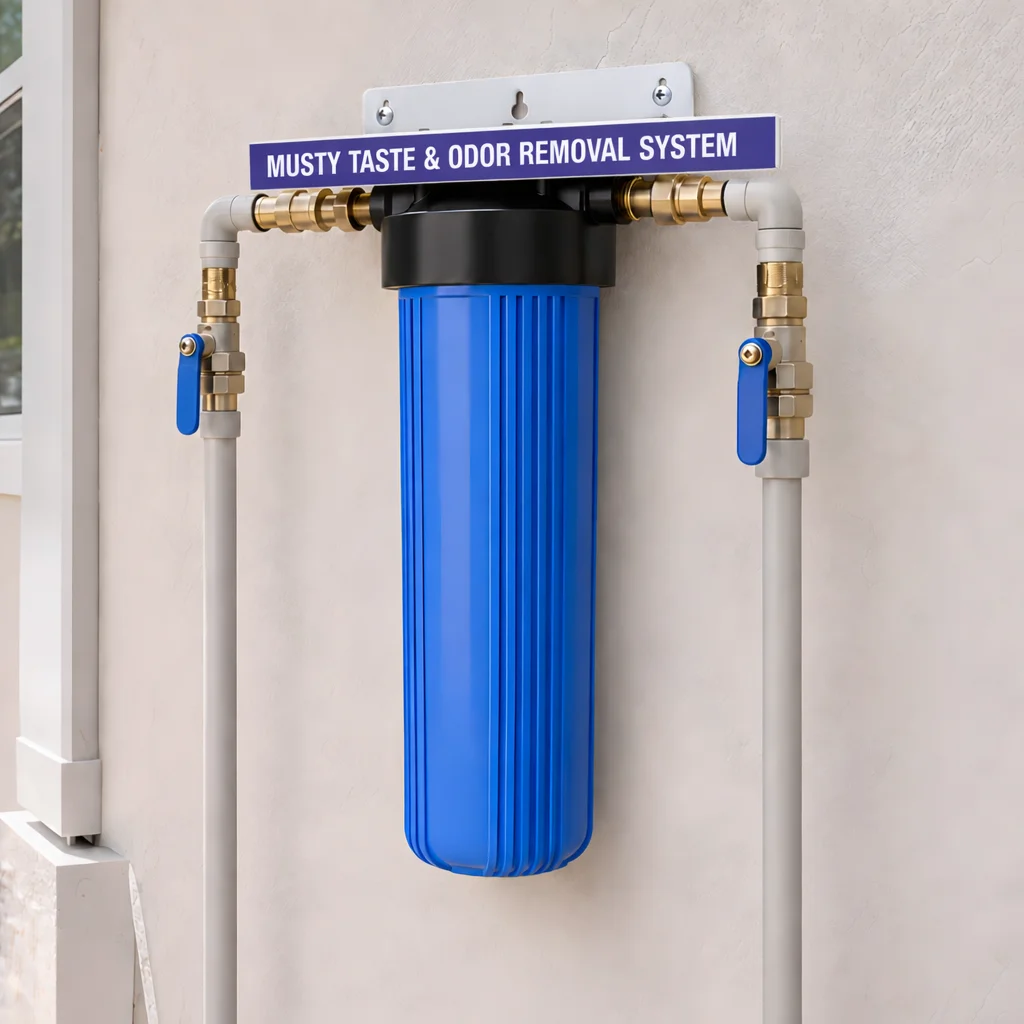
To address musty taste and odor throughout a South Port home, a whole-house activated carbon filter is generally the most effective single-filter choice. Activated carbon adsorbs trace organic compounds — including earthy-smelling molecules like geosmin and 2-MIB — and when installed where water enters your property it treats every tap so odors don’t follow you into showers, laundry, or dishwashing. This whole-home approach improves water quality across fixtures without relying on pitchers or point-of-use add-ons.
A correctly sized whole-house carbon system gives the contact time needed to pull out odor-causing organics while keeping good flow for daily use in South Port, where hard municipal water can also contribute to mineral buildup on fixtures. Because musty taste and odor often come from multiple sources, carbon is chosen for its broad ability to reduce many taste- and odor-related organics. Mr. Pure Water can help you pick the right carbon media and tank size and suggest prefiltration when sediment or plumbing biofilm might reduce carbon performance.
 407-214-2646
 info@bestwaterheater.com

