 Phone: 850-772-1365
 info@bestwaterheater.com
Phone: 850-772-1365
info@bestwaterheater.com
info@bestwaterheater.com
Phone: 850-772-1365
info@bestwaterheater.com
 Phone: 850-772-1365
info@bestwaterheater.com
Phone: 850-772-1365
info@bestwaterheater.com

Including filter system and high-performance Nitrate filter.



Nitrate can enter household water when it moves through soil into groundwater or surface sources, and it often has no taste or smell—so water that looks fine may still contain it. Many Medart homeowners only discover nitrate after a water test or a utility notice about source water. Treating the water where it enters your home gives you confidence that every tap, from the kitchen to the laundry, is being protected.
Because nitrate stays dissolved, it won’t settle like sediment and standard carbon filters typically won’t remove it. That can be frustrating if you’ve already addressed chlorine taste or sulfur odor but still need nitrate reduction. Nitrate is discussed alongside nitrite sometimes, but both are dissolved ions that need specific treatment methods. The first step for Medart residents is a proper water test so you know if nitrate is present and which treatment approach fits your household.
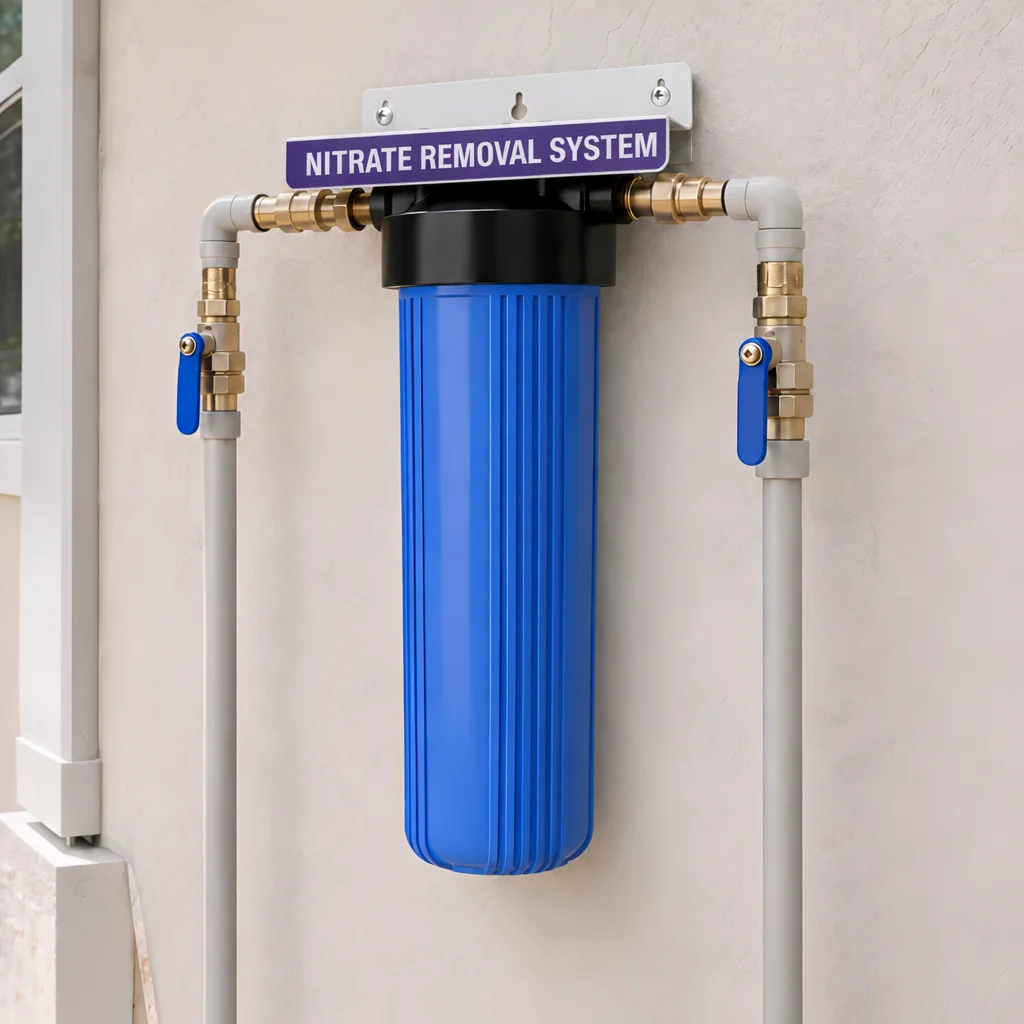
For whole-home treatment, a whole-house reverse osmosis system is the most effective single-filter option for reducing dissolved nitrate. Reverse osmosis relies on a semi-permeable membrane to remove dissolved contaminants rather than only improving taste and odor, and when installed at the point of entry it treats water used in showers, laundry, kitchens, and baths. If you want consistent nitrate reduction at every Medart tap—not just at one sink—this is the recommended solution.
A correctly designed whole-house RO includes prefiltration and the controls the membrane needs to perform reliably. Prefilters protect the RO membrane from sediment and chlorine, which can shorten membrane life, while the membrane does the heavy lifting for nitrate reduction. Because RO systems produce some wastewater and commonly require storage and delivery components, proper sizing and installation are important; Mr. Pure Water can assess your Medart home’s water and usage to recommend the right whole-house RO setup.
 850-772-1365
 info@bestwaterheater.com

