 Phone: 850-772-1365
 info@bestwaterheater.com
Phone: 850-772-1365
info@bestwaterheater.com
info@bestwaterheater.com
Phone: 850-772-1365
info@bestwaterheater.com
 Phone: 850-772-1365
info@bestwaterheater.com
Phone: 850-772-1365
info@bestwaterheater.com

Including filter system and high-performance Nonylphenol filter.


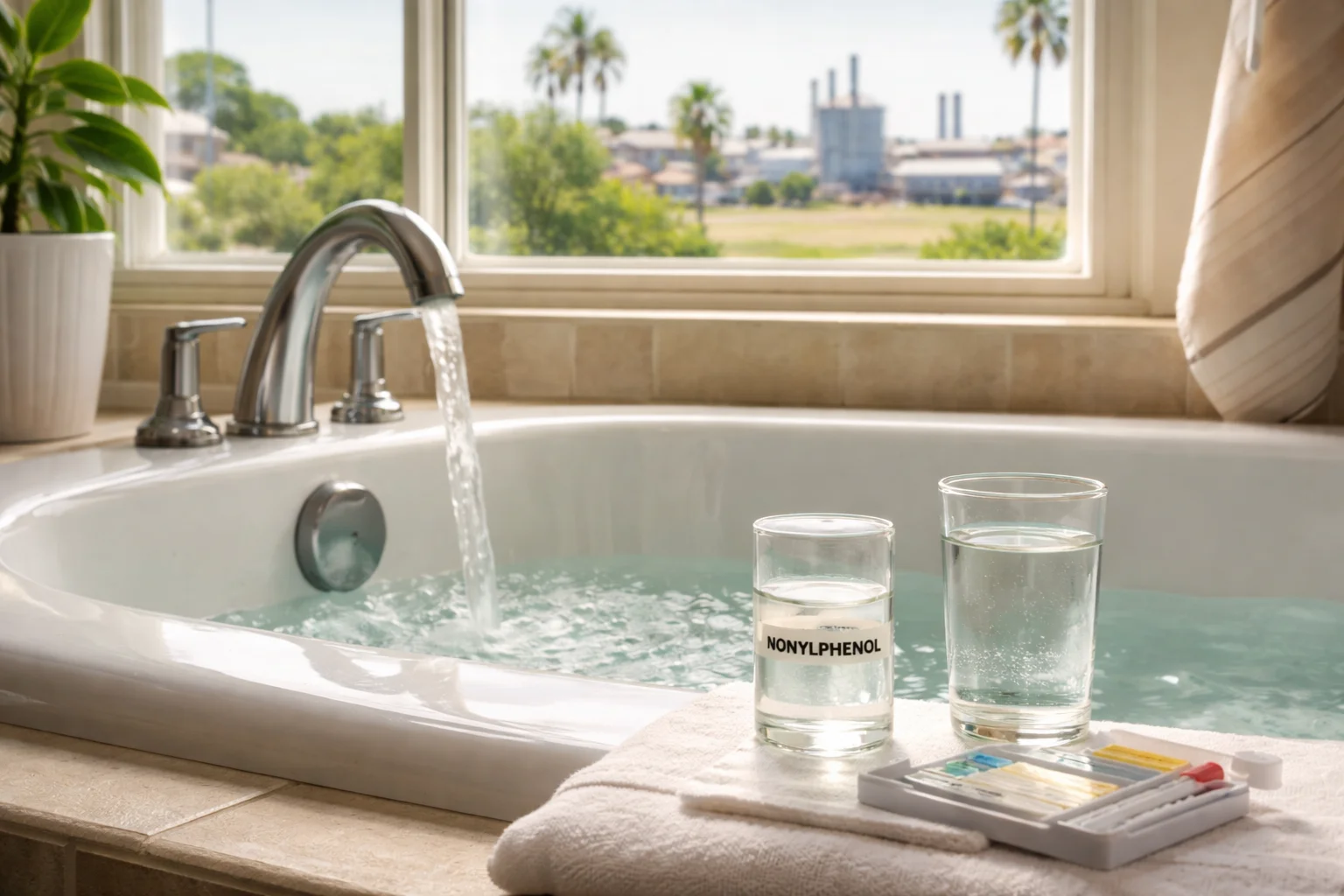
Nonylphenol is a man-made chemical that can enter water when certain detergents, cleaners, or industrial additives break down and travel into waterways. It’s part of a group of compounds that can follow wastewater pathways into source water and, eventually, household taps. Because it doesn’t always change taste or smell, homeowners in Perry might not notice it without testing or a water-quality notice. Understanding what nonylphenol is and how it behaves helps Perry residents decide when to seek additional protection for their water.
Nonylphenol acts unlike common minerals such as calcium or visible particles like sand—it’s a dissolved organic chemical rather than a sediment you can see. That means basic screen filters or standard water softeners usually won’t remove it well. Many Perry homeowners prefer a single, home-wide solution so drinking, cooking, bathing, and laundry all receive the same treatment. A whole-house approach gives consistent reduction at every faucet instead of relying on a point-of-use device.
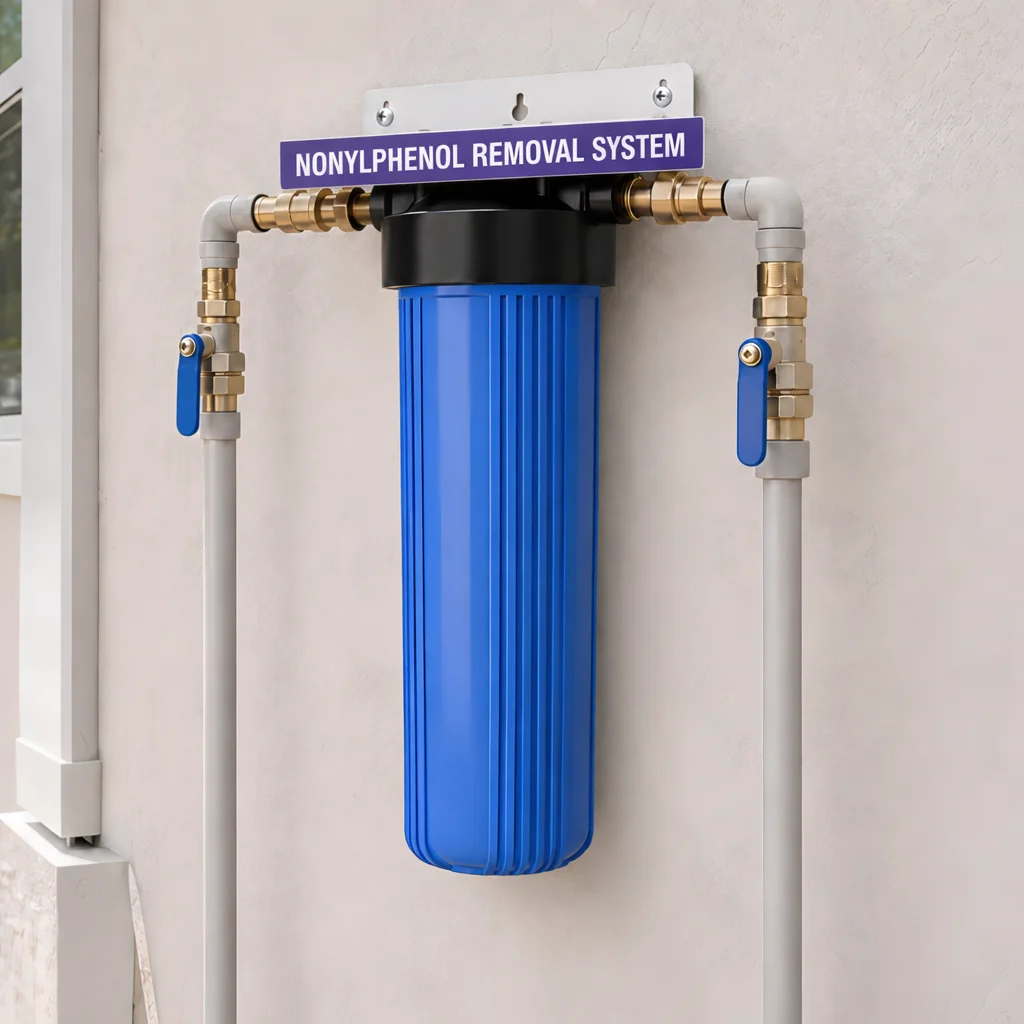
For removing nonylphenol from whole-house water, the most effective single-filter option is a high-quality activated carbon system—ideally catalytic carbon or a dense carbon media bed built for chemical adsorption. Activated carbon captures many dissolved organic compounds as water passes through, making it well suited to contaminants like nonylphenol. Installed on the main service line, a carbon system treats water for the entire Perry home rather than just one sink, focusing on chemicals you can’t see rather than on sediment.
A correctly sized whole-house carbon filter provides enough contact time for the media to adsorb more dissolved organics, which matters when showers, laundry and dishwashers draw high flow rates. In Florida homes like those in Perry, pairing the carbon unit with prefiltration can prevent the carbon bed from clogging too soon and keeps performance steady. Mr. Pure Water can assess your household’s water use in Perry and recommend the right carbon media and tank size to meet your nonylphenol reduction goals.
 850-772-1365
 info@bestwaterheater.com

