 Phone: 954-208-3500
 info@bestwaterheater.com
Phone: 954-208-3500
info@bestwaterheater.com
info@bestwaterheater.com
Phone: 954-208-3500
info@bestwaterheater.com
 Phone: 954-208-3500
info@bestwaterheater.com
Phone: 954-208-3500
info@bestwaterheater.com

Including filter system and high-performance Norovirus filter.


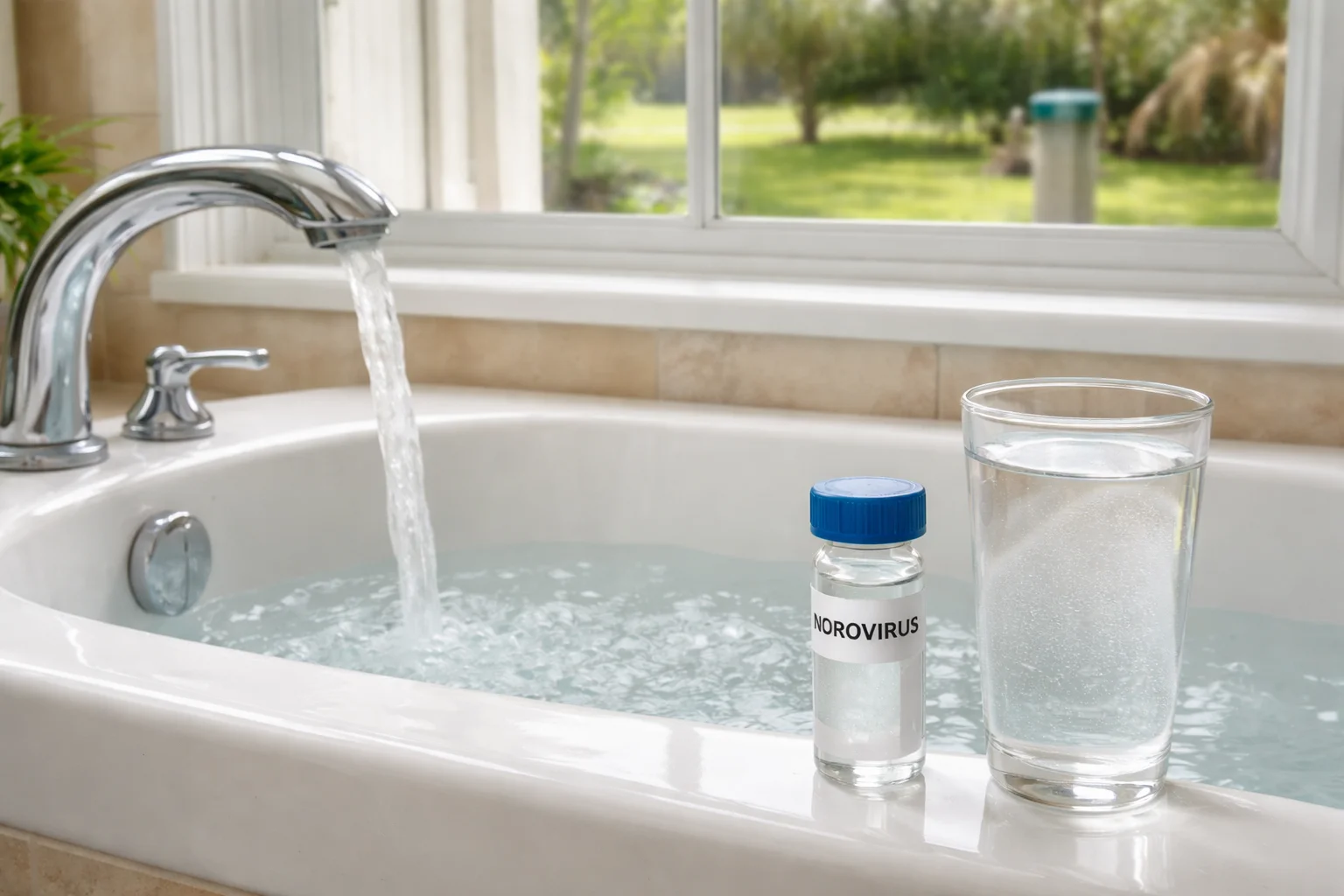
Norovirus causes sudden stomach illness and spreads easily; when it appears in water supplies it’s most often linked to sewage intrusion or a breakdown in treatment or distribution rather than a natural presence in source water. Because viruses are far too small to affect taste, odor, or clarity, Plantation homeowners can’t rely on senses alone to know if water is affected. Many residents first find out about a potential problem through a public advisory or after a private microbial test that looks for viruses and other pathogens.
Contamination can occur when sanitation systems fail — for example during pipe repairs, pressure loss, or issues with wells and septic systems — turning water into a pathway for norovirus. Even though person-to-person transmission and contaminated food are common routes, water remains central to daily life in Plantation for drinking, cooking, making ice, and brushing teeth. That’s why homeowners across Broward County often choose a whole-house barrier so every tap in the house, from the kitchen to the bathrooms and laundry, receives the same level of protection.
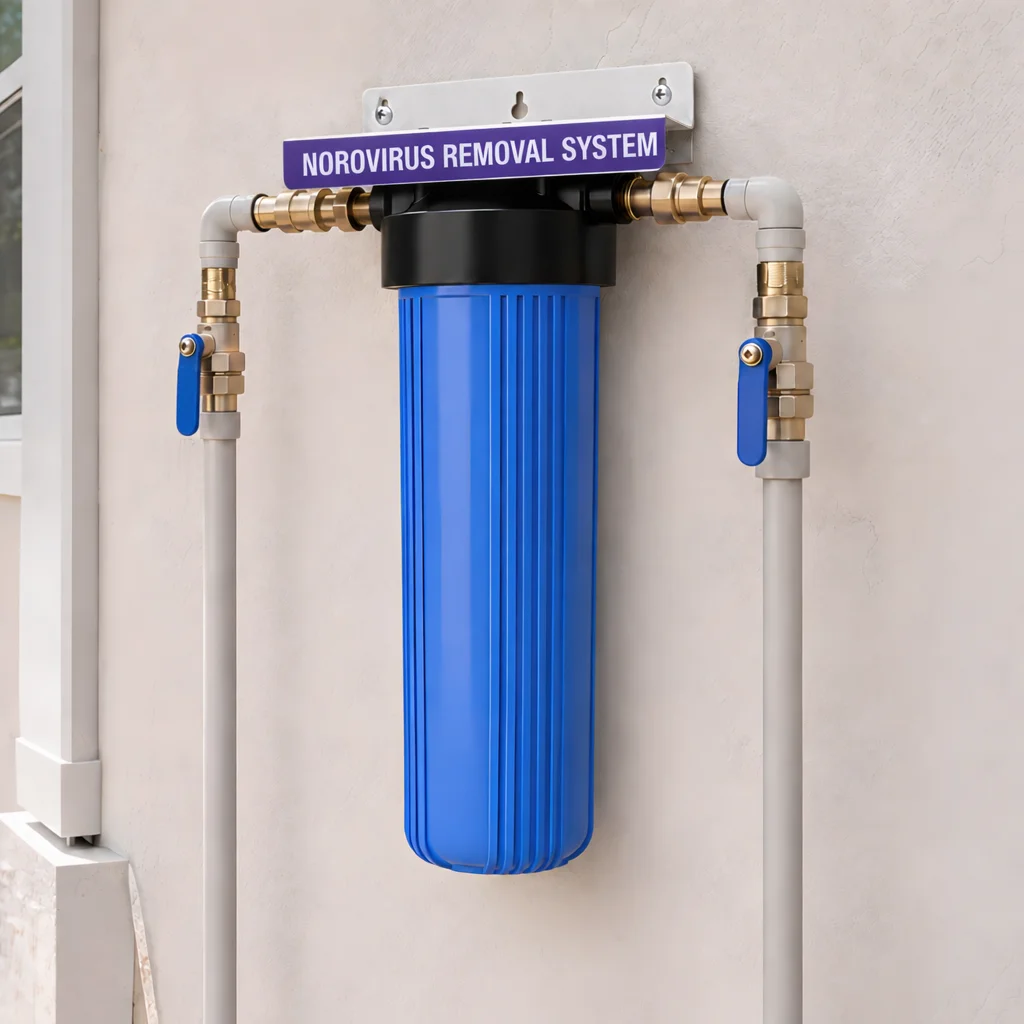
The most effective single-filter option for treating norovirus in a home is a whole-house ultraviolet (UV) disinfection system. Rather than filtering out particles, UV exposes microorganisms to germicidal light inside a sealed chamber to inactivate them as water passes through. Properly sized and maintained UV systems are widely used for virus control because they disinfect continuously without chemicals, making them a practical choice for Plantation homeowners who want protection at the point where water enters their house.
UV needs clear water to work reliably, since heavy sediment or cloudiness can block the light; many whole-house installs in hard-water areas like Plantation pair UV with a sediment prefilter so the disinfection stage can perform consistently. Mr. Pure Water will size the UV unit to match your household flow — important for homes with multiple bathrooms or high-demand appliances — and recommend routine lamp replacement and simple maintenance so the system continues to address microbial concerns while fitting into South Florida’s hard-water conditions.
 954-208-3500
 info@bestwaterheater.com

