 Phone: 561-300-5075
 info@bestwaterheater.com
Phone: 561-300-5075
info@bestwaterheater.com
info@bestwaterheater.com
Phone: 561-300-5075
info@bestwaterheater.com
 Phone: 561-300-5075
info@bestwaterheater.com
Phone: 561-300-5075
info@bestwaterheater.com

Including filter system and high-performance Petroleum Hydrocarbons filter.


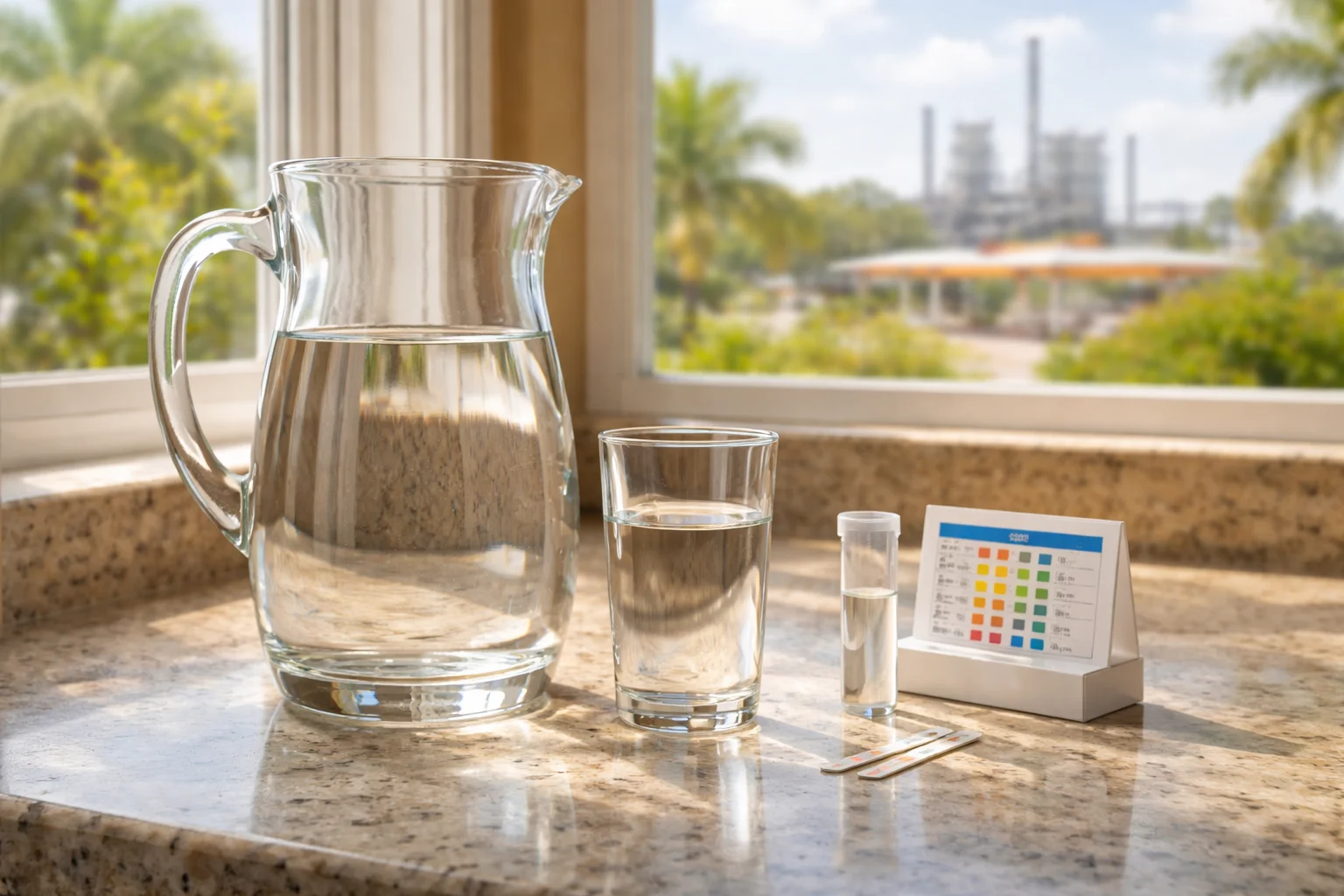
Petroleum hydrocarbons refer to a range of compounds associated with fuels and oils that can give water a noticeable taste or smell. Homeowners often report gasoline-like, diesel-like or oily notes, sometimes stronger from hot water or after water has sat in pipes. These contaminants can reach water supplies through spills, leaks, runoff, or problems affecting groundwater and distribution lines. Because petroleum hydrocarbons are a category rather than a single chemical, the right first step is identifying likely sources in your area and choosing treatment that specifically targets those compounds.
Clear water can still carry petroleum-related compounds that affect drinking, cooking and the general comfort of water use around the house. If faucets, showers or appliances give off a persistent chemical or fuel-like odor, have it tested rather than assuming it will go away—some petroleum hydrocarbons are volatile and noticeable, while others have little smell but still reduce water quality. In Jupiter Farms, where outdoor plumbing and irrigation are common on larger lots, a whole-house approach treats every tap and fixture so you’re not relying on a single point-of-use filter to protect the whole home.
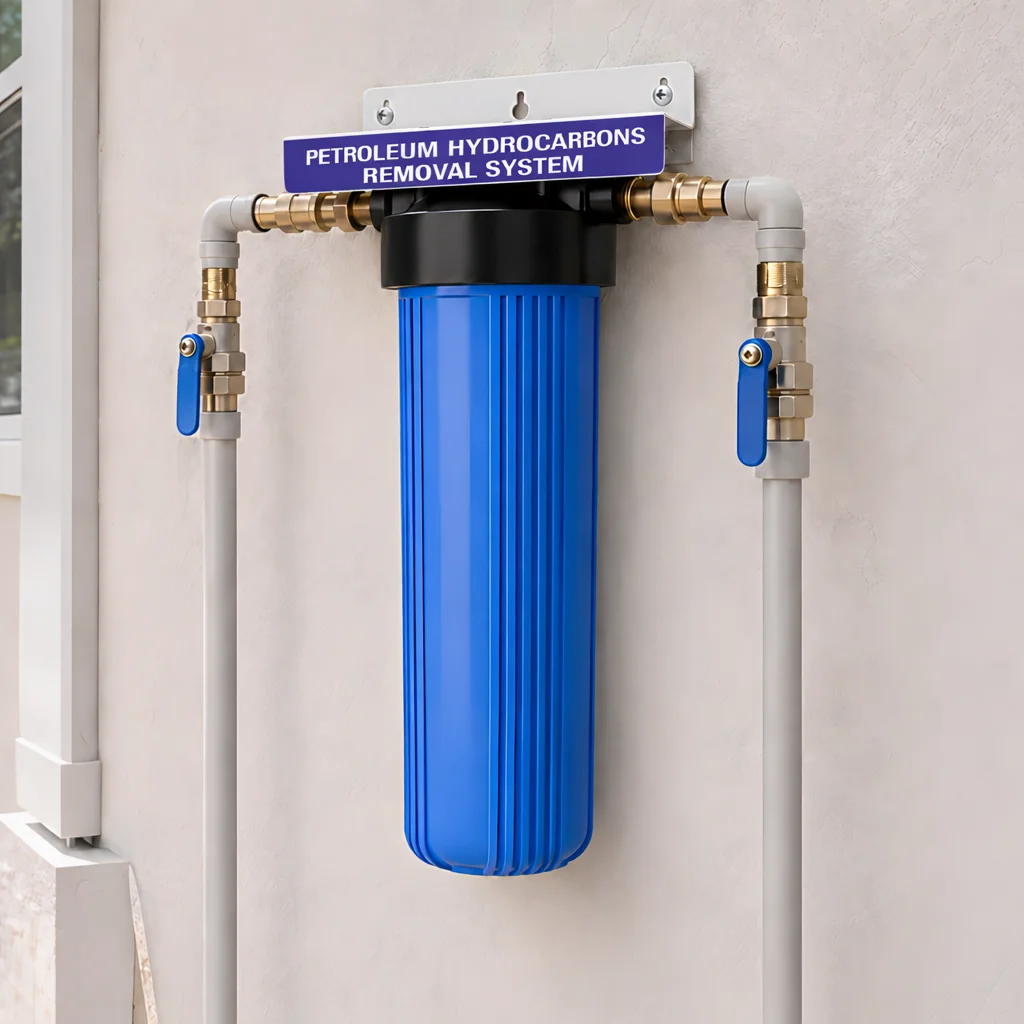
A high-quality activated carbon filter is generally the single best filter type for reducing petroleum hydrocarbons in household water. Carbon adsorption captures many petroleum-related compounds as water flows through the media. For whole-house protection, a tank-style or large backwashing granular activated carbon (GAC) system is usually preferred over small cartridge filters because it offers greater carbon capacity and longer contact time—important for reducing both the chemical contaminants and the fuel-like tastes and odors people notice first.
A correctly sized whole-house GAC system is installed at the main water entry so it treats showers, laundry and all kitchen taps—helpful in Jupiter Farms where hard water and outdoor irrigation use are common. Because carbon’s adsorption sites fill over time, routine maintenance and media replacement are required to preserve effectiveness. Mr. Pure Water can help size a whole-house carbon system for your household flow demands and the specific petroleum hydrocarbon issues identified by testing.
 561-300-5075
 info@bestwaterheater.com

