 Phone: 407-214-2646
 info@bestwaterheater.com
Phone: 407-214-2646
info@bestwaterheater.com
info@bestwaterheater.com
Phone: 407-214-2646
info@bestwaterheater.com
 Phone: 407-214-2646
info@bestwaterheater.com
Phone: 407-214-2646
info@bestwaterheater.com

Including filter system and high-performance PFBA filter.


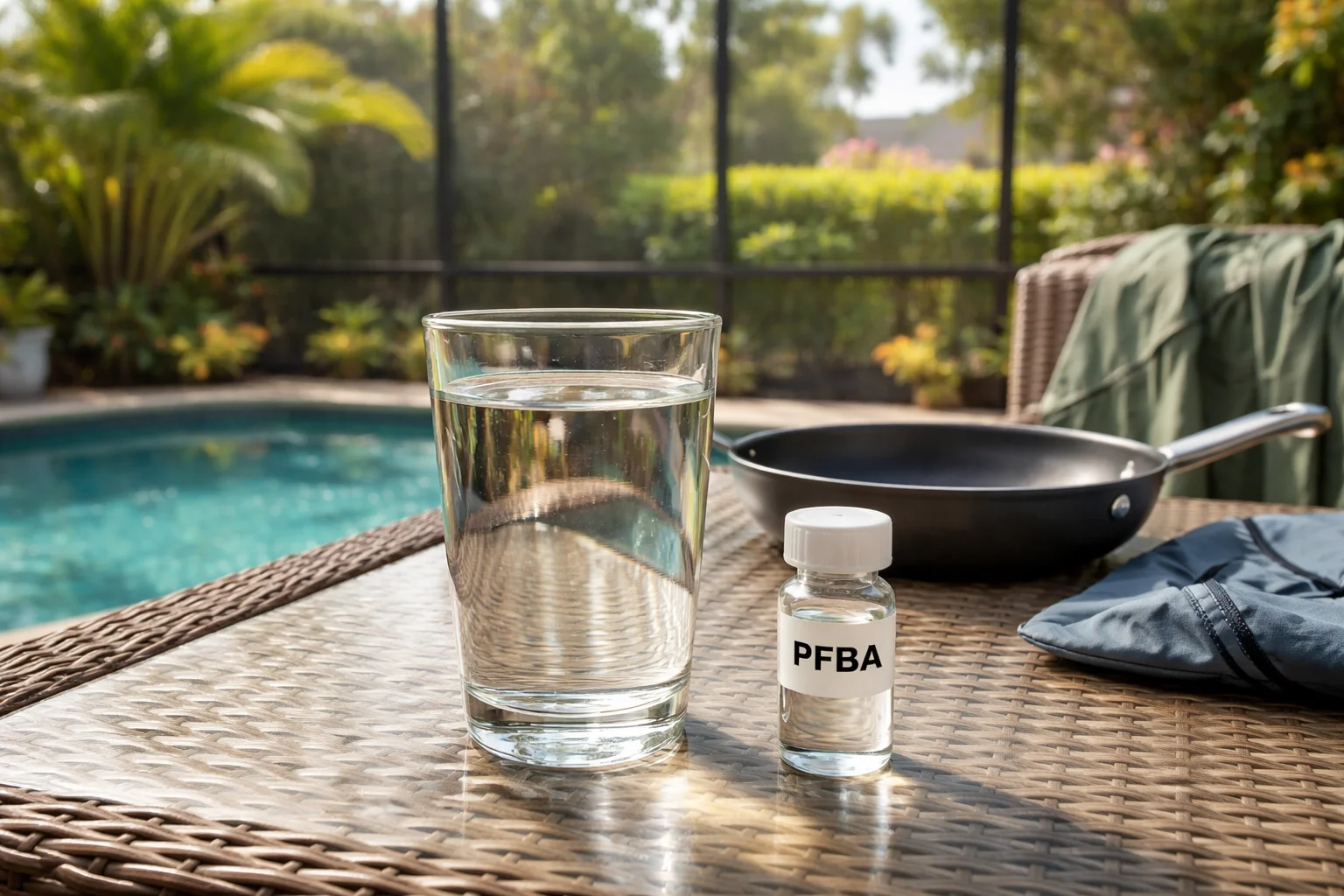
PFBA is one of the PFAS family that can turn up in household water. Local homeowners often become aware of it after a private test, a utility notice, or when they start asking questions about what’s coming from their faucets in Camp Ocala. Because PFBA is persistent in the environment and not easy to remove once present, many families prefer treating water at the whole-house level so drinking, cooking, and bathing water are all addressed and you can have greater peace of mind about daily use.
PFBA can be present even when water looks clear, tastes normal, and has no odor, so visual checks won’t reveal it. It can also occur alongside other PFAS, which is why some homeowners in the Ocala/Marion County area opt for systems that target a broader set of compounds rather than a simple taste-and-odor filter. A current water analysis is the smartest first move so you understand what’s in your supply; from there a whole-house system can be sized for your Camp Ocala home and daily water use patterns.
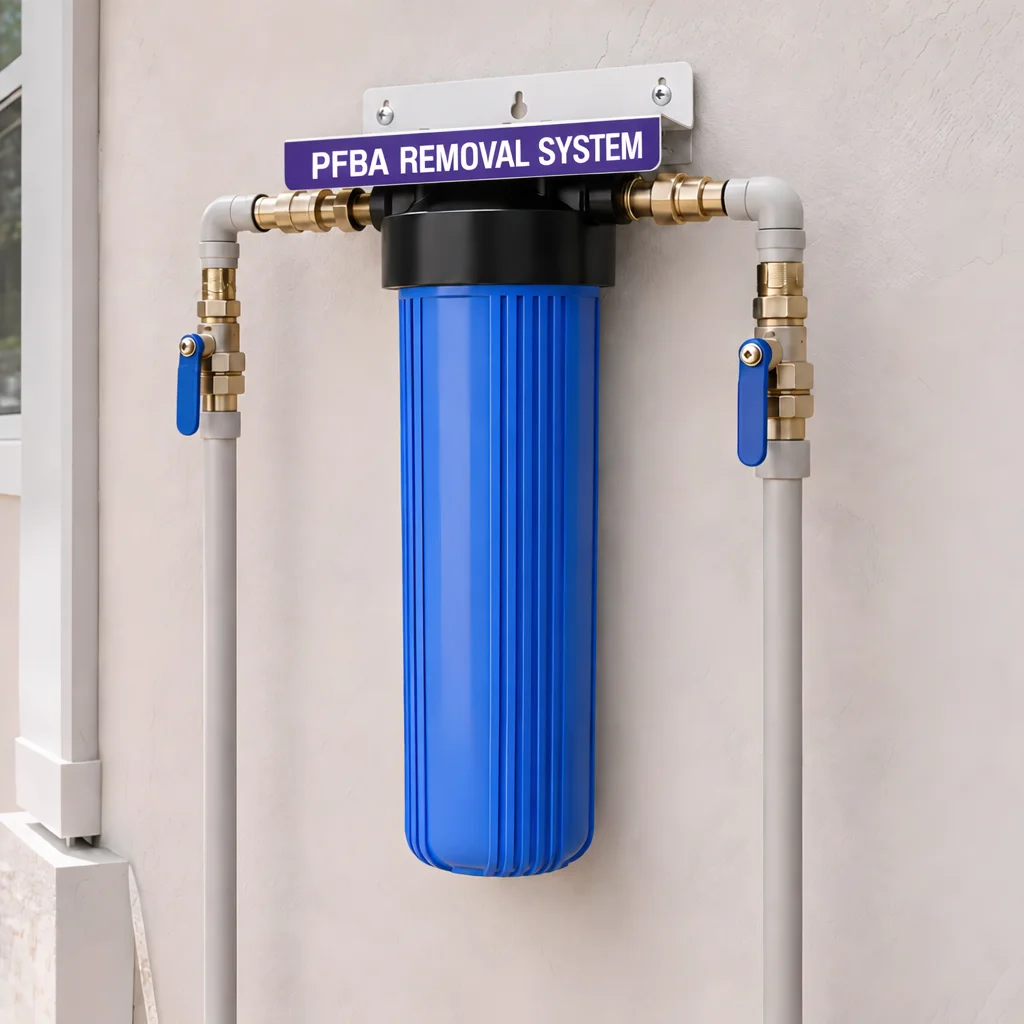
To reduce PFBA where water enters your house, a whole-house granular activated carbon (GAC) filter is typically the most effective single-filter option. GAC works by adsorbing many organic contaminants, including numerous PFAS, as water moves through the carbon media. A properly sized GAC tank gives the contact time needed for better PFBA reduction and treats every faucet, shower, and appliance in homes across Camp Ocala, helping with overall water quality in our hard, groundwater-fed supplies.
PFBA can be tougher to remove than some larger PFAS, so system performance hinges on carbon quality, bed depth, and flow rate—not just installing any carbon cartridge. At Mr. Pure Water we design whole-house GAC systems to match household demand in the Ocala area, accounting for hard, groundwater-fed water so the media provides effective contact time. Regular media replacement keeps capacity strong; if your water test shows multiple PFAS, we’ll help choose a setup that prioritizes PFBA reduction while addressing broader PFAS concerns.
 407-214-2646
 info@bestwaterheater.com

