 Phone: 561-300-5075
 info@bestwaterheater.com
Phone: 561-300-5075
info@bestwaterheater.com
info@bestwaterheater.com
Phone: 561-300-5075
info@bestwaterheater.com
 Phone: 561-300-5075
info@bestwaterheater.com
Phone: 561-300-5075
info@bestwaterheater.com

Including filter system and high-performance PFBA filter.


PFBA is one of the PFAS chemicals that can turn up in household water. Haverhill homeowners often hear about it after a private test, a utility notice, or questions about tap water safety. Because PFBA persists in the environment and can be hard to manage, many families in Palm Beach County prefer a treatment that addresses the whole house so drinking, cooking, and bathing water are treated consistently.
You can’t rely on clarity, taste, or smell to tell whether PFBA is present — water that looks and tastes normal may still contain it. PFBA may occur alongside other PFAS, which is why some Haverhill residents opt for systems that target a broader group of these compounds instead of simple taste-and-odor filters. Start with a current water analysis so you know what’s in your supply; from there we can recommend a whole-house system sized to your home, the hard Palm Beach County water, and your household’s usage.
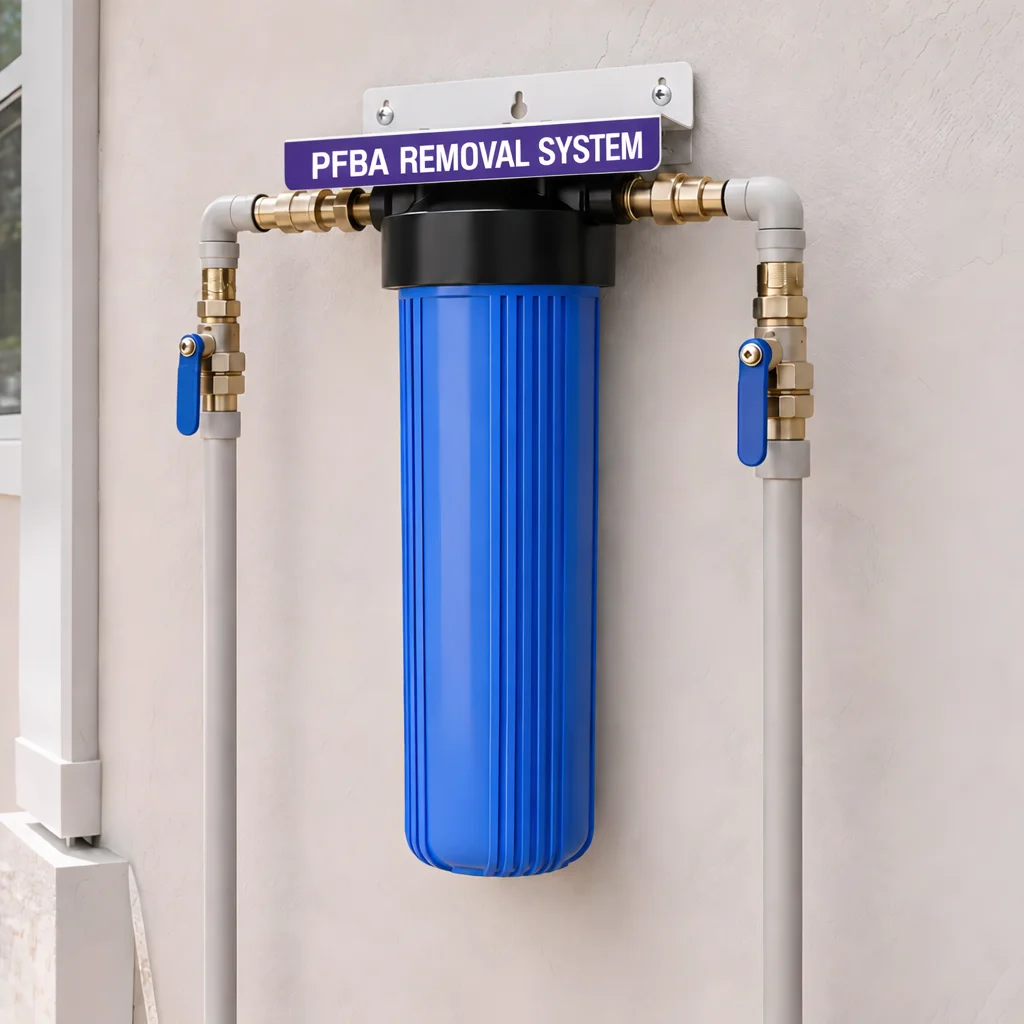
To reduce PFBA where water enters a Haverhill home, a whole-house granular activated carbon (GAC) filter is generally the most effective single-filter option. GAC works by adsorbing many organic contaminants, including numerous PFAS, as water moves through the media. A correctly sized GAC tank gives the contact time needed for better removal and treats every faucet, shower, and appliance — helping with nuisance issues that can come from Palm Beach County’s hard, mineral-rich water as well.
Because PFBA can be more difficult to remove than some larger PFAS, results depend on carbon quality, bed depth, and flow rate — not just installing a small cartridge. Mr. Pure Water sizes whole-house GAC systems for Haverhill homes to preserve effective contact time through the media and handle local water conditions. Regular media replacement is important so the carbon doesn’t become exhausted; if your test shows multiple PFAS, we’ll help you choose a configuration that balances PFBA reduction with broader PFAS treatment goals.
 561-300-5075
 info@bestwaterheater.com

