 Phone: 407-214-2646
 info@bestwaterheater.com
Phone: 407-214-2646
info@bestwaterheater.com
info@bestwaterheater.com
Phone: 407-214-2646
info@bestwaterheater.com
 Phone: 407-214-2646
info@bestwaterheater.com
Phone: 407-214-2646
info@bestwaterheater.com

Including filter system and high-performance PFBA filter.



PFBA is one of the PFAS chemicals that can be found in household water. Homeowners in Heathrow often hear about it from private test results, utility communications, or conversations about water quality. Because PFBA is persistent in the environment and not always simple to remove, many families choose a treatment that protects the entire house so drinking, cooking, and bathing water are addressed consistently and with more peace of mind.
You can’t rely on clear water or a normal taste to rule out PFBA — it may be present even when everything seems fine. It can also appear alongside other PFAS, so Heathrow residents frequently opt for solutions that handle a broader group of compounds instead of a basic taste-and-odor cartridge. The first practical step is current water testing to see what’s in your supply; from there a whole-house system can be sized to your home, considering local hard water conditions from the Floridan Aquifer and your typical household demand.
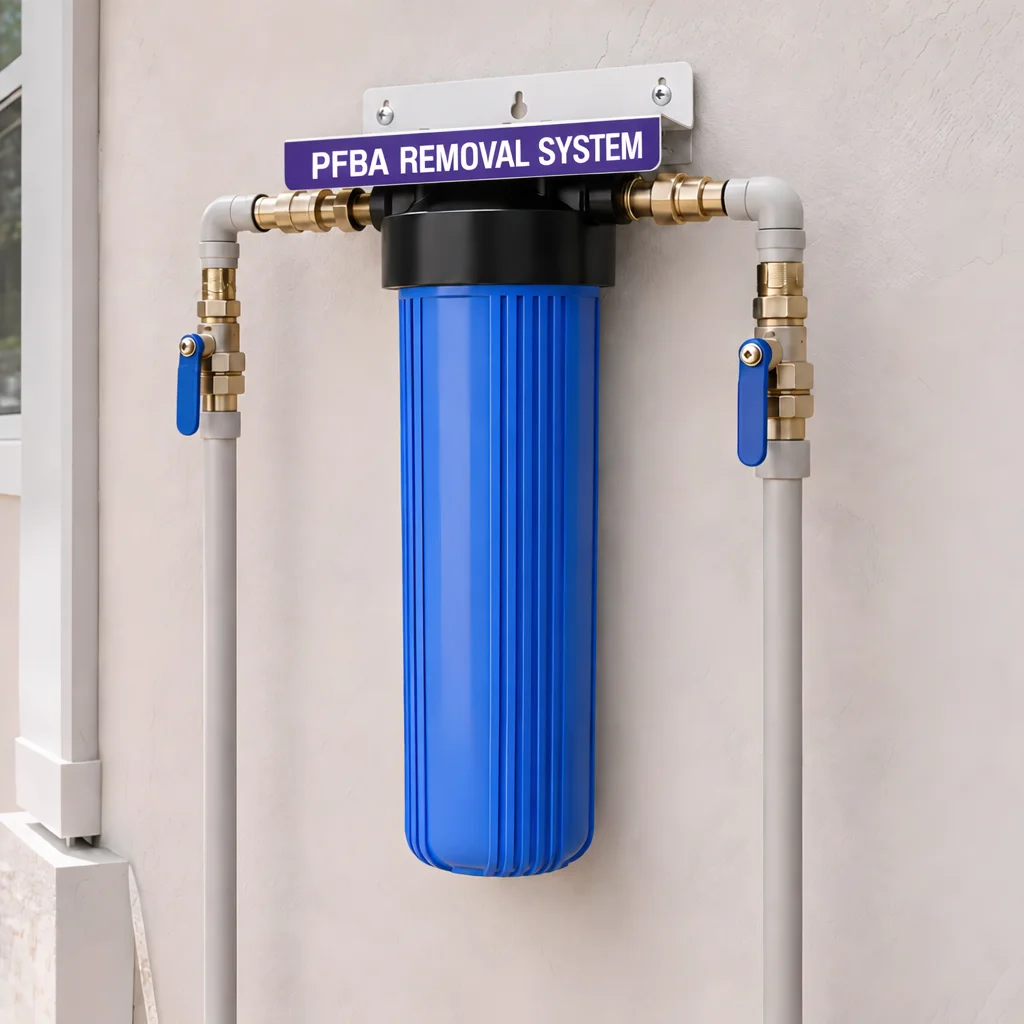
To reduce PFBA at the main water entry, a whole-house granular activated carbon (GAC) filter is generally the best single-filter option. Carbon removes many organic contaminants — including a range of PFAS — by adsorbing them as water moves through the media. A correctly sized GAC tank gives the contact time needed for better PFBA reduction and protects every faucet, shower, and appliance in your Heathrow home while also helping with nuisance compounds that carbon captures.
PFBA can be tougher to treat than larger PFAS, so performance depends on carbon quality, bed depth, and flow rate rather than simply adding an in-line carbon cartridge. At Mr. Pure Water we design whole-house GAC systems to match household flow and demand, which is important in hard-water areas fed by the Floridan Aquifer. Scheduled media replacement keeps the carbon working before it becomes exhausted, and if your testing shows multiple PFAS we’ll recommend a configuration that prioritizes PFBA reduction while addressing wider PFAS concerns.
 407-214-2646
 info@bestwaterheater.com

