 Phone: 850-772-1365
 info@bestwaterheater.com
Phone: 850-772-1365
info@bestwaterheater.com
info@bestwaterheater.com
Phone: 850-772-1365
info@bestwaterheater.com
 Phone: 850-772-1365
info@bestwaterheater.com
Phone: 850-772-1365
info@bestwaterheater.com

Including filter system and high-performance PFHxS filter.


PFHxS is one of the PFAS group of “forever chemicals” that can remain in the environment for a long time. In New York homeowners may see PFHxS listed when utilities test for PFAS or when water quality reports break out specific compounds. Because you can’t see, smell, or taste PFHxS, testing is the only way to know if it’s present — and adding a point-of-entry, whole-house treatment lets you take control of what enters your home.
PFHxS has ties to industrial uses and some consumer products that have contained PFAS, so it can occur at low levels in water sources and be hard to remove with basic filters. Simple pitcher filters or sediment cartridges may trap particles but aren’t built to reliably lower dissolved PFAS. That’s why many New York homeowners choose a system that treats all household water — so you’re not left with clean water at just one sink while other taps remain untreated.
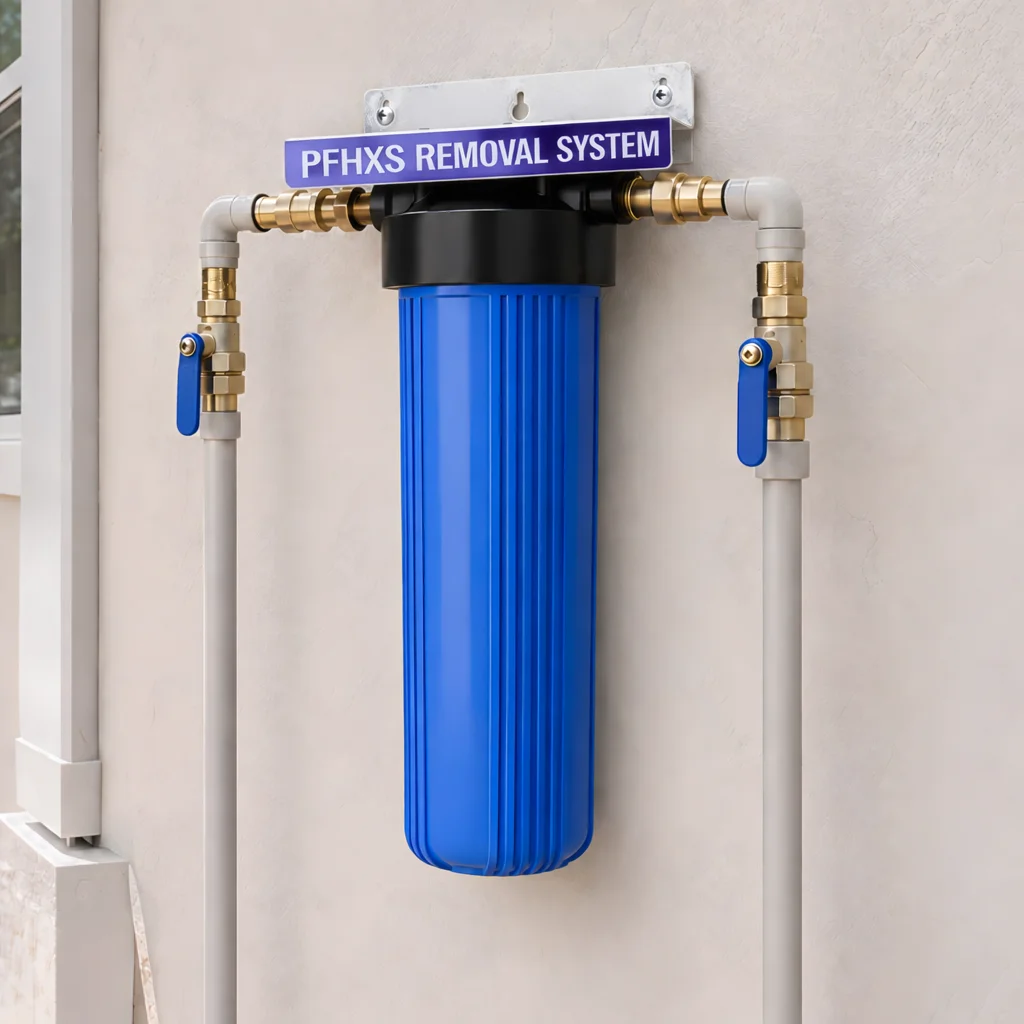
For PFHxS, the most commonly recommended option is a whole-house activated carbon system using high-capacity granular activated carbon (GAC). Activated carbon is effective for many organic contaminants because its porous media adsorbs these compounds, including certain PFAS. In a whole-house installation the important factor is contact time — a properly sized GAC tank on the main line gives PFHxS the opportunity to bind before water reaches your fixtures.
Mr. Pure Water designs whole-house carbon systems around real home conditions in New York, focusing on flow rate, bed depth, and media volume instead of relying on a small cartridge to do the work. That approach matters for PFHxS control because effectiveness depends on how long water contacts the carbon and how quickly the media becomes saturated. We’ll size the system to your household’s plumbing and water use so you get consistent filtration and adequate pressure; for treating PFHxS throughout your home, a dedicated whole-house GAC filter is the practical choice.
 850-772-1365
 info@bestwaterheater.com

