 Phone: 561-300-5075
 info@bestwaterheater.com
Phone: 561-300-5075
info@bestwaterheater.com
info@bestwaterheater.com
Phone: 561-300-5075
info@bestwaterheater.com
 Phone: 561-300-5075
info@bestwaterheater.com
Phone: 561-300-5075
info@bestwaterheater.com

Including filter system and high-performance PFMPA filter.



PFMPA is one of the PFAS chemicals that can persist in the environment and eventually show up in drinking water. Because many PFAS are present without changing taste, smell, or color, homeowners in Chapel Hill may not notice contamination without testing. If a lab report lists PFMPA, it’s understandable to want a clear, practical plan for reducing exposure at home. A whole-house system treats all incoming water so showers, laundry and outdoor spigots are included, not just the kitchen tap.
Water that looks and tastes fine can still carry trace contaminants, and PFMPA is not something a simple sediment screen will reliably remove. Boiling water doesn’t eliminate PFAS and can even concentrate some pollutants as evaporation reduces volume. Because PFMPA is part of the larger PFAS family, Chapel Hill homeowners often seek treatment that consistently targets low-level contaminants over time—aiming to reduce PFMPA coming into the house so everyday uses like cooking and bathing are treated.
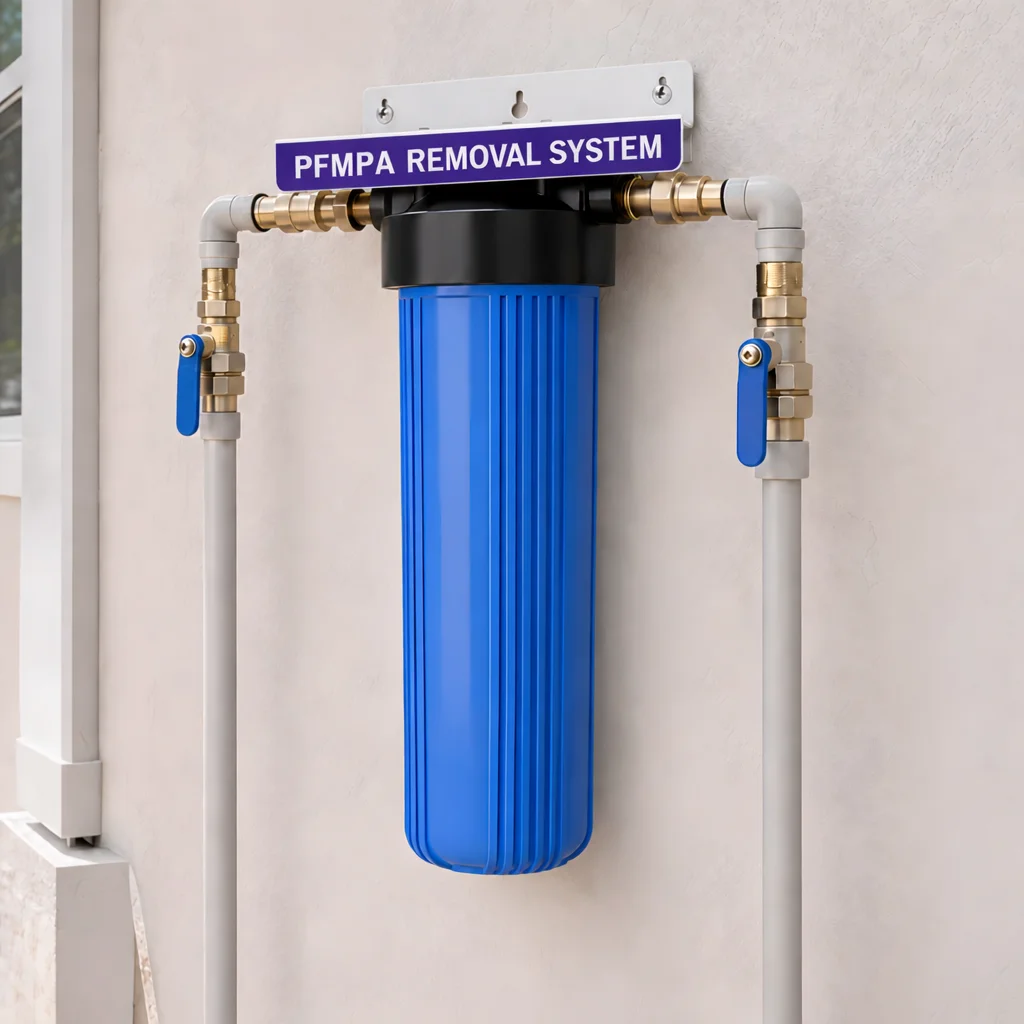
For PFMPA, the most effective single whole-house option is a high-quality activated carbon filter. Carbon media adsorbs many organic compounds as water flows through, making it a common choice for chemicals that slip past basic filtration. Installed at the point of entry, a whole-house carbon system protects every faucet, shower and appliance in your Chapel Hill residence. The system should be designed with sufficient carbon volume and contact time so the focus is on PFAS reduction rather than only improving taste.
Because PFMPA is a smaller, more mobile PFAS, performance depends on choosing carbon media formulated for PFAS and sizing the unit to your home’s flow rate and daily water use. A whole-house carbon filter for a Chapel Hill home should include prefiltration where needed to prevent sediment from shortening media life and reducing contact time. As with all adsorption systems, the carbon must be replaced on schedule to avoid exhaustion. Mr. Pure Water can help you pick and size a PFMPA-focused whole-house carbon system based on your water test and household needs.
 561-300-5075
 info@bestwaterheater.com

