 Phone: 561-300-5075
 info@bestwaterheater.com
Phone: 561-300-5075
info@bestwaterheater.com
info@bestwaterheater.com
Phone: 561-300-5075
info@bestwaterheater.com
 Phone: 561-300-5075
info@bestwaterheater.com
Phone: 561-300-5075
info@bestwaterheater.com

Including filter system and high-performance PFMPA filter.


PFMPA is one of the PFAS chemicals that can persist in the environment and turn up in drinking water without changing taste, smell, or appearance. If your lab report for a Lantana home shows PFMPA, it’s understandable to want a clear plan for what that means at the tap. Treating water at the point of entry — a whole-house approach — addresses exposure from showers, laundry, and all household uses, not only the kitchen sink.
Even when water looks clear, low-level contaminants like PFMPA can remain, and standard sediment filters won’t reliably remove them. Boiling won’t get rid of PFAS and can actually concentrate some substances as water evaporates. Because PFMPA is part of the wider PFAS family, many Lantana homeowners choose treatments designed for consistent, long-term reduction so that bathing, cooking, and other daily uses are protected.
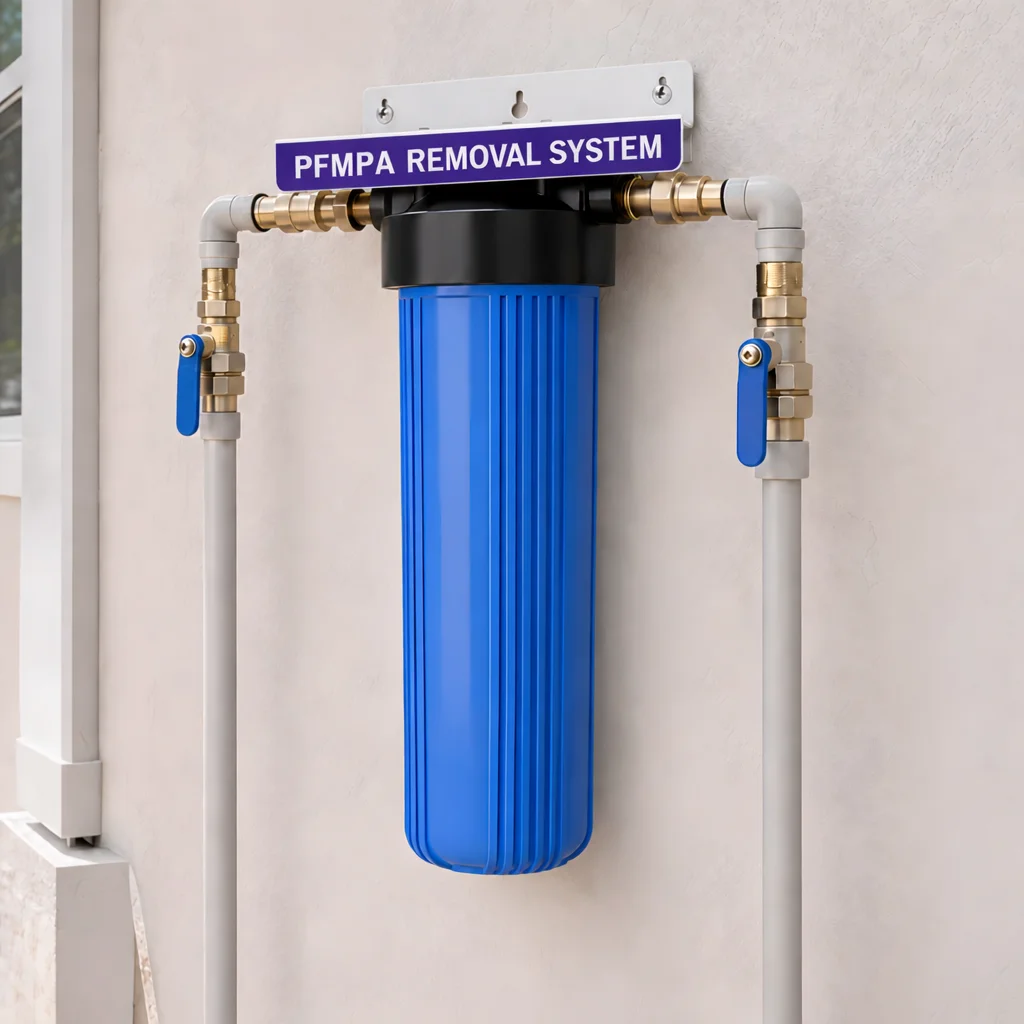
For reducing PFMPA at the point of entry, a high-quality activated carbon whole-house filter is commonly the single most effective single-filter option. Carbon media adsorbs many organic compounds as water flows through, and installing it before water reaches your plumbing means every faucet, shower, and appliance in your Lantana home benefits. Effective systems prioritize sufficient carbon volume and contact time to support PFAS reduction, beyond merely improving taste.
Because PFMPA is a smaller, more mobile PFAS, performance hinges on using carbon media formulated for PFAS and sizing the system for your household flow and daily usage. In hard-water areas like Palm Beach County, proper prefiltration also helps prevent mineral and sediment buildup from shortening carbon life by keeping media from fouling. As with any adsorption system, carbon must be changed on schedule to remain effective — Mr. Pure Water can evaluate your Lantana water test and household needs to recommend the right whole-house carbon setup.
 561-300-5075
 info@bestwaterheater.com

