 Phone: 561-300-5075
 info@bestwaterheater.com
Phone: 561-300-5075
info@bestwaterheater.com
info@bestwaterheater.com
Phone: 561-300-5075
info@bestwaterheater.com
 Phone: 561-300-5075
info@bestwaterheater.com
Phone: 561-300-5075
info@bestwaterheater.com

Including filter system and high-performance PFMPA filter.



PFMPA is one of the PFAS chemicals that can persist in the environment and end up in drinking water, often without any noticeable taste, smell, or color change. If your lab results list PFMPA, it’s understandable to want clear guidance about what that means for water at home. In Ocean Ridge—where coastal living and Palm Beach County conditions affect plumbing—many homeowners prefer a whole-house strategy so showers, laundry and outdoor uses all receive the same protection, not just the kitchen tap.
Even clear, good-looking water can contain trace contaminants, and PFMPA isn’t something a basic sediment filter will reliably remove. Boiling won’t reliably eliminate PFAS and can even concentrate dissolved substances as water evaporates. Because PFMPA belongs to the larger PFAS family, Ocean Ridge residents often choose treatments designed for consistent low-level reduction over time so bathing, cooking, and appliance water are treated at the point of entry.
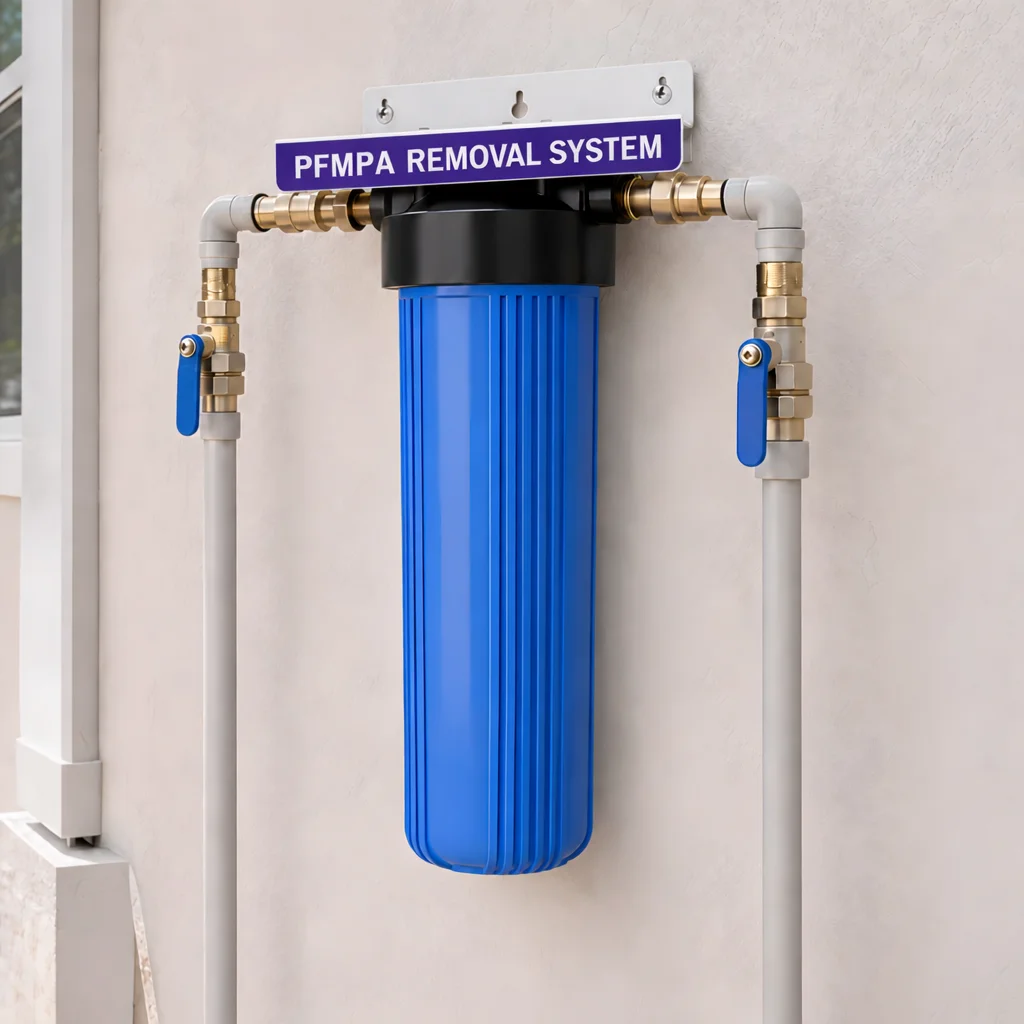
For PFMPA, a whole-house activated carbon filter is commonly the single most effective point-of-entry option for reducing PFAS. Carbon media adsorbs many organic contaminants as water moves through the tank, and when installed before plumbing it protects every faucet and shower in your Ocean Ridge home. Effective designs emphasize sufficient carbon volume and contact time geared toward PFAS reduction—not just flavor improvements.
Because PFMPA is a smaller, more mobile PFAS, performance depends on choosing carbon media formulated for PFAS and sizing the system to your household flow and daily use. In Ocean Ridge, where hard water and outdoor heat can affect plumbing, a whole-house carbon system should include prefiltration to prevent sediment and scale from shortening media life. Like all adsorption systems, the carbon needs scheduled replacement before it exhausts; Mr. Pure Water can help match a PFMPA-focused whole-house carbon system to your water test and usage patterns.
 561-300-5075
 info@bestwaterheater.com

