 Phone: 772-290-5223
 info@bestwaterheater.com
Phone: 772-290-5223
info@bestwaterheater.com
info@bestwaterheater.com
Phone: 772-290-5223
info@bestwaterheater.com
 Phone: 772-290-5223
info@bestwaterheater.com
Phone: 772-290-5223
info@bestwaterheater.com

Including filter system and high-performance PFOA filter.


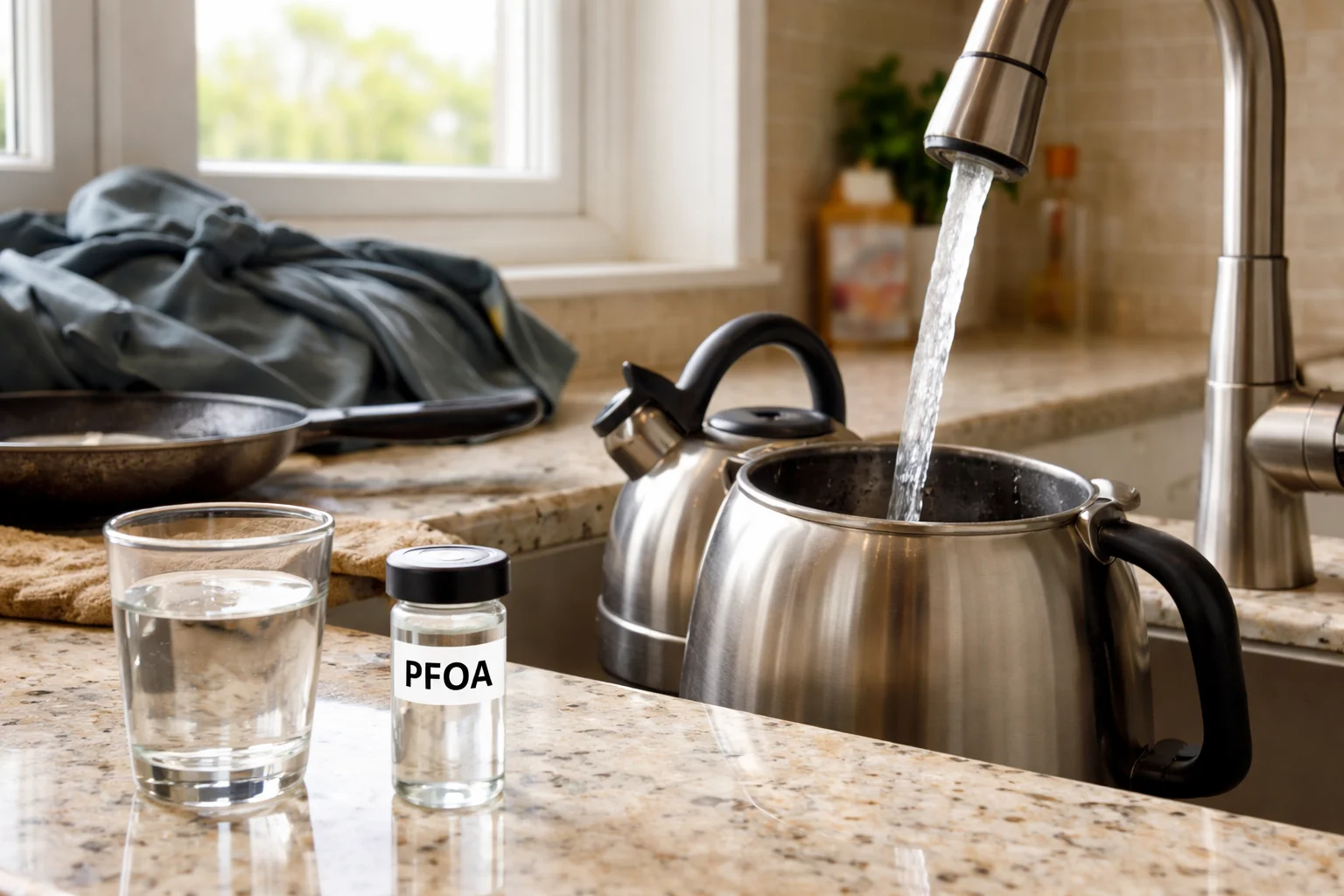
PFOA is a synthetic PFAS compound that can reach drinking water through industrial sources or persistent legacy products. Because it degrades very slowly, PFOA can remain in water long after a release, and you usually can’t see, smell, or taste it—testing is how it’s typically found. If you live in Highland Lakes and are worried about PFOA in your home supply, the first step is understanding how this contaminant behaves so you can choose the right treatment.
Clear, good-tasting water doesn’t always mean it’s free of dissolved contaminants like PFOA, and many basic filters won’t address PFAS. Sediment cartridges help with grit and softeners treat hardness—useful in the hard municipal water common around Highland Lakes—but they won’t significantly reduce PFOA. A whole-house solution makes sense for households that want treated water for bathing, cooking, and laundry across every faucet, rather than only at a single point of use.
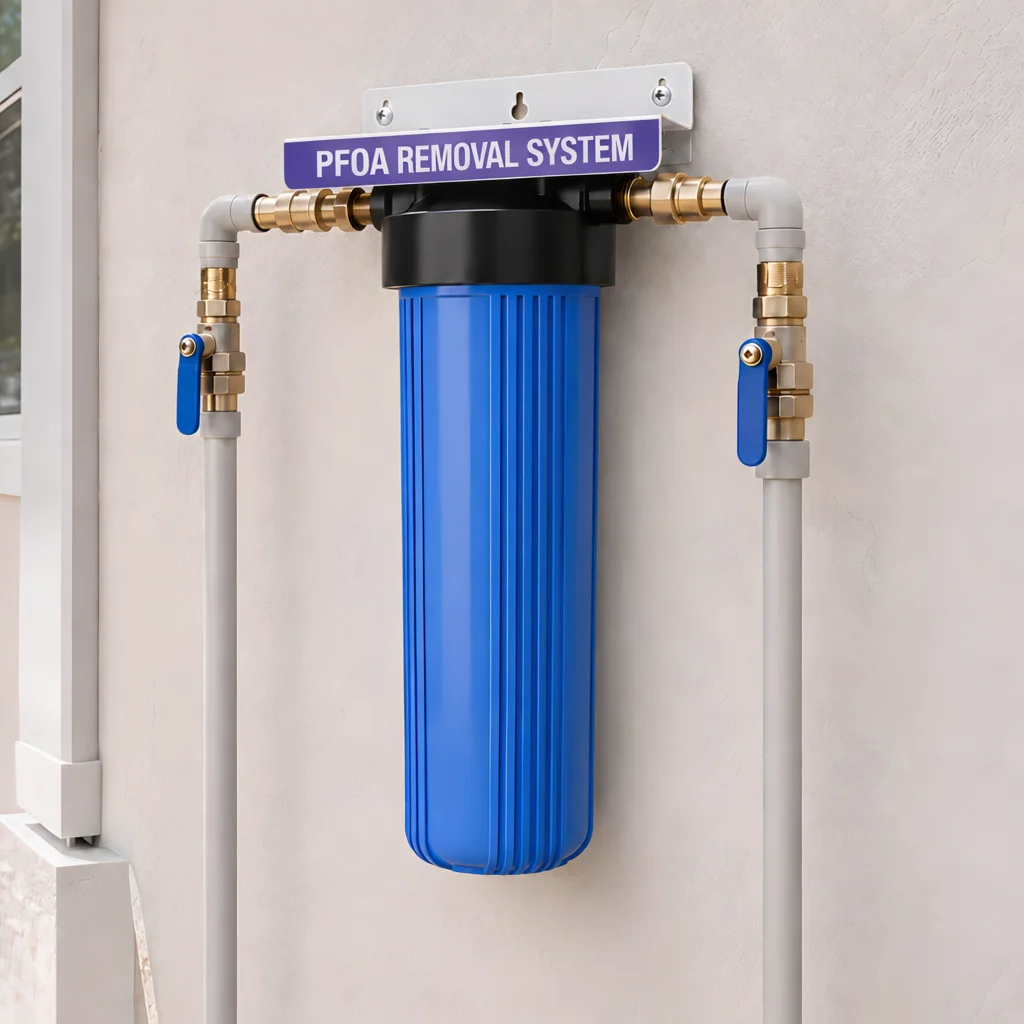
For whole-home reduction of PFOA, a high-quality granular activated carbon (GAC) filter is the most effective single-filter choice. Proper GAC media can adsorb PFAS compounds, including PFOA, when water spends enough time in a correctly sized tank. The system must use the right carbon grade and be designed so flow rates—especially during simultaneous use in larger Highland Lakes households—do not compromise contact time and performance.
Because PFOA is dissolved rather than particulate, small “taste and odor” cartridges won’t provide the capacity a whole house needs. A professionally sized GAC tank offers greater contact time and capacity than point-of-use units, which can be overwhelmed by whole-home flow, and regular maintenance is required since carbon’s adsorption capacity is finite. Mr. Pure Water can assess your Highland Lakes residence, account for local water hardness and household demand, and recommend a whole-house carbon setup sized and serviced to keep PFOA reduction working reliably.
 772-290-5223
 info@bestwaterheater.com

