 Phone: 321-400-9302
 info@bestwaterheater.com
Phone: 321-400-9302
info@bestwaterheater.com
info@bestwaterheater.com
Phone: 321-400-9302
info@bestwaterheater.com
 Phone: 321-400-9302
info@bestwaterheater.com
Phone: 321-400-9302
info@bestwaterheater.com

Including filter system and high-performance PFOA filter.


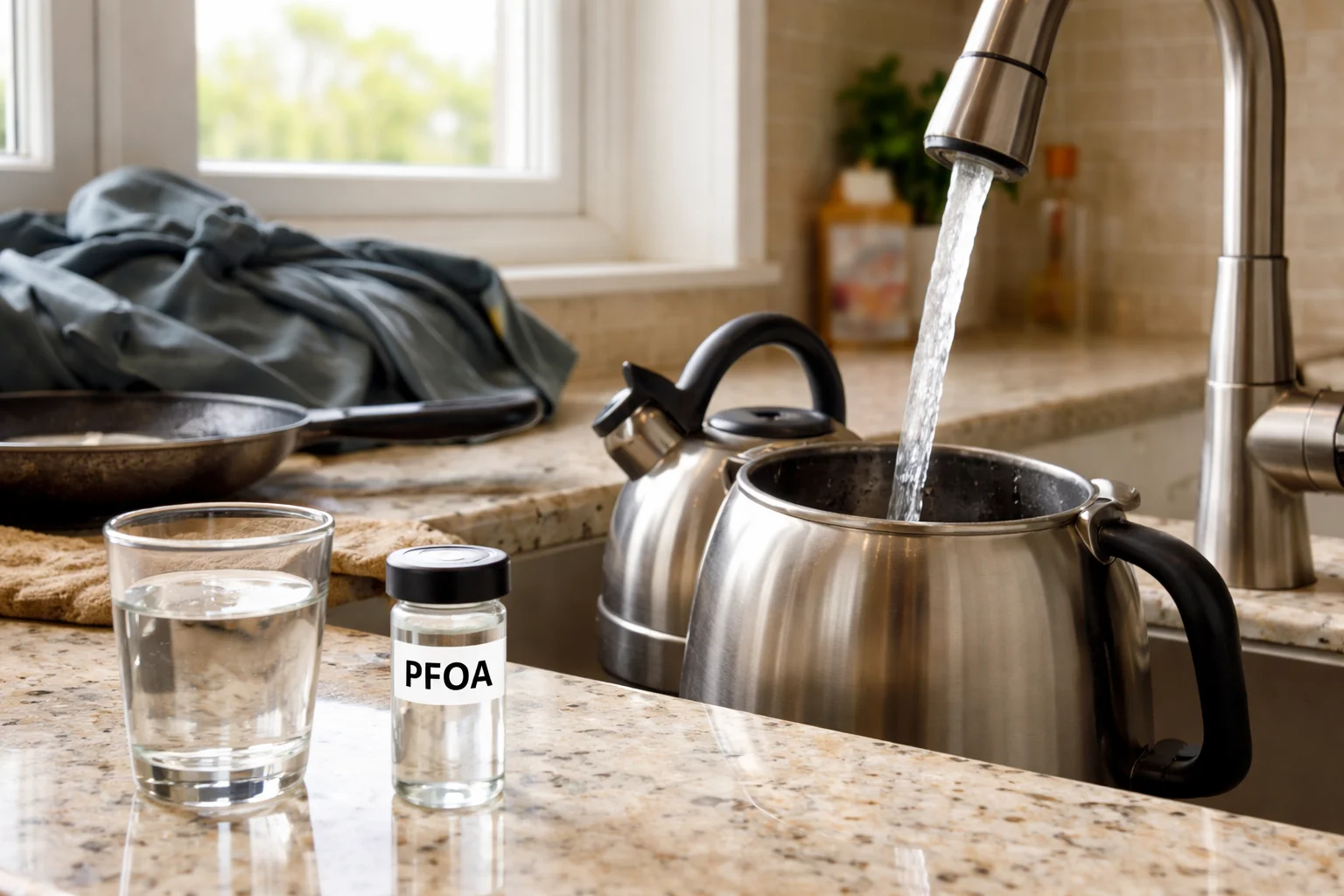
PFOA is a human-made PFAS compound that can enter drinking water through long-lasting industrial and product-related sources. Because it degrades very slowly, PFOA can remain in water supplies long after the original release. You typically won’t see, smell, or taste it at home, which is why testing is the usual way to detect it. If you’re an Indialantic homeowner worried about PFOA in your water, the first step is learning how this contaminant behaves so you can choose the right treatment.
Clear, good-tasting water can still carry low-level contaminants like PFOA that ordinary filters don’t remove. Sediment cartridges help with sand and grit, and water softeners tackle minerals, but neither is designed to reduce dissolved PFAS chemicals. Many Indialantic families prefer a whole-house solution so every faucet—whether in Ocean Side Village or along Riverside Drive—delivers treated water for cooking, bathing, and laundry rather than relying on a single point-of-use device.
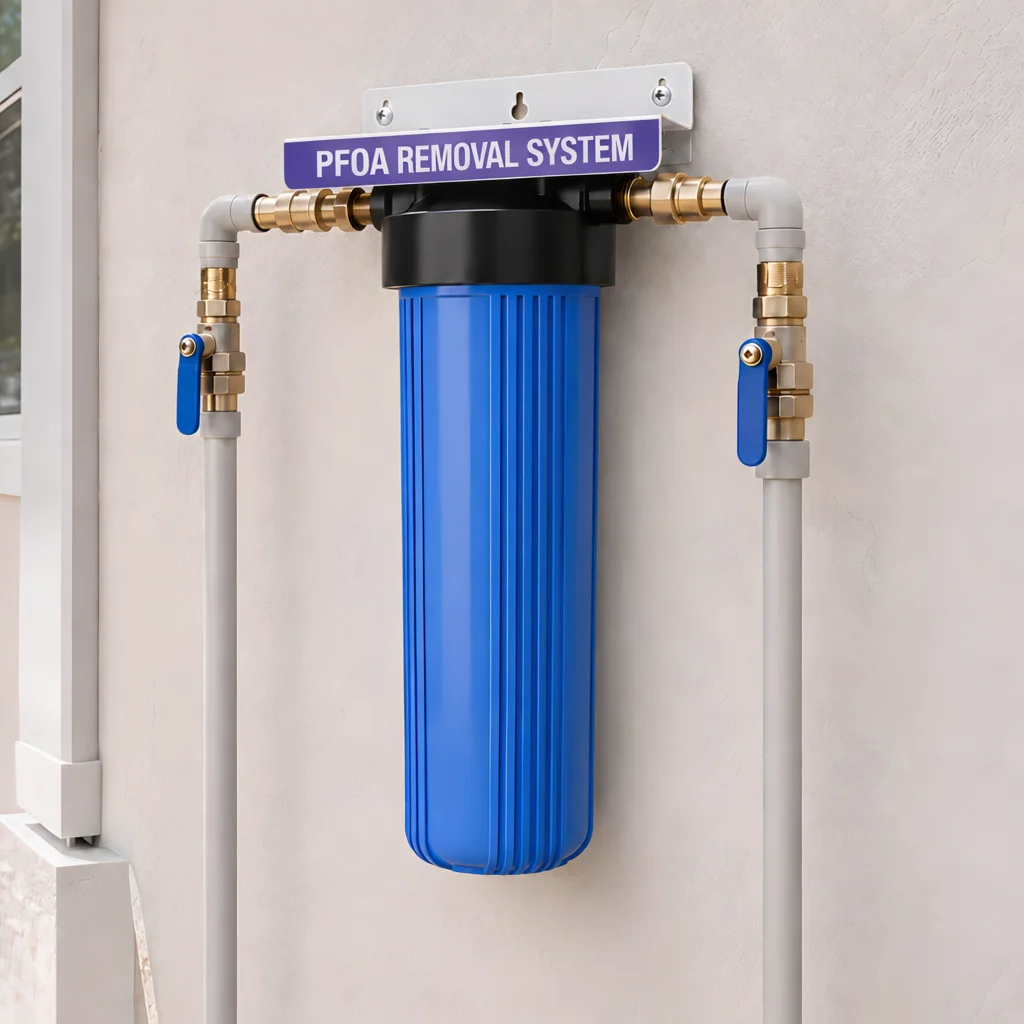
For whole-home reduction of PFOA, a granular activated carbon (GAC) whole-house filter is the most effective single-filter choice. Properly graded carbon media adsorbs PFAS compounds like PFOA as water passes through a correctly sized tank, and adequate contact time is essential. A system designed for Indialantic’s hard municipal water and the flow demands of homes in neighborhoods such as The Sanctuary or The Shores at Indialantic will help ensure treatment isn’t compromised when multiple fixtures run.
Because PFOA is dissolved rather than particulate, it takes more than a small “taste and odor” cartridge to reduce it across the whole house. A professionally sized GAC tank provides greater capacity and longer contact time than under-sink filters, which can be overwhelmed by whole-home usage. Regular maintenance is important since carbon’s adsorption capacity is finite and media must be replaced on schedule. Mr. Pure Water can assess your Indialantic property—considering hard water and salty coastal air—and recommend and maintain the right whole-house carbon system for reliable PFOA reduction.
 321-400-9302
 info@bestwaterheater.com

