 Phone: 305-404-8790
 info@bestwaterheater.com
Phone: 305-404-8790
info@bestwaterheater.com
info@bestwaterheater.com
Phone: 305-404-8790
info@bestwaterheater.com
 Phone: 305-404-8790
info@bestwaterheater.com
Phone: 305-404-8790
info@bestwaterheater.com

Including filter system and high-performance PFOS filter.


PFOS is one member of the PFAS family that can persist in the environment and sometimes shows up in drinking water. Because it doesn’t break down readily, small inputs can remain present for a long time unless addressed. Miami-Dade County homeowners commonly hear about PFOS from water reports, local news, or private testing; if you’re worried, the next step is confirming what’s in your supply and choosing a treatment that specifically targets PFAS.
PFOS doesn’t affect taste or smell the way chlorine does, so you can’t count on your senses to tell if it’s present in tap water. That makes it harder to judge risk just by filling a glass. Because PFOS is generally a long-term exposure concern, many Miami-Dade residents opt to treat water at the main entry to protect drinking, cooking, bathing and laundry throughout the home in one step.
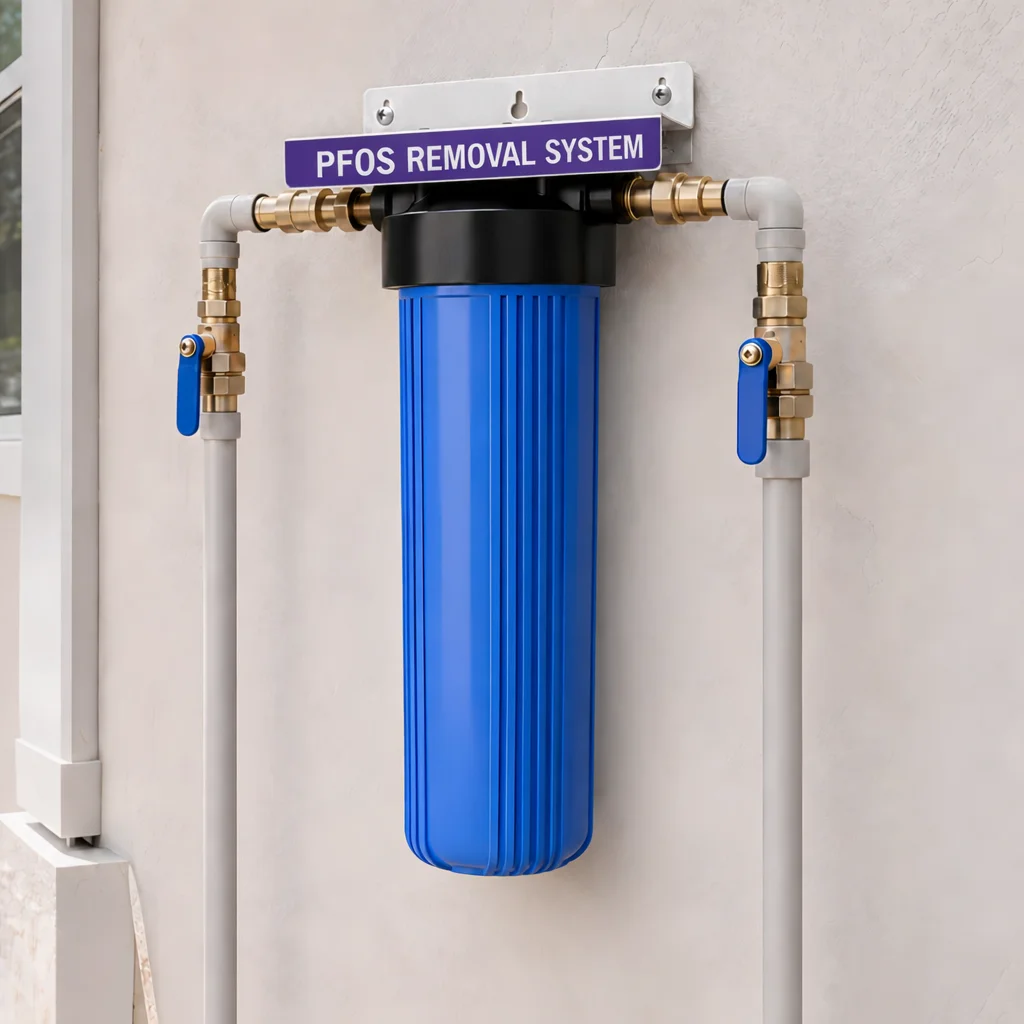
For whole-house reduction of PFOS, a high-capacity granular activated carbon (GAC) filter formulated for PFAS is the single most effective choice. GAC removes PFOS by adsorbing it onto a large internal surface as water flows through the media. PFOS is tougher to remove than common taste-and-odor compounds, so the carbon quality, bed depth and flow rate must be right. A properly sized whole-house GAC system can handle a Miami-Dade home’s needs without relying on multiple under-sink units.
A whole-house GAC unit installs on the main water line so every faucet and appliance in your Miami-Dade County home receives treated water; sizing should match your peak flow and hard municipal water conditions to avoid reduced performance. To maintain PFOS reduction, follow recommended media changeouts and service intervals. Mr. Pure Water can help select a carbon configuration suited for PFOS and for local plumbing, and periodic before-and-after tests provide added assurance the system continues to perform.
 305-404-8790
 info@bestwaterheater.com

