 Phone: 305-404-8790
 info@bestwaterheater.com
Phone: 305-404-8790
info@bestwaterheater.com
info@bestwaterheater.com
Phone: 305-404-8790
info@bestwaterheater.com
 Phone: 305-404-8790
info@bestwaterheater.com
Phone: 305-404-8790
info@bestwaterheater.com

Including filter system and high-performance PFOS filter.


PFOS is a member of the PFAS family that can persist in the environment for long periods, resisting natural breakdown. Because it lingers, small releases over time can lead to continued presence in a water source. Newport homeowners often first hear about PFOS from local water reports, neighborhood conversations, or a private home water test. If you have concerns, the sensible first step is to confirm what’s in your water and choose a treatment option that specifically targets PFAS.
PFOS won’t change the taste, smell, or appearance of your water the way chlorine or iron might, so it’s not something you can detect at the tap. That’s why it’s generally treated as a long-term exposure issue rather than an immediate nuisance. For Newport homes — where humid subtropical conditions and occasional cold snaps can affect plumbing, and harder groundwater may encourage scale — treating at the main service line makes sense so drinking, cooking, bathing, and laundry all benefit from the same protection.
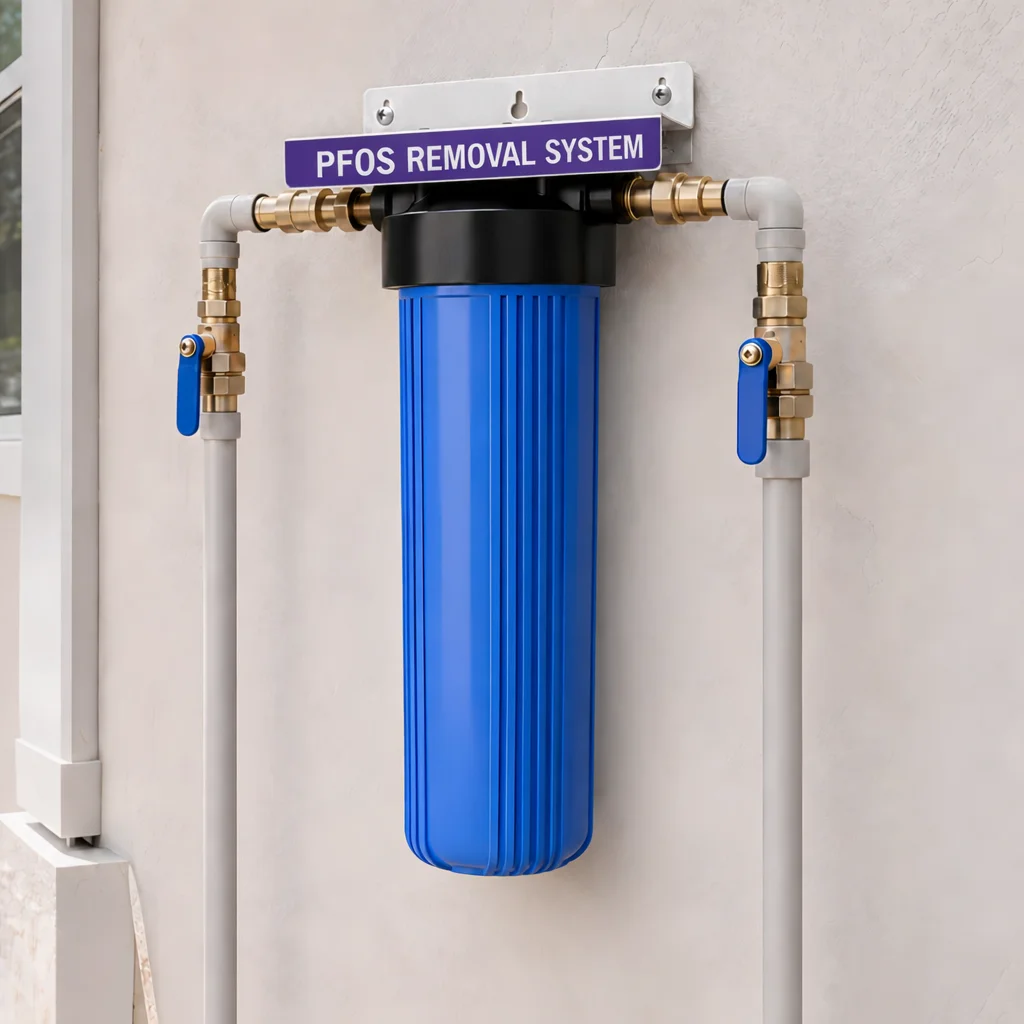
For whole-house reduction of PFOS, the single most effective option is a high-capacity granular activated carbon (GAC) system formulated for PFAS removal. GAC removes PFOS by adsorbing it onto the carbon’s large surface area as water flows through. Because PFOS can be tougher to remove than ordinary taste-and-odor contaminants, the quality of the media, the depth of the carbon bed, and maintaining proper flow rates are important. A correctly sized GAC whole-house system treats every fixture in the home without relying on multiple under-sink units.
A whole-house GAC filter is plumbed on the main line so all faucets and appliances receive treated water; sizing for peak flow and scheduled media changeouts keep PFOS reduction consistent. Mr. Pure Water can recommend a carbon configuration tailored to Newport homes — accounting for hard water and typical household demand — and work with your plumbing layout. If you want extra assurance, we also suggest periodic water testing before and after treatment to confirm the system’s ongoing performance.
 305-404-8790
 info@bestwaterheater.com

