 Phone: 954-208-3500
 info@bestwaterheater.com
Phone: 954-208-3500
info@bestwaterheater.com
info@bestwaterheater.com
Phone: 954-208-3500
info@bestwaterheater.com
 Phone: 954-208-3500
info@bestwaterheater.com
Phone: 954-208-3500
info@bestwaterheater.com

Including filter system and high-performance PFPeA filter.



PFPeA is one of the PFAS chemicals that can show up in drinking water and worry homeowners who want reliable, clean water. These compounds are persistent in the environment and don’t break down easily, which is why they can remain after being released. PFPeA usually has no taste, smell, or visible sign, so the only way to know if it’s in your supply is a water test. If results suggest elevated PFPeA, Harbor Beach residents often consider whole-home treatment to reduce PFAS throughout the house.
Because PFPeA typically occurs at very low levels, the goal is steady reduction rather than covering up tastes or odors. It can enter water from industrial and consumer-product sources and is commonly found alongside other PFAS. Many Harbor Beach homeowners opt for whole-house systems so every shower, faucet, and appliance is treated instead of relying on a single point-of-use filter. A single system also makes upkeep simpler by centralizing maintenance at one location.
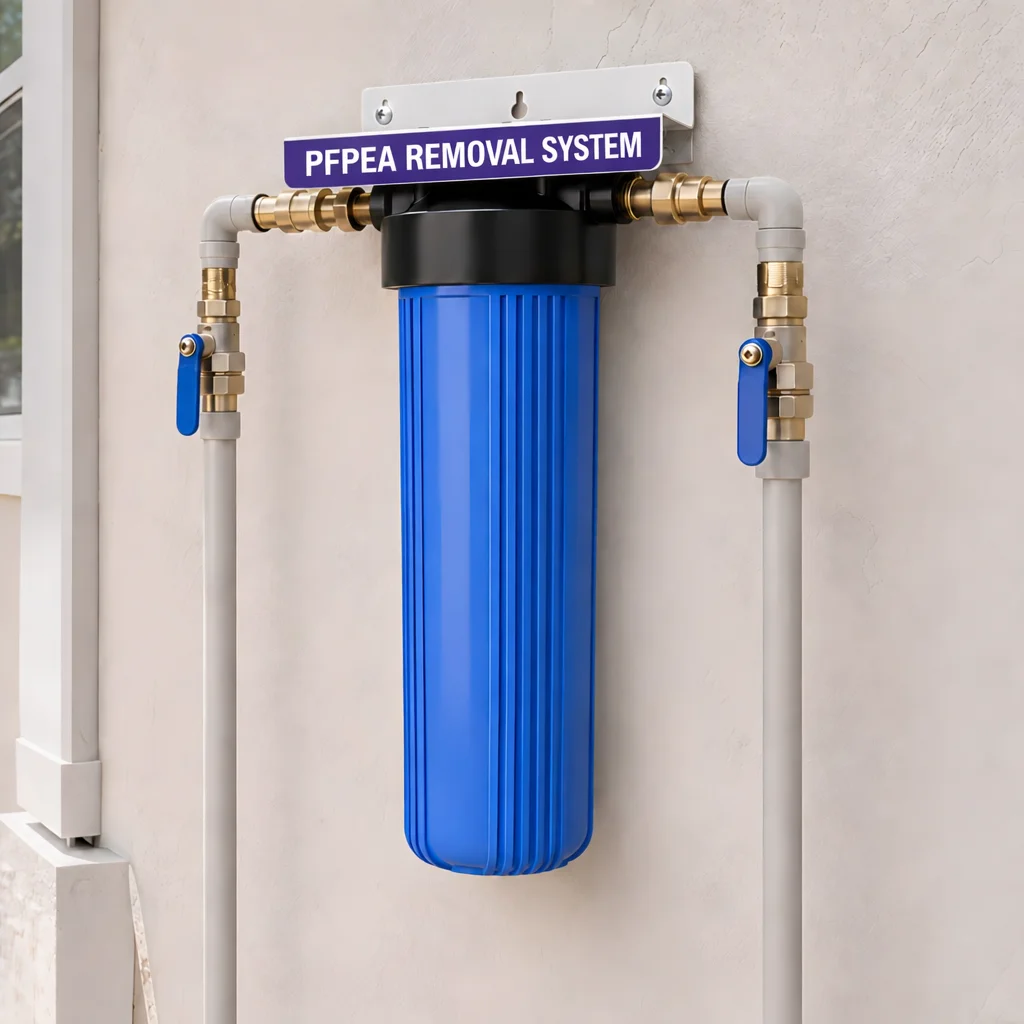
For whole-house PFPeA reduction, the best single-filter choice is a high-capacity granular activated carbon (GAC) tank built for PFAS adsorption. Activated carbon traps and holds many organic contaminants as water passes through its media. Because PFPeA is a shorter-chain PFAS, effective removal requires sufficient carbon volume, proper contact time, and the right flow rate for your home. When sized and installed correctly for Harbor Beach residences, a GAC tank can deliver everyday PFAS treatment without changing how you use water.
A whole-house GAC system is placed at the main water line so filtered water goes to bathrooms, laundry, and the kitchen. To keep PFPeA reduction reliable, the carbon media must be replaced on a schedule based on your household’s usage and system design rather than just waiting for taste changes. After installation, follow-up testing can confirm the system is performing as expected. Mr. Pure Water can help Harbor Beach homeowners pick the right carbon tank capacity and plan maintenance—keeping PFPeA treatment steady amid coastal conditions and salt-air corrosion risks.
 954-208-3500
 info@bestwaterheater.com

