 Phone: 772-290-5223
 info@bestwaterheater.com
Phone: 772-290-5223
info@bestwaterheater.com
info@bestwaterheater.com
Phone: 772-290-5223
info@bestwaterheater.com
 Phone: 772-290-5223
info@bestwaterheater.com
Phone: 772-290-5223
info@bestwaterheater.com

Including filter system and high-performance PFPeA filter.



PFPeA is one of the PFAS chemicals homeowners ask about when they want clearer, more reliable water. These substances resist breaking down, so once they enter the environment they can persist for a long time. Because PFPeA has no taste, smell, or color, the only way to know if it’s in your supply is with a proper water test — an important first step for Sebastian residents concerned about what’s coming from their taps.
PFPeA often appears at very low levels, so the focus for homeowners is steady reduction rather than covering a flavor or odor. It can reach water sources through industrial and consumer uses and is frequently found with other PFAS compounds. Many Sebastian households opt for whole-house treatment to protect showers, laundry, and appliances as well as kitchen sinks — a single system can simplify upkeep compared with multiple point-of-use units and help with issues common here like hard-water scaling and fixture corrosion from coastal humidity.
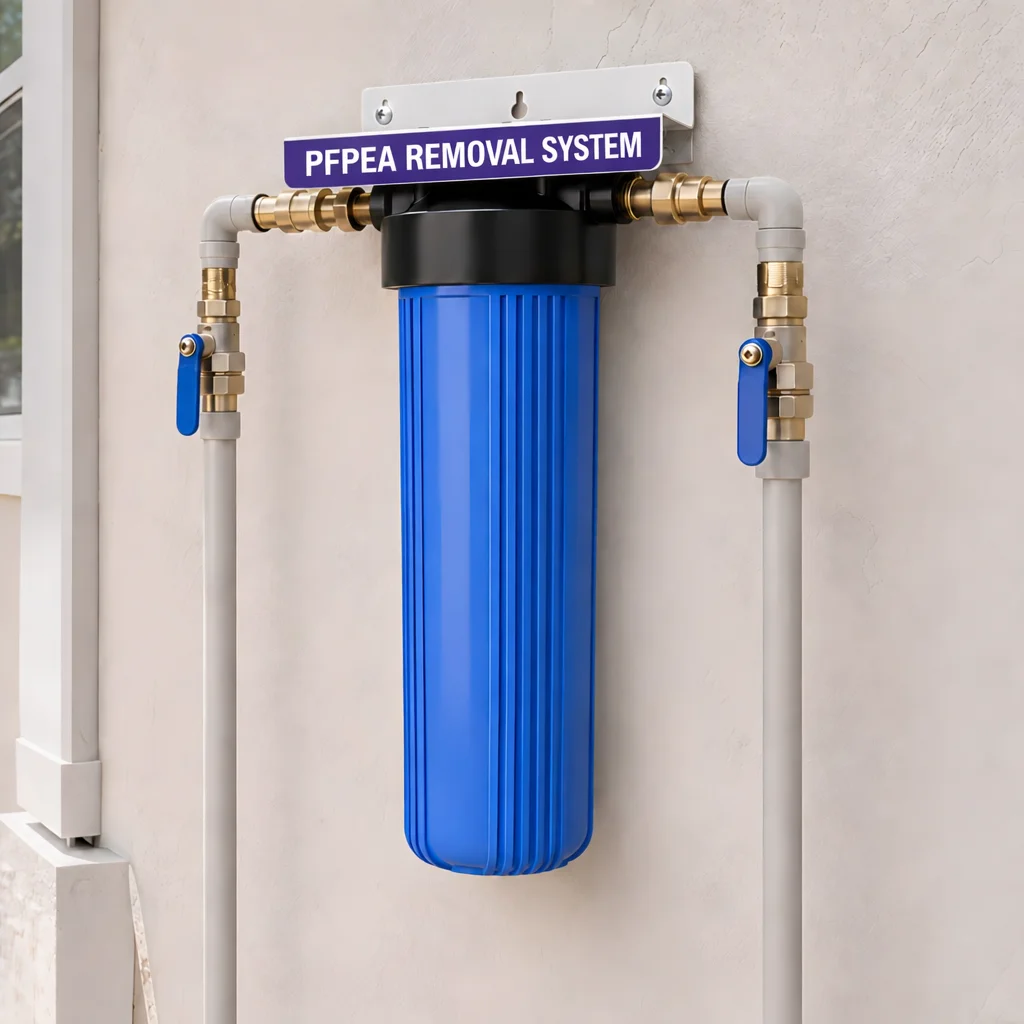
For treating PFPeA throughout the entire plumbing system, the most effective single-filter choice is a high-capacity granular activated carbon (GAC) tank made for PFAS adsorption. Activated carbon removes many organic contaminants by adsorbing them to its surface as water flows through. Because PFPeA is a shorter-chain PFAS, the system must have sufficient carbon volume, proper contact time, and an appropriate flow rate sized for your home in Sebastian to work well.
A whole-house GAC tank is mounted at the main line so filtered water serves bathrooms, laundry, and the kitchen; in Sebastian this also helps protect appliances from hard-water effects. To maintain PFPeA reduction you’ll replace the carbon media on a schedule based on usage and system design rather than waiting for taste changes. If initial testing shows PFAS concerns, post-install testing can confirm the system’s performance, and Mr. Pure Water can size and recommend the right carbon tank for your household needs.
 772-290-5223
 info@bestwaterheater.com

