 Phone: 305-404-8790
 info@bestwaterheater.com
Phone: 305-404-8790
info@bestwaterheater.com
info@bestwaterheater.com
Phone: 305-404-8790
info@bestwaterheater.com
 Phone: 305-404-8790
info@bestwaterheater.com
Phone: 305-404-8790
info@bestwaterheater.com

Including filter system and high-performance PFTA filter.



PFTA is a synthetic chemical that can persist in the environment and sometimes shows up in drinking water supplies. Kendall homeowners often first hear about it from a utility water quality report, local news, or private lab testing of a well or municipal connection. Because PFTA doesn’t necessarily change the smell, taste, or appearance of water, it can go unnoticed without testing—so if your report shows elevated PFTA, it makes sense to explore a reliable whole-home strategy to reduce it.
If PFTA is present, it won’t be limited to the kitchen: it can travel through plumbing to showers, washing machines, and every tap. Many families around Kendall—from The Hammocks and Kendale Lakes to West Kendall—choose a whole-house system so treated water is delivered throughout the home rather than relying on point-of-use devices. A correctly chosen whole-home filter can also help with other common water issues tied to Miami-Dade’s limestone aquifer, such as hard water effects, improving overall water quality for cooking, bathing, and appliances.
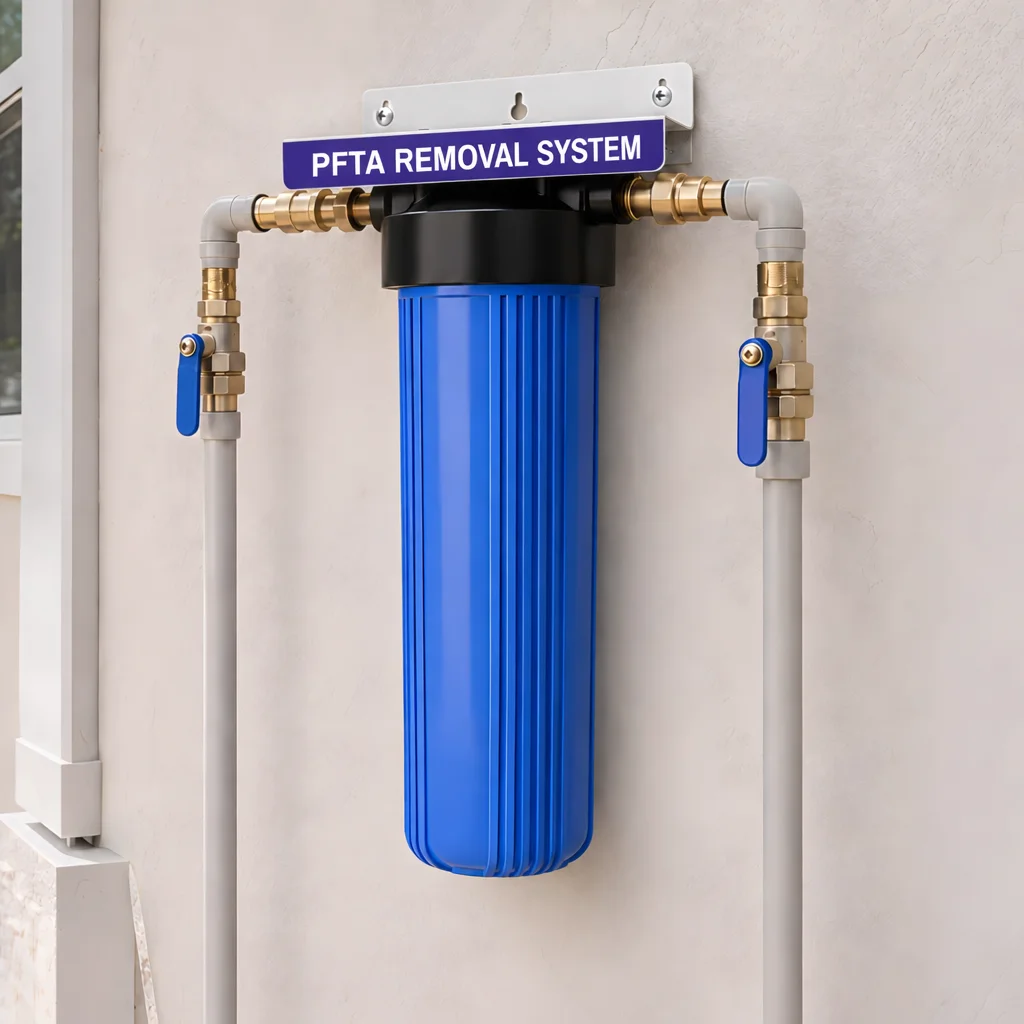
For removing PFTA in a whole-house setup, the best single-filter choice is a high-quality activated carbon system — commonly catalytic carbon or a dense carbon media that provides extended contact time. Carbon removes trace organic compounds by adsorption as water flows through the media, so factors like media type, flow rate, and tank size are important to performance. Installed on the main water line, a whole-house carbon filter treats water before it reaches fixtures, giving continuous protection without depending on pitchers or under-sink cartridges.
Because PFTA reduction relies on contact time, selecting a carbon tank sized for typical household flow is key to reliable treatment across showers, appliances, and drinking taps in Kendall homes. Mr. Pure Water designs whole-house carbon systems to handle continuous residential demand and to address hard-water concerns common to Miami-Dade County. Activated carbon media must be replaced on schedule to restore adsorption capacity, and pairing the system with periodic water testing is the best way to verify ongoing PFTA reduction.
 305-404-8790
 info@bestwaterheater.com

