 Phone: 321-400-9302
 info@bestwaterheater.com
Phone: 321-400-9302
info@bestwaterheater.com
info@bestwaterheater.com
Phone: 321-400-9302
info@bestwaterheater.com
 Phone: 321-400-9302
info@bestwaterheater.com
Phone: 321-400-9302
info@bestwaterheater.com

Including filter system and high-performance Phosphates filter.



Phosphates can end up in household water for several reasons — from treatment additives used to control corrosion to surface runoff that reaches a source. Commonly called phosphorus, this nutrient is everywhere in the environment; at low concentrations it may go unnoticed, but higher amounts can change water chemistry and cause practical headaches around the house. In Winter Park many homeowners begin investigating after seeing results on a water report, getting lab tests, or noticing recurring issues with plumbing, fixtures, or appliances.
Because phosphates affect how minerals and dissolved ions behave, they can sometimes play a role in scale dynamics while still presenting concerns when elevated. They often appear alongside other water quality factors, so it’s best to evaluate your complete water profile instead of focusing on one number. For Winter Park homes — where moderate hardness and Central Florida’s limestone-related minerals are common — understanding phosphate and related phosphorus compounds helps you make treatment choices that keep bathing, laundry, and cooking water consistent and comfortable.
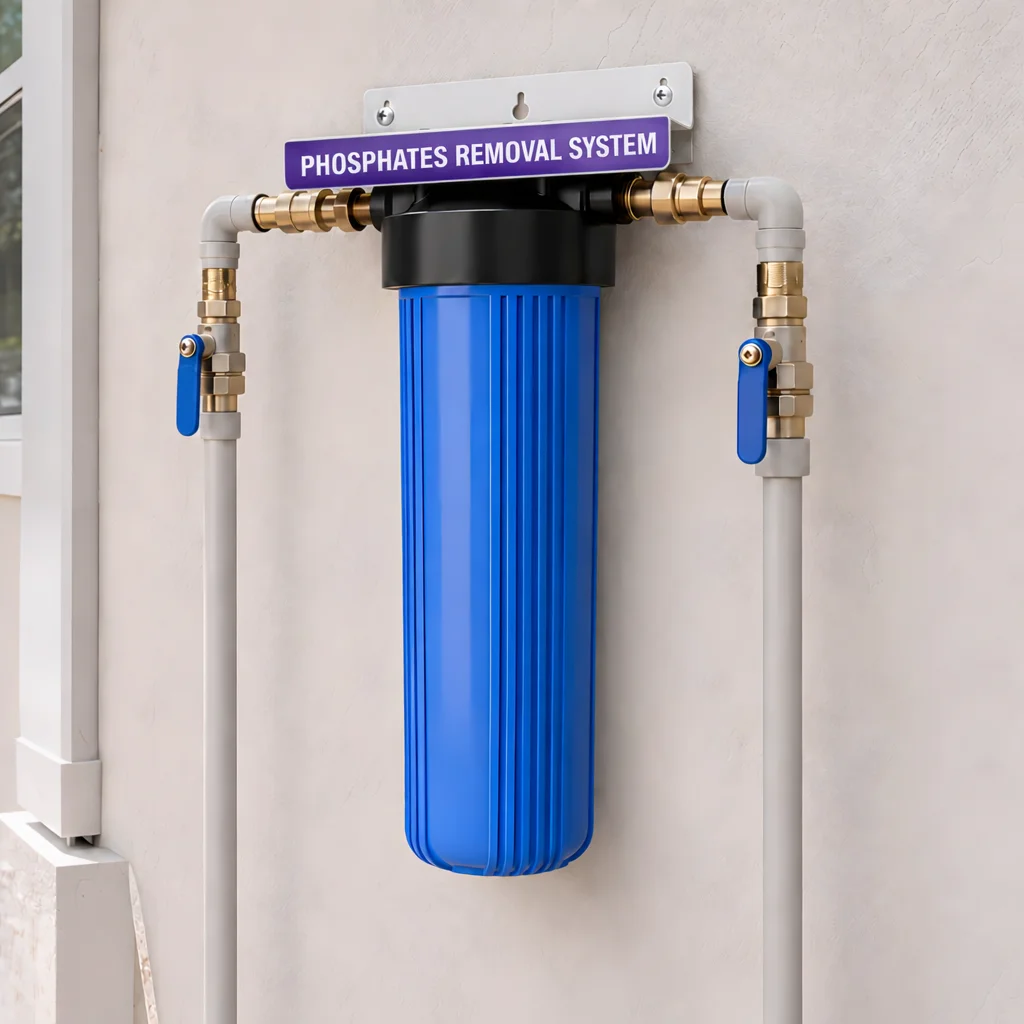
To reduce dissolved phosphates throughout a house, a single-point whole-house anion exchange filter is frequently the most reliable solution. These systems use a tailored resin that attracts and captures negatively charged ions such as phosphate as water flows through the tank. Unlike basic sediment or carbon filters, anion exchange targets the chemistry that holds phosphates in solution, making it a good match when you want phosphate reduction across every tap in your Winter Park home.
Anion exchange effectiveness depends on your water’s overall chemistry because other anions — sulfate, nitrate, chloride — can compete for the resin’s capacity. That’s why we begin with your water results from Winter Park, size the media and system for your household demand, and recommend a maintenance schedule to keep removal consistent. In many homes, adding a sediment prefilter and a carbon stage to remove chlorine helps protect the phosphate-removal resin and improves system longevity; Mr. Pure Water will help design a whole-house setup that targets phosphates while keeping everyday water use simple and reliable.
 321-400-9302
 info@bestwaterheater.com

