 Phone: 305-404-8790
 info@bestwaterheater.com
Phone: 305-404-8790
info@bestwaterheater.com
info@bestwaterheater.com
Phone: 305-404-8790
info@bestwaterheater.com
 Phone: 305-404-8790
info@bestwaterheater.com
Phone: 305-404-8790
info@bestwaterheater.com

Including filter system and high-performance Picloram filter.


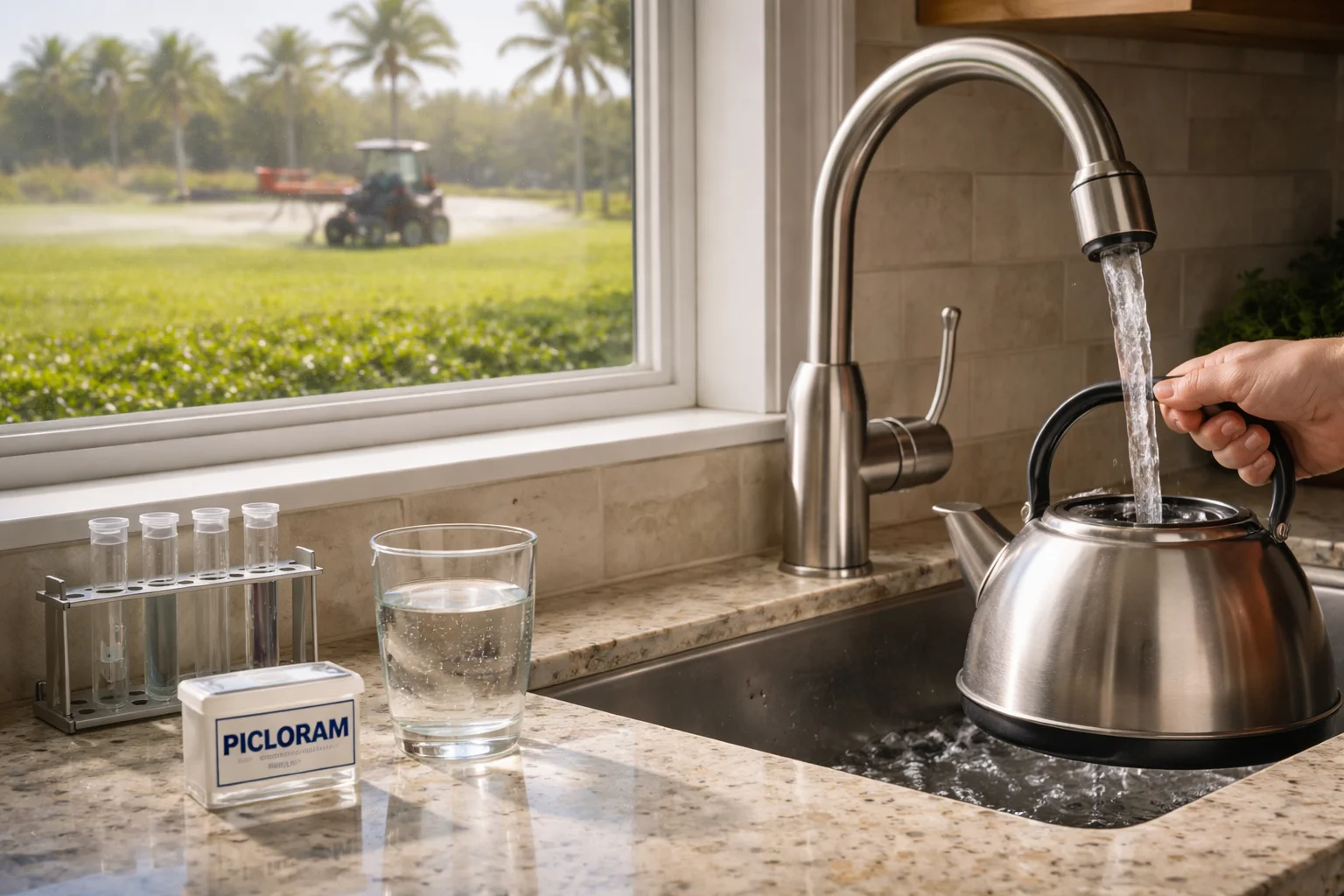
Picloram is a persistent herbicide that can enter water through runoff and movement in soil after weed control. In homes it won’t show up by sight, smell, or taste, so many Marathon homeowners only learn of it through testing. If you’re worried about unhealthy levels of picloram in your Marathon water, treat it as a trace contaminant issue that’s best addressed at the main water entry point to the house rather than at a single faucet.
Because picloram is formulated to remain effective in the environment, simple cartridge filters often struggle to remove it. That raises concerns about the water you use for cooking, drinking, showering, and washing produce—everyday uses that add up over time. Whether you’re on Marathon’s municipal supply or using a private well or cistern, especially in coastal areas exposed to salt air and storms, a whole-house system offers consistent protection across all taps instead of relying on a lone point-of-use filter.
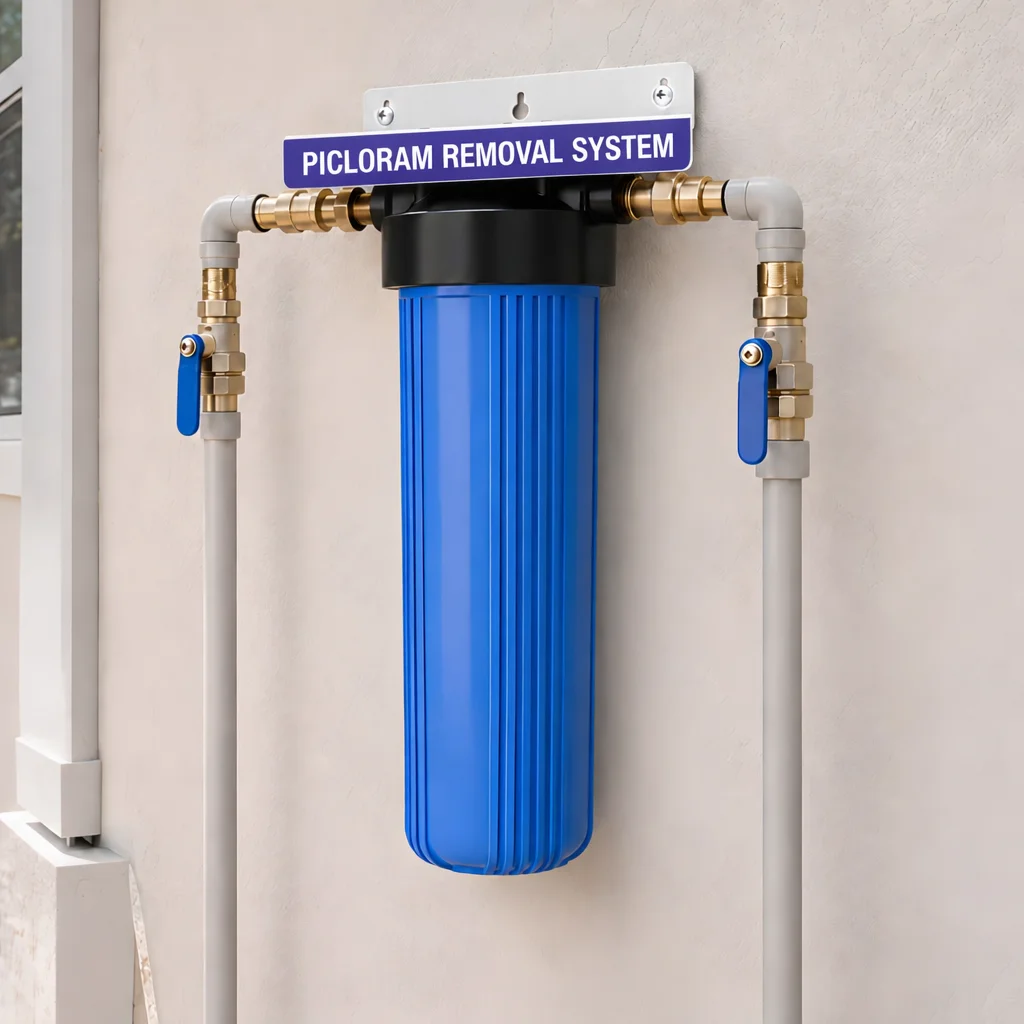
For whole-house reduction of picloram, the top single-filter choice is a high-capacity activated carbon system, typically using granular activated carbon (GAC). Carbon media is commonly used to remove organic chemicals, including certain herbicides, by adsorbing them as water passes through the bed. A correctly sized GAC tank gives longer contact time than small cartridges, improving removal, and it treats all the water in your Marathon home—not just the kitchen sink.
Because water chemistry and usage vary across Monroe County homes, pick the carbon media and tank size based on your specific test results and household flow needs. Picloram removal depends on concentration, water chemistry, and contact time, so system design matters as much as the media. Mr. Pure Water can size a whole-house GAC filtration system for your Marathon property—protecting showers, laundry, and daily use—and add prefiltration where needed to guard the carbon from sediment and maintain steady performance.
 305-404-8790
 info@bestwaterheater.com

