 Phone: 772-290-5223
 info@bestwaterheater.com
Phone: 772-290-5223
info@bestwaterheater.com
info@bestwaterheater.com
Phone: 772-290-5223
info@bestwaterheater.com
 Phone: 772-290-5223
info@bestwaterheater.com
Phone: 772-290-5223
info@bestwaterheater.com

Including filter system and high-performance Picloram filter.


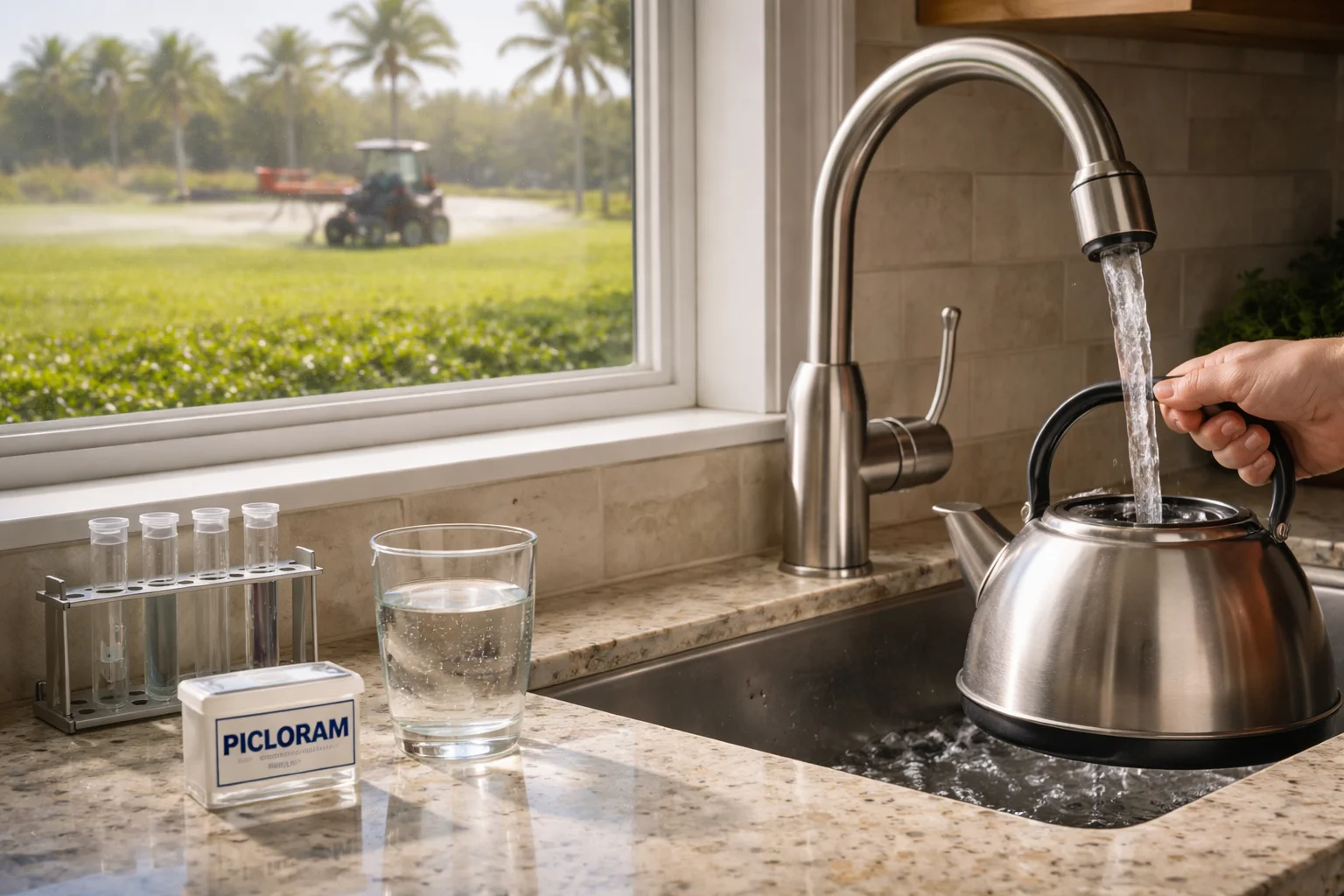
Picloram is a herbicide that can reach drinking water through runoff and movement in soils, especially near areas where weed control is used. In Port St. Lucie it won’t show up on sight, smell, or taste, so the only reliable way to find it is through testing. If you’re worried about unhealthy levels of picloram in your home supply, think of it as a trace contaminant issue rather than a nuisance like hard water; treatment is usually most effective where water first enters the house.
Because picloram is formulated to persist in the environment, simple cartridge filters often struggle to remove it completely. That can leave families in Port St. Lucie concerned about contaminants on the water used for drinking, cooking, bathing, and rinsing produce. Whether you’re on a private well or connected to a public system, added protection makes sense when tests show picloram or when nearby land use raises questions. A whole-house solution treats every faucet and appliance, avoiding reliance on a single point‑of‑use filter that’s easy to forget or bypass.
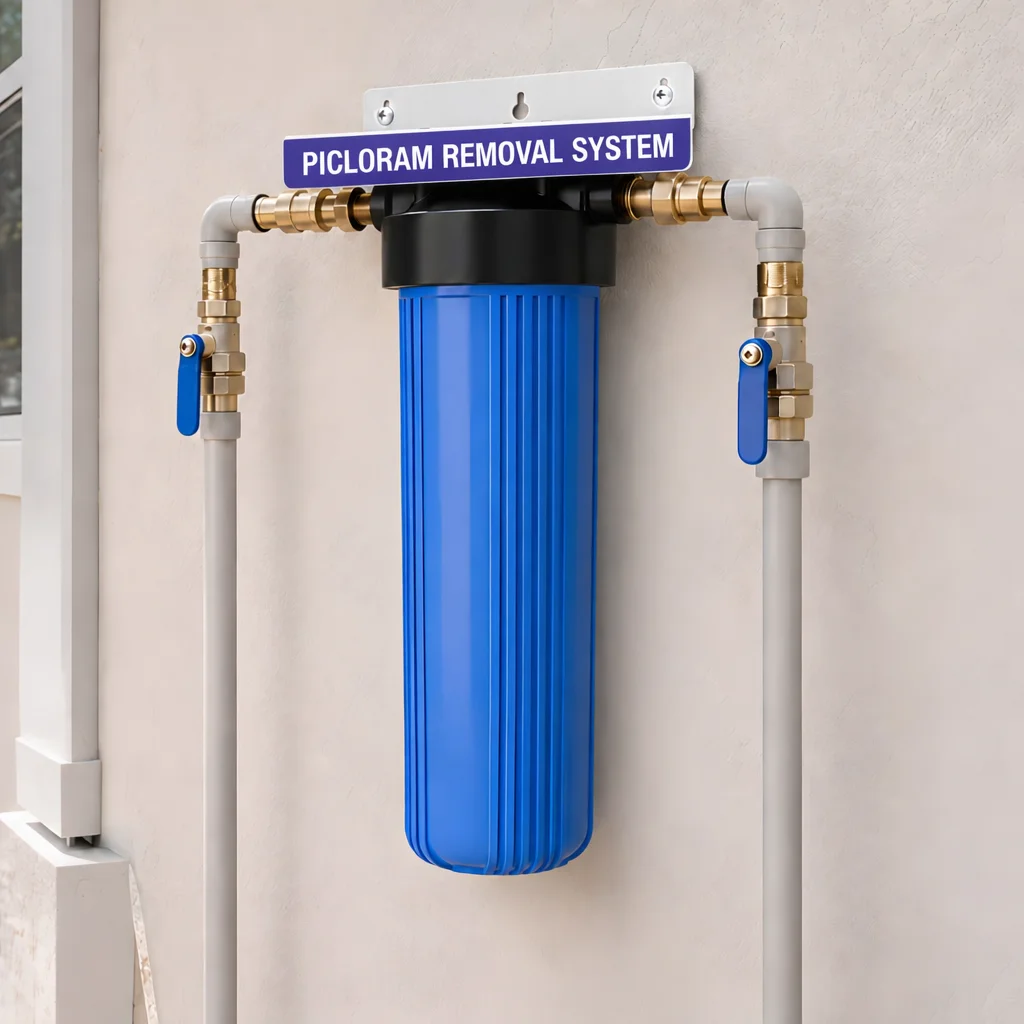
For whole-house reduction of picloram, the most effective single-filter choice is a high-capacity activated carbon system, typically using granular activated carbon (GAC). Carbon is commonly used to lower many organic compounds, including some herbicides, by adsorbing them as water passes through the media. In Port St. Lucie homes a properly sized whole-house carbon tank gives longer contact time than small cartridges, improving removal and protecting every tap in the house.
Selecting the right carbon media and tank size depends on your water test results and household flow needs, especially with South Florida’s hard water and possible mineral buildup concerns. Picloram removal is affected by concentration, water chemistry, and flow rate, so system design matters as much as the media. Mr. Pure Water can size and configure a whole-house carbon system for your Port St. Lucie home and add prefiltration when needed to protect the carbon from sediment and maintain steady performance.
 772-290-5223
 info@bestwaterheater.com

