 Phone: 561-300-5075
 info@bestwaterheater.com
Phone: 561-300-5075
info@bestwaterheater.com
info@bestwaterheater.com
Phone: 561-300-5075
info@bestwaterheater.com
 Phone: 561-300-5075
info@bestwaterheater.com
Phone: 561-300-5075
info@bestwaterheater.com

Including filter system and high-performance Picloram filter.


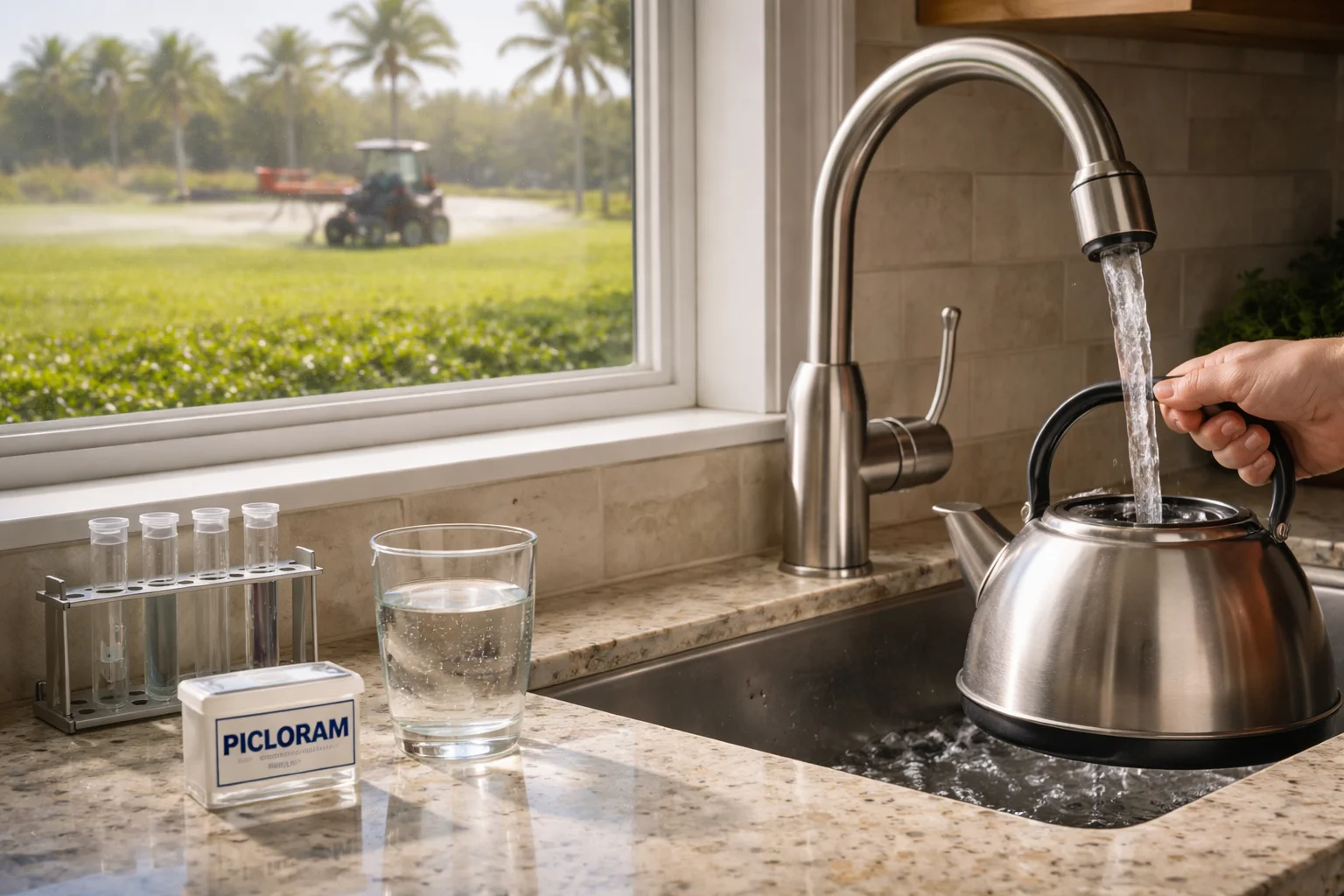
Picloram is a herbicide that can enter drinking water through runoff and movement in soil, especially near areas where weed control is practiced. It’s not detectable by sight, smell, or taste, so many homeowners only learn it’s present after laboratory testing. If you’re in South Bay and worried about unhealthy levels of picloram, treat it as a trace contaminant issue that’s best managed where water enters your house rather than by single-point fixes.
Because picloram is formulated to persist in the environment, simple cartridge filters often struggle to remove it effectively. That can leave families concerned about the water used for cooking, drinking, bathing, and rinsing produce around South Bay and the Lake Okeechobee shoreline. Whether you’re on a private well or connected to a public system in Palm Beach County, a whole-house solution gives steady protection at every faucet and avoids relying on one-off filters that are easy to forget or bypass.
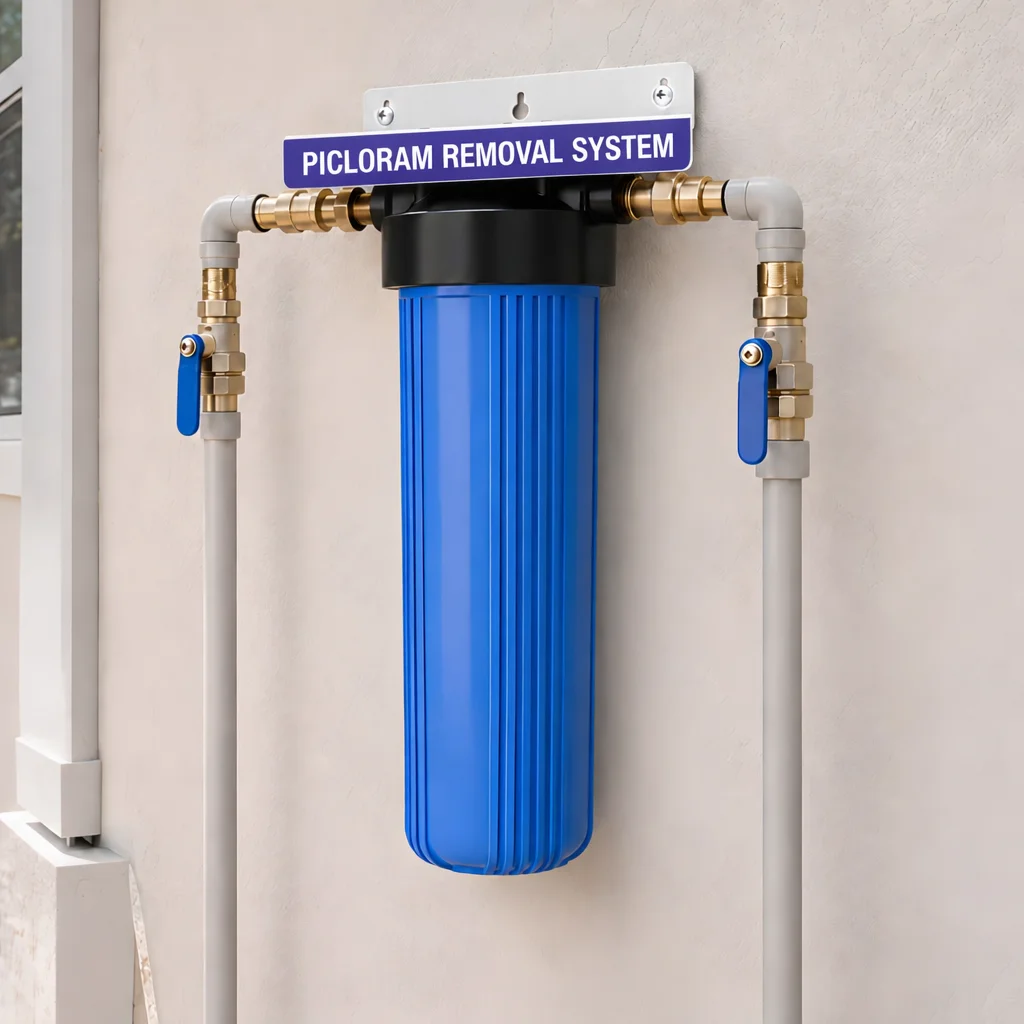
For whole-house reduction of picloram, a high-capacity activated carbon system—commonly a granular activated carbon (GAC) tank—is typically the best single-filter choice. Carbon media adsorbs many organic compounds, including some herbicides, as water moves through the media bed. Compared with small cartridge systems, a correctly sized whole-house carbon tank provides the extended contact time needed for better performance and treats all household water, from showers to laundry, not just the kitchen sink.
Every water supply in South Bay has its own chemistry—local water commonly tests hard, which can contribute to scale—so choosing the right carbon media and tank size should follow a water test and consideration of your household flow. Picloram removal depends on concentration, water chemistry, and contact time, so system design matters as much as the media itself. Mr. Pure Water can help size a whole-house carbon filtration system for reliable performance across your home, and provide prefiltration options to protect the carbon from sediment and preserve long-term effectiveness.
 561-300-5075
 info@bestwaterheater.com

