 Phone: 772-290-5223
 info@bestwaterheater.com
Phone: 772-290-5223
info@bestwaterheater.com
info@bestwaterheater.com
Phone: 772-290-5223
info@bestwaterheater.com
 Phone: 772-290-5223
info@bestwaterheater.com
Phone: 772-290-5223
info@bestwaterheater.com

Including filter system and high-performance Picloram filter.



Picloram is a herbicide that can wash into drinking supplies from runoff or move through soil, especially where vegetation control is practiced nearby. You won’t detect it by sight, smell, or taste, so routine testing is often the only way to know it’s present. If you’re a homeowner in Vero Lake Estates worried about unhealthy levels of picloram, think of it as a trace contaminant issue that’s best addressed at the point where water enters your house so every tap receives treatment.
Because picloram is formulated to persist in the environment, ordinary cartridge filters may not remove it effectively. That matters for families who use groundwater from the Floridan aquifer system around Vero Lake Estates, where hard water and everyday household uses—cooking, bathing, washing produce—mean you want reliable protection at all outlets. Whether you have a private well or are on a public system in Indian River County, a whole-house solution gives consistent treatment across the home instead of depending on a lone faucet filter that can be overlooked or bypassed.
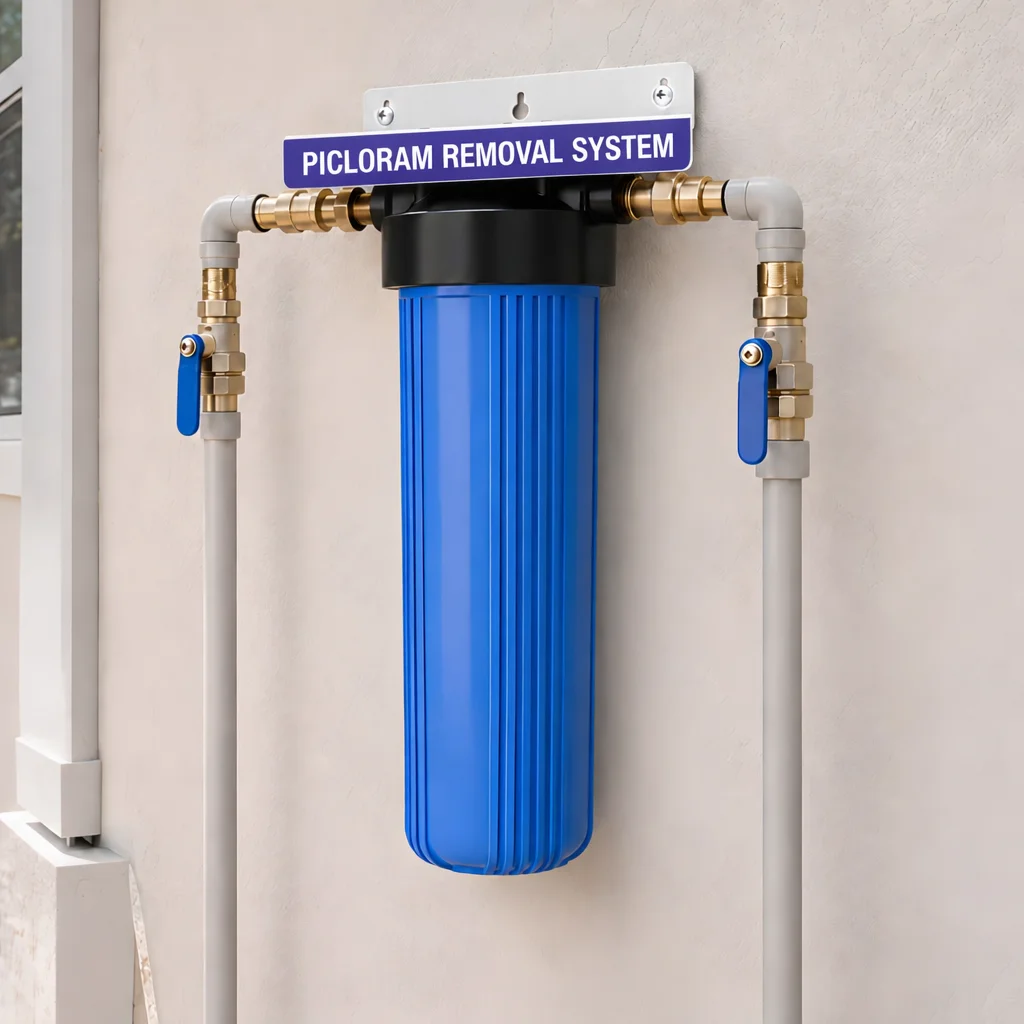
For whole-house reduction of picloram, the most effective single-filter choice is a high-capacity activated carbon system, typically using granular activated carbon (GAC). Carbon is commonly used to reduce many organic contaminants, including some herbicides, by adsorbing them as water passes through the media. A correctly sized whole-house carbon tank offers much longer contact time than small cartridge units, improving removal and treating all the water coming into your Vero Lake Estates home—not just the kitchen sink.
Because local water chemistry and flow rates vary, the ideal carbon media and tank size should be selected after testing your water and assessing household demand. Picloram removal depends on factors like concentration, hardness, and contact time, so system design is as important as the filter itself. Mr. Pure Water can help Vero Lake Estates homeowners match a whole-house carbon system to their needs and, when appropriate, add prefiltration to protect the carbon from sediment and maintain long-term performance.
 772-290-5223
 info@bestwaterheater.com

