 Phone: 561-300-5075
 info@bestwaterheater.com
Phone: 561-300-5075
info@bestwaterheater.com
info@bestwaterheater.com
Phone: 561-300-5075
info@bestwaterheater.com
 Phone: 561-300-5075
info@bestwaterheater.com
Phone: 561-300-5075
info@bestwaterheater.com

Including filter system and high-performance Potassium filter.



Potassium is a naturally occurring mineral that can enter household water as groundwater moves through soil and rock. While small amounts are common, higher potassium in drinking water may matter for people who must limit dietary potassium for health reasons. In Palm Beach County — including Westlake — municipal and private supplies pick up minerals from the local geology, and because potassium has little to no taste or smell at ordinary concentrations, testing is the only reliable way to know whether it’s present.
Many Westlake homeowners first learn about potassium when reviewing a water lab report or when monitoring mineral levels alongside sodium, chloride, and total dissolved solids. Potassium usually exists as dissolved ions, so it remains in solution instead of settling out — which means sediment filters won’t remove it and some common carbon filters may not be effective. If you want to manage potassium at the tap in your Westlake residence, the sensible first move is a comprehensive water test to determine concentration and chemical form.
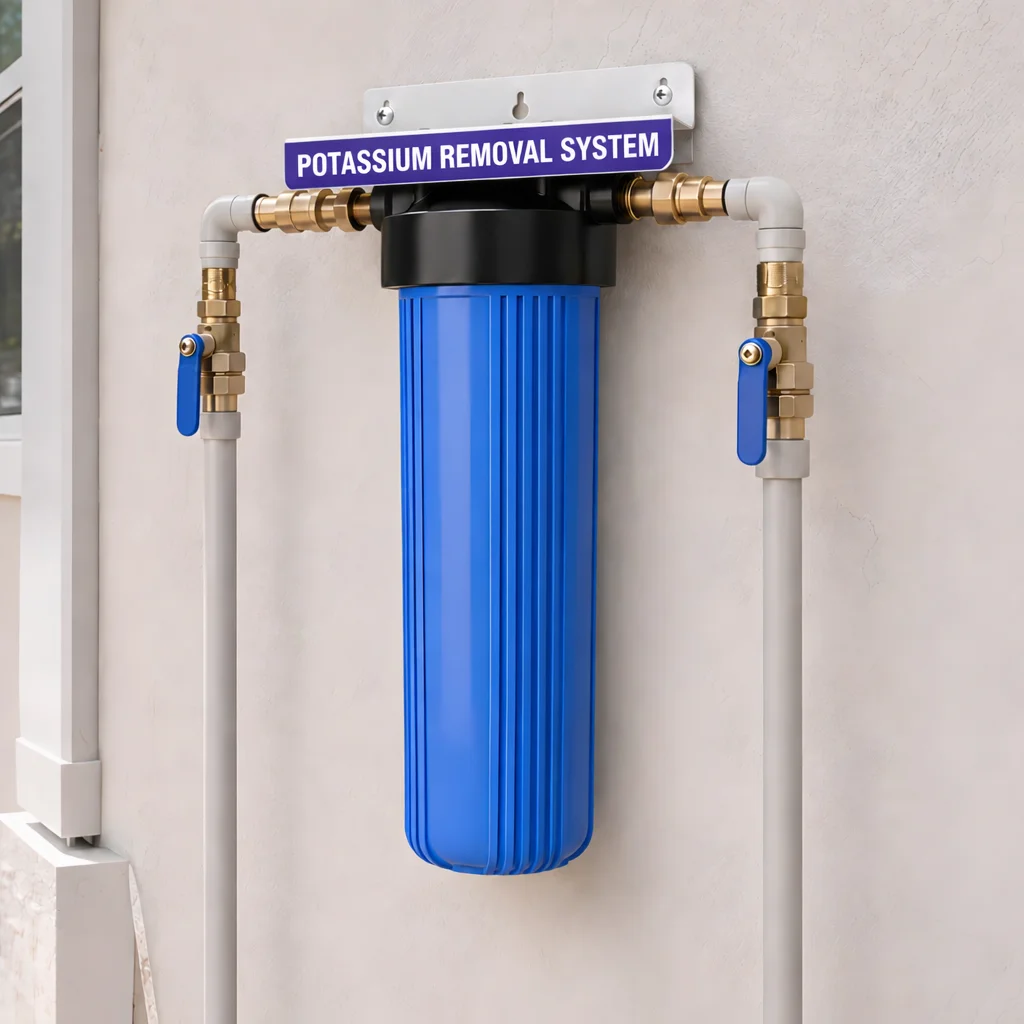
The most effective single-filter solution for reducing potassium throughout a home is a whole-house reverse osmosis system. RO uses a semipermeable membrane to reject dissolved ions like potassium rather than simply trapping particles, so it can meaningfully lower levels that other filters leave behind. Installed ahead of kitchen and bathroom fixtures, a properly sized whole-house RO gives consistent treated water from every tap in your Westlake home.
Whole-house reverse osmosis installations include prefiltration to shield the membrane from sediment and from disinfectants that can shorten membrane life. The RO membrane handles potassium reduction while the supporting stages preserve performance and reduce upkeep. Because RO produces a concentrate stream, the system needs a suitable drain connection and space for equipment — considerations that Mr. Pure Water can help you plan for based on your Westlake water test, daily water use, and the area’s typically hard municipal water.
 561-300-5075
 info@bestwaterheater.com

