 Phone: 850-772-1365
 info@bestwaterheater.com
Phone: 850-772-1365
info@bestwaterheater.com
info@bestwaterheater.com
Phone: 850-772-1365
info@bestwaterheater.com
 Phone: 850-772-1365
info@bestwaterheater.com
Phone: 850-772-1365
info@bestwaterheater.com

Including filter system and high-performance Rust filter.



Rust in home water often appears as orange-brown stains on sinks, tubs, and toilets or as gritty sediment in faucet screens. It usually comes from corroding pipes, an aging water heater, or iron picked up before water reaches your property. In plumbing systems rust — commonly iron oxide or loose iron particles — can settle out, discolor laundry, and leave a sandy residue that makes cleaning harder. Some Nash homeowners also report a metallic taste or brief cloudiness when settled sediment is disturbed.
Because rust consists of solid iron particles rather than dissolved iron, it tends to behave differently in household lines. You might notice more of it after a main line repair, pressure changes, or when water that’s sat in pipes suddenly moves through fixtures. Even if the particles aren’t a direct health risk, the staining and wear they cause around your Nash home can be aggravating — especially when the problem keeps coming back. The most practical plan is to stop those particles at the point of entry so they don’t travel to every tap and appliance.
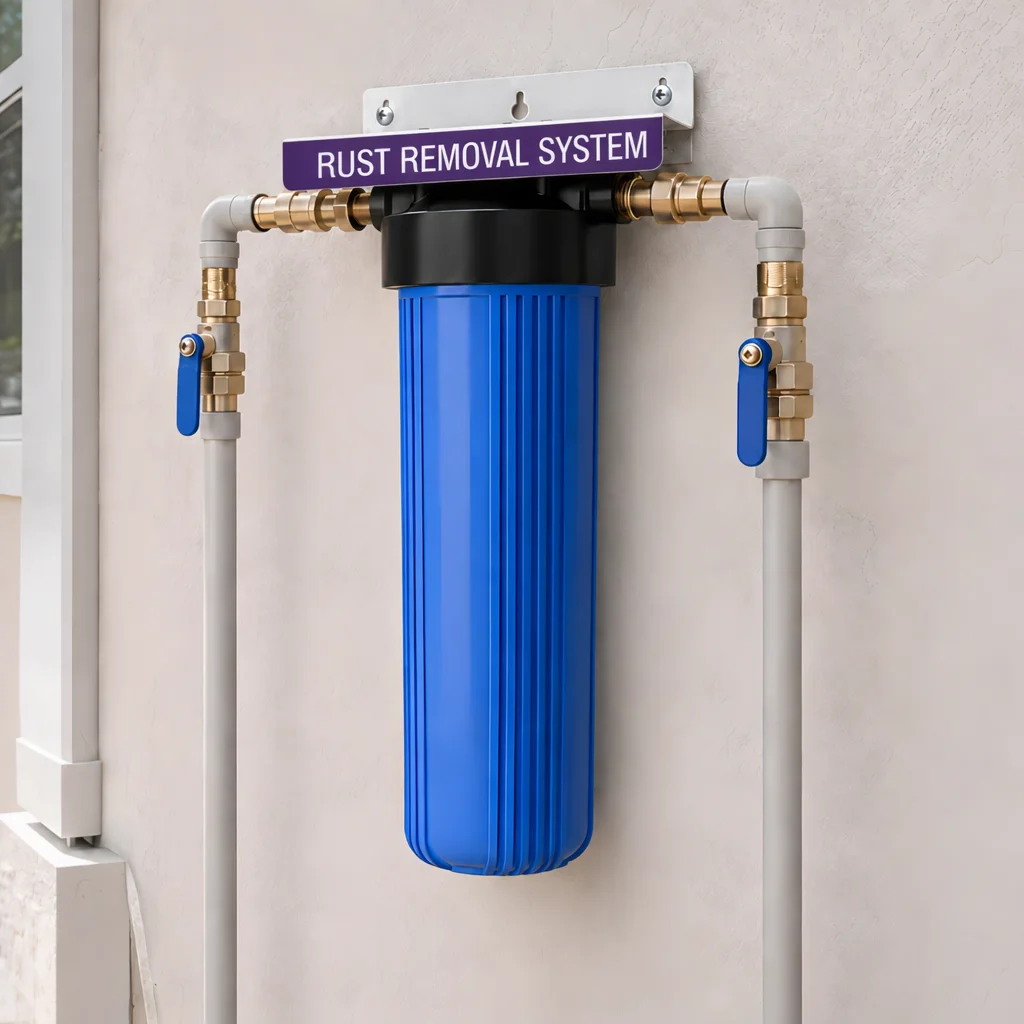
When the issue is rust in particle form, the single best option is a whole-house sediment filter with a fine micron rating. This type of filter physically captures iron oxide and other suspended solids before they reach plumbing fixtures, water-using appliances, and showerheads. Installed where water enters your Nash home, it helps cut down on orange staining, gritty buildup, and clogged aerators. It’s an effective, straightforward fix when the problem is loose iron rather than dissolved iron.
A depth-style sediment cartridge is often the preferred choice because it traps particles throughout the media instead of just on the surface, improving capacity and reducing how often it clogs. Picking the correct micron rating matters — too coarse and rust will pass, too fine and flow can be restricted as the filter fills. Mr. Pure Water in Nash can help you choose a whole-house sediment filter suited to your water and needs, install it at the entry point, and make routine maintenance simple; if testing also finds dissolved iron, additional treatment can be added without replacing the whole system.
 850-772-1365
 info@bestwaterheater.com

