 Phone: 407-214-2646
 info@bestwaterheater.com
Phone: 407-214-2646
info@bestwaterheater.com
info@bestwaterheater.com
Phone: 407-214-2646
info@bestwaterheater.com
 Phone: 407-214-2646
info@bestwaterheater.com
Phone: 407-214-2646
info@bestwaterheater.com

Including filter system and high-performance Rust filter.



In St Augustine South households, rust often appears as orange-brown stains in sinks, tubs and toilets and as gritty sediment in faucet screens. It usually comes from corrosion inside pipes, an aging water heater, or iron picked up before water reaches your house. As iron oxide and other particles settle out, laundry can discolor and routine cleaning becomes more difficult; some homeowners also report a faint metallic taste or cloudy water when sediment is disturbed.
Rust is composed of solid iron particles, so it behaves differently than dissolved iron. You might notice more after pressure changes, main line repairs, or when water that’s been sitting in pipes suddenly moves. While it’s often not a direct health threat, the staining and abrasive wear to fixtures and appliances can be a recurring headache—especially in our hard-water, humid coastal environment—so preventing particles from traveling through every tap is the best approach.
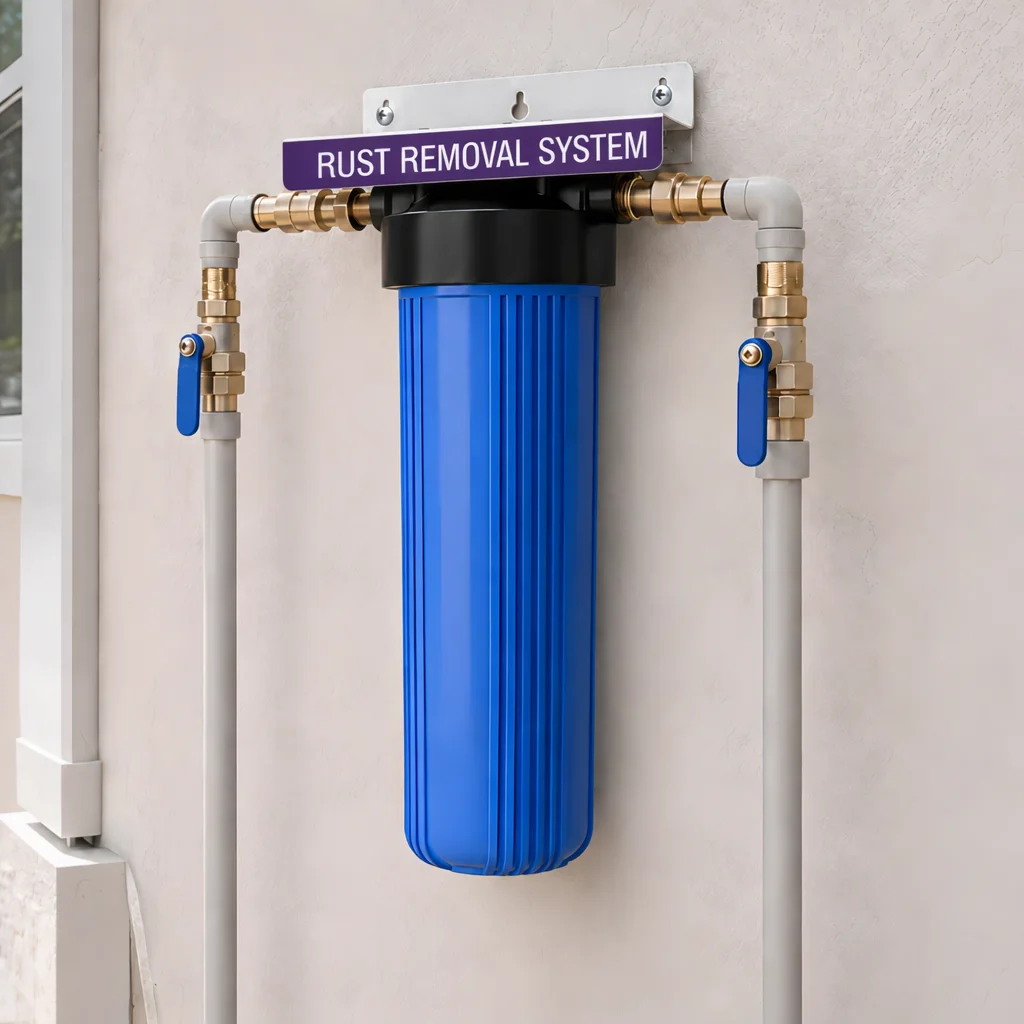
When rust is already in particle form, a whole-house sediment filter with a fine micron rating is the most effective single filter. Installed at the home’s main water entry, this filter physically captures iron oxide and other suspended solids before they reach plumbing, appliances and showerheads, helping cut down on orange staining, gritty buildup and clogged aerators in St Augustine South properties.
Depth-style sediment cartridges are commonly recommended because they trap particles throughout the media rather than only on the surface, which increases holding capacity and reduces frequent clogging. Picking the correct micron size is important: too large and rust will pass through, too small and the filter can restrict flow as it loads. Mr. Pure Water can assess your St Augustine South water—considering our hard water and coastal corrosion factors—and match a whole-house sediment filter to your needs, with straightforward maintenance and options to add treatment if dissolved iron shows up in testing.
 407-214-2646
 info@bestwaterheater.com

