 Phone: 305-404-8790
 info@bestwaterheater.com
Phone: 305-404-8790
info@bestwaterheater.com
info@bestwaterheater.com
Phone: 305-404-8790
info@bestwaterheater.com
 Phone: 305-404-8790
info@bestwaterheater.com
Phone: 305-404-8790
info@bestwaterheater.com

Including filter system and high-performance Rust filter.



In The Crossings, rust in household water usually appears as orange-brown stains in sinks, tubs, and toilets or gritty sediment in faucet screens. This material is iron oxide or iron particles that can come from corroding pipes, an aging water heater, or iron picked up before water reaches your property. When it settles it can discolor clothes and make cleaning harder, and some homeowners notice a metallic taste or cloudy water when sediment is stirred up.
Because rust is solid iron particles rather than dissolved iron, it tends to show up after disturbances like main-line work, pressure shifts, or when water sits in pipes and is then flushed. Even if it’s not a direct health risk, the staining and wear on fixtures — a frequent annoyance in Miami-Dade’s hard-water system — can be persistent. The best fix is to stop those particles at the point they enter your home so they don’t travel to every tap and appliance.
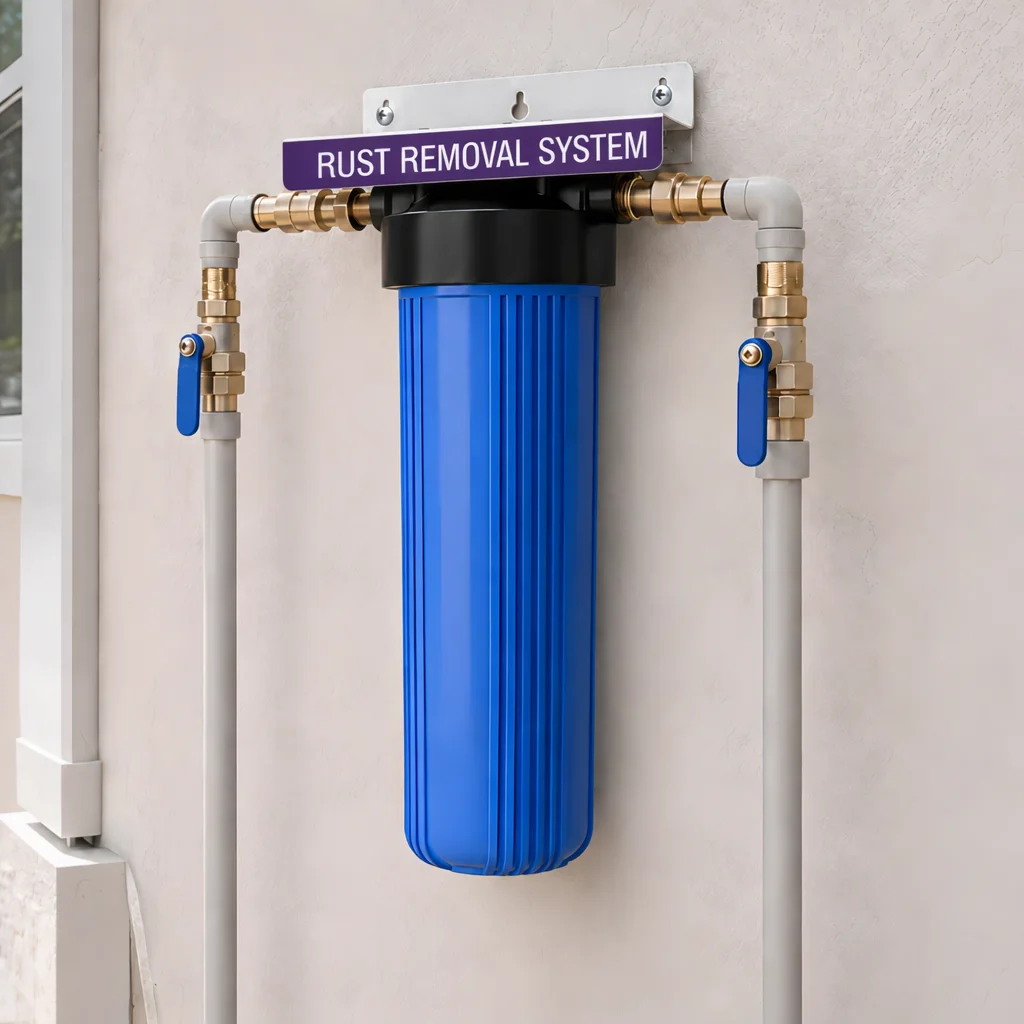
For rust already present as particles, the single most effective choice is a whole-house sediment filter with a fine micron rating. Installed where water enters your Crossings home, this filter physically captures iron oxide and other suspended solids before they reach plumbing, appliances, and showerheads, helping cut down on orange staining, gritty buildup, and clogged aerators.
A depth-style sediment cartridge is often the preferred option because it traps particles throughout the media, increasing capacity and reducing how often it clogs. Picking the right micron size is important: too large and rust slips through; too small and flow can be restricted as the cartridge loads. Mr. Pure Water can evaluate The Crossings’ hard, mineral-rich supply and recommend the right whole-house sediment filter and maintenance plan, and add extra treatment later if testing indicates dissolved iron is also present.
 305-404-8790
 info@bestwaterheater.com

