 Phone: 561-300-5075
 info@bestwaterheater.com
Phone: 561-300-5075
info@bestwaterheater.com
info@bestwaterheater.com
Phone: 561-300-5075
info@bestwaterheater.com
 Phone: 561-300-5075
info@bestwaterheater.com
Phone: 561-300-5075
info@bestwaterheater.com

Including filter system and high-performance Salty Taste filter.



A salty taste in tap water can make drinking water and everyday cooking less enjoyable, and it often leaves you wondering what is getting into your supply. This flavor is commonly linked to elevated dissolved minerals, such as sodium and chloride, that don’t boil off or dissipate over time. It can also show up when water softeners are overfeeding salt, when brine systems are misadjusted, or when the plumbing layout causes softened water to feed more fixtures than intended. Because taste is personal, even moderate mineral changes can be noticeable at the kitchen sink.
Salinity can vary from home to home based on the source water and how water is treated before it reaches your taps. In some cases, the salty note is strongest in hot water, which can point to the water heater concentrating minerals as water is heated and evaporates slightly. It may also be accompanied by a slick or mineral feel, faster spotting on glassware, or a persistent aftertaste in coffee and tea. The best first step is confirming whether the taste is coming from the incoming supply or from in-home equipment like a softener or filtration cartridge.
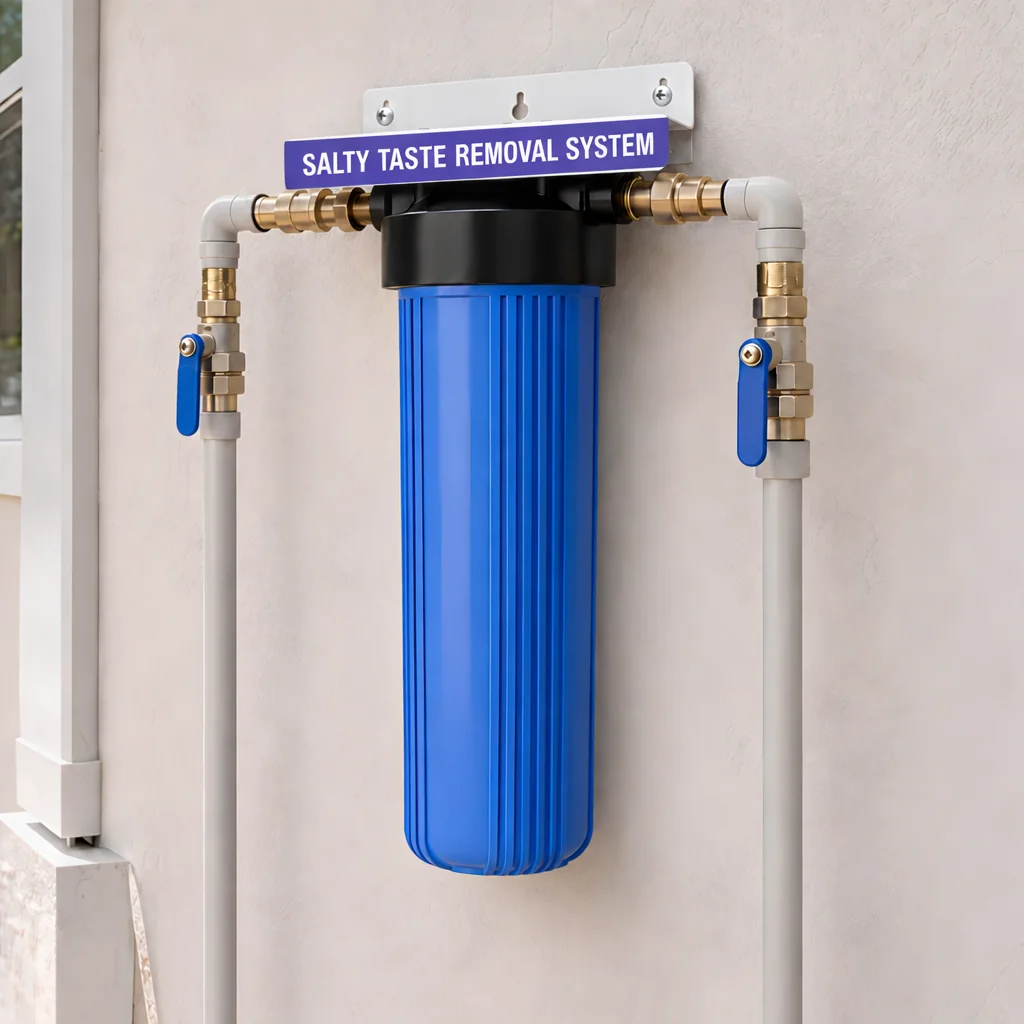
When the goal is to remove a salty taste caused by dissolved salts, the most effective single filter is reverse osmosis. Unlike standard carbon filtration, which is great for chlorine and many odors but not dissolved sodium and chloride, reverse osmosis uses a semi-permeable membrane to reduce dissolved minerals that contribute to salinity. Installed as a whole-house system, it treats water at the point of entry so the improved taste carries through to drinking, cooking, bathing, and appliances. It’s a strong fit when the problem is true mineral salt in the water rather than a temporary odor or disinfectant flavor.
A whole-house reverse osmosis setup is typically paired with prefiltration to protect the membrane and keep performance steady over time. Sediment prefilters help prevent fouling from sand, silt, and rust particles, while carbon prefilters can reduce chlorine that may damage certain membrane types. Because reverse osmosis produces a concentrate stream, it also requires proper plumbing for discharge and may be designed with storage and re-pressurization to maintain good flow throughout the home. Mr. Pure Water can help confirm the cause of the salty taste and match your home to the right whole-house reverse osmosis configuration.
 561-300-5075
 info@bestwaterheater.com

