 Phone: 407-214-2646
 info@bestwaterheater.com
Phone: 407-214-2646
info@bestwaterheater.com
info@bestwaterheater.com
Phone: 407-214-2646
info@bestwaterheater.com
 Phone: 407-214-2646
info@bestwaterheater.com
Phone: 407-214-2646
info@bestwaterheater.com

Including filter system and high-performance Sediment filter.



Sediment in household water shows up as the gritty, cloudy material you might notice in a glass, settling in a tub, or snagged in a faucet screen. These suspended solids—sand, silt, clay, and similar particles—can be stirred up from source water, older mains, or work in the area. Around Bay Lake and the greater Orange County resort area, homeowners often spot it first as scratchy bits, dull-looking water, or extra residue on fixtures, and it’s more of a nuisance than just "dirt" when it shortens appliance life and clogs screens.
Even if you don’t see sediment constantly, it can accumulate inside pipes and equipment over time. That buildup restricts flow at showerheads and aerators, leaves deposits in water heaters and toilet tanks, and can foul downstream filters and media. In Bay Lake’s humid subtropical setting—where homes rely on municipal supply and equipment corrosion or scaling are relevant—recurring grit, cloudiness, or brownish particles are a clear sign to add particle control at the point of entry.
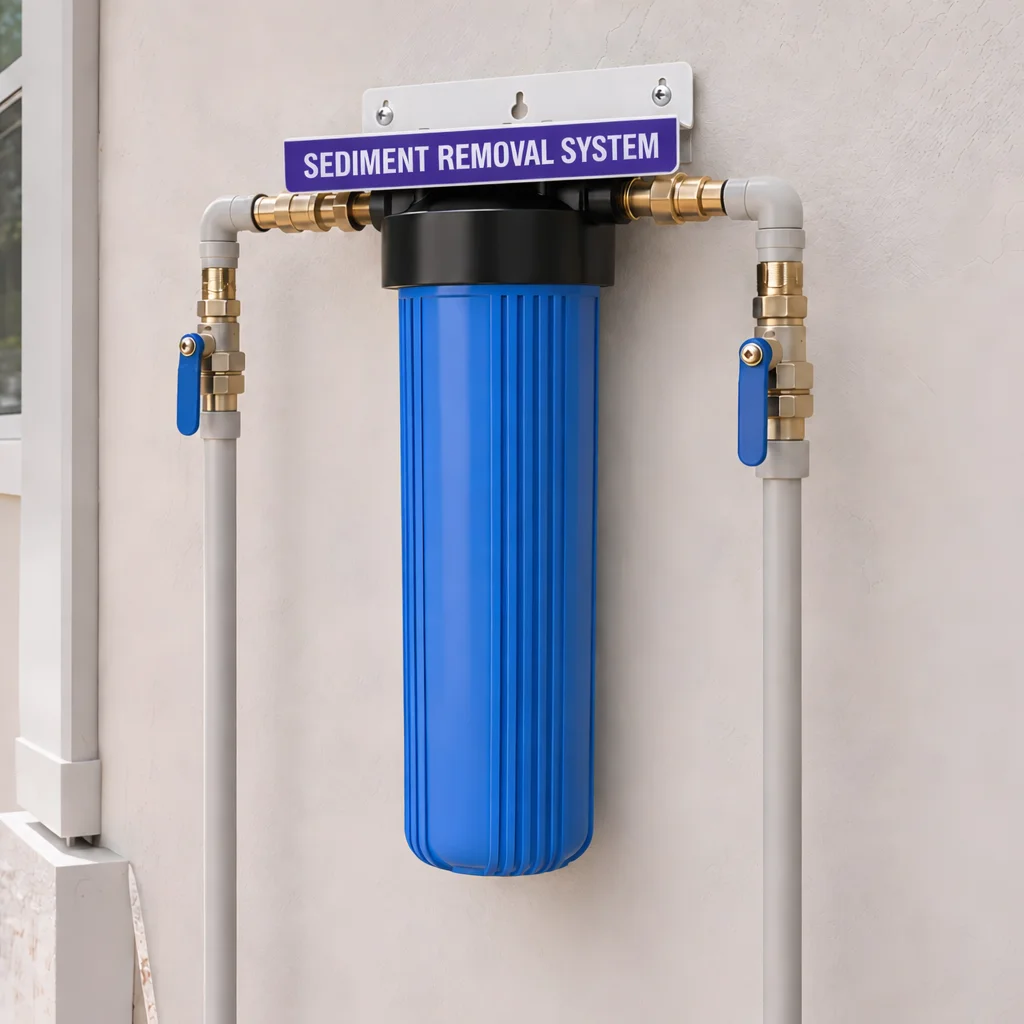
For whole-home protection in Bay Lake, a pleated whole-house sediment filter is usually the single most practical choice. The pleated element gives a large capture surface for suspended solids like sand, silt, clay, and other gritty particles so it resists clogging longer than flat cartridges. Mounted on the main water line, it intercepts abrasive material before it reaches plumbing, fixtures, and appliances—helping keep showers, dishwashers, and irrigation systems running cleaner and reducing sediment-related wear and maintenance.
Pleated whole-house filters are chosen with a micron rating that matches the particles you’re seeing—from coarse grit to fine haze—so you get clear water without sacrificing flow for showers, laundry, or irrigation. Because a point-of-entry pleated filter traps sediment first, it also preserves downstream carbon or specialty media from premature fouling. Mr. Pure Water can assess your Bay Lake home’s water use, moderate hardness, and likely particle load to recommend the correct micron size and housing for reliable, long-lasting protection.
 407-214-2646
 info@bestwaterheater.com

