 Phone: 850-772-1365
 info@bestwaterheater.com
Phone: 850-772-1365
info@bestwaterheater.com
info@bestwaterheater.com
Phone: 850-772-1365
info@bestwaterheater.com
 Phone: 850-772-1365
info@bestwaterheater.com
Phone: 850-772-1365
info@bestwaterheater.com

Including filter system and high-performance Sediment filter.



Sediment in household water shows up as the gritty or cloudy material you might find in a glass, pooling in a bathtub, or clogging faucet screens. It commonly consists of sand, silt, and clay carried in from source water, disturbed mains, or nearby work, and those suspended solids can be more than just an eyesore. In Floridatown homes, residents often notice sediment first as scratchy particles in water, dull-looking flow, or premature wear on fixtures and finishes.
Even when you don’t see it, sediment can accumulate inside pipes and appliances over months and years. That buildup can clog aerators, reduce shower pressure, leave residue in toilet tanks and water heaters, and generally shorten equipment life. Sediment also makes other treatments work harder by fouling downstream filters and media. If you’re spotting recurring grit, cloudiness, or small brownish particles in a Floridatown home, it’s a sign to install point-of-entry particle control.
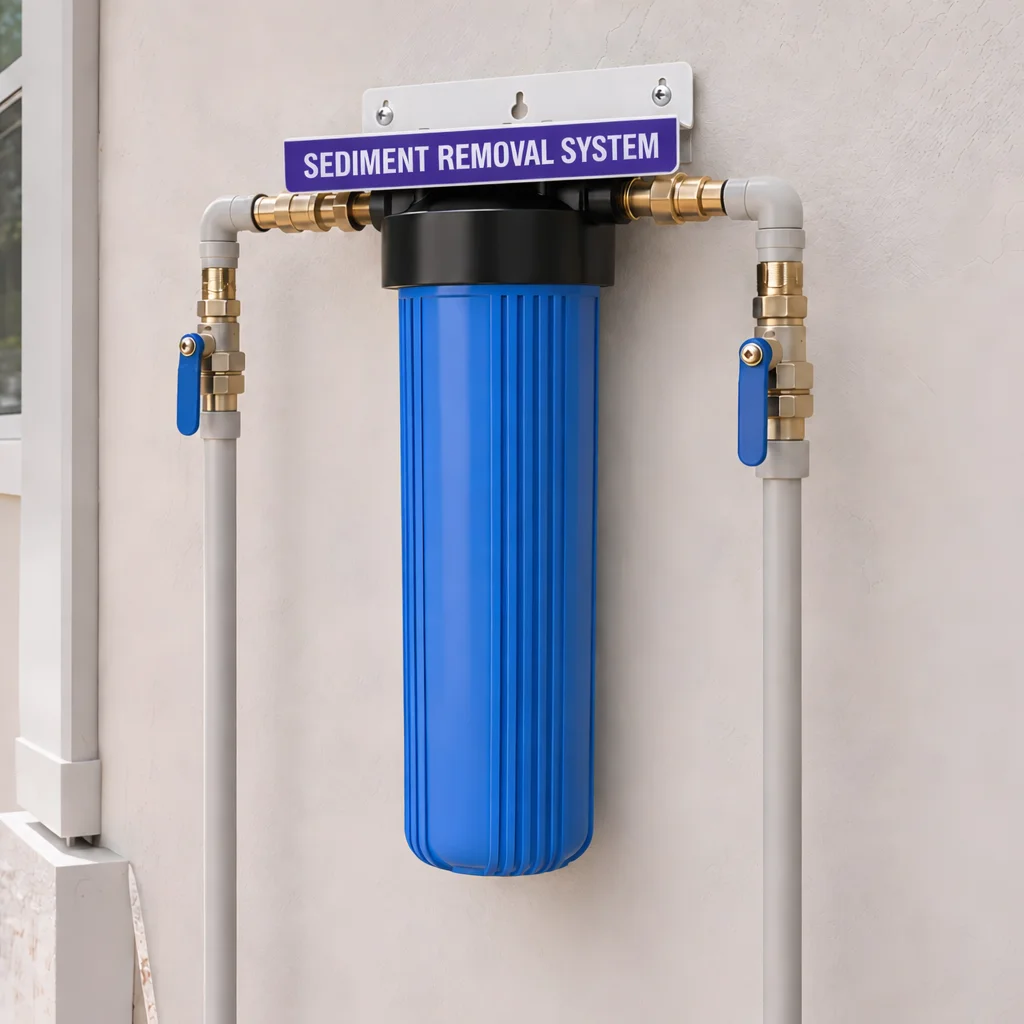
For whole-home control of sediment, many Floridatown homeowners choose a pleated whole-house sediment filter as the single most practical option. The pleated element gives a large capture area for suspended solids such as sand, silt, clay, and other gritty material, so it resists clogging longer than flat cartridges. Installed on your main water line, it intercepts abrasive particles before they reach plumbing, fixtures, and appliances—helping keep water clearer at every tap and reducing sediment-related wear and maintenance throughout the house.
Pleated whole-house filters are typically chosen by micron rating to match the particle size you need removed—from coarse grit to fine haze—balancing water clarity with flow for showers, laundry, and irrigation. Because the filter treats water at the point of entry, it also shields downstream carbon or specialty media from coating and overload. Mr. Pure Water in Floridatown can help you select the correct pleated filter micron rating and housing size to suit your home’s water usage and likely particle load.
 850-772-1365
 info@bestwaterheater.com

