 Phone: 321-400-9302
 info@bestwaterheater.com
Phone: 321-400-9302
info@bestwaterheater.com
info@bestwaterheater.com
Phone: 321-400-9302
info@bestwaterheater.com
 Phone: 321-400-9302
info@bestwaterheater.com
Phone: 321-400-9302
info@bestwaterheater.com

Including filter system and high-performance Silica filter.


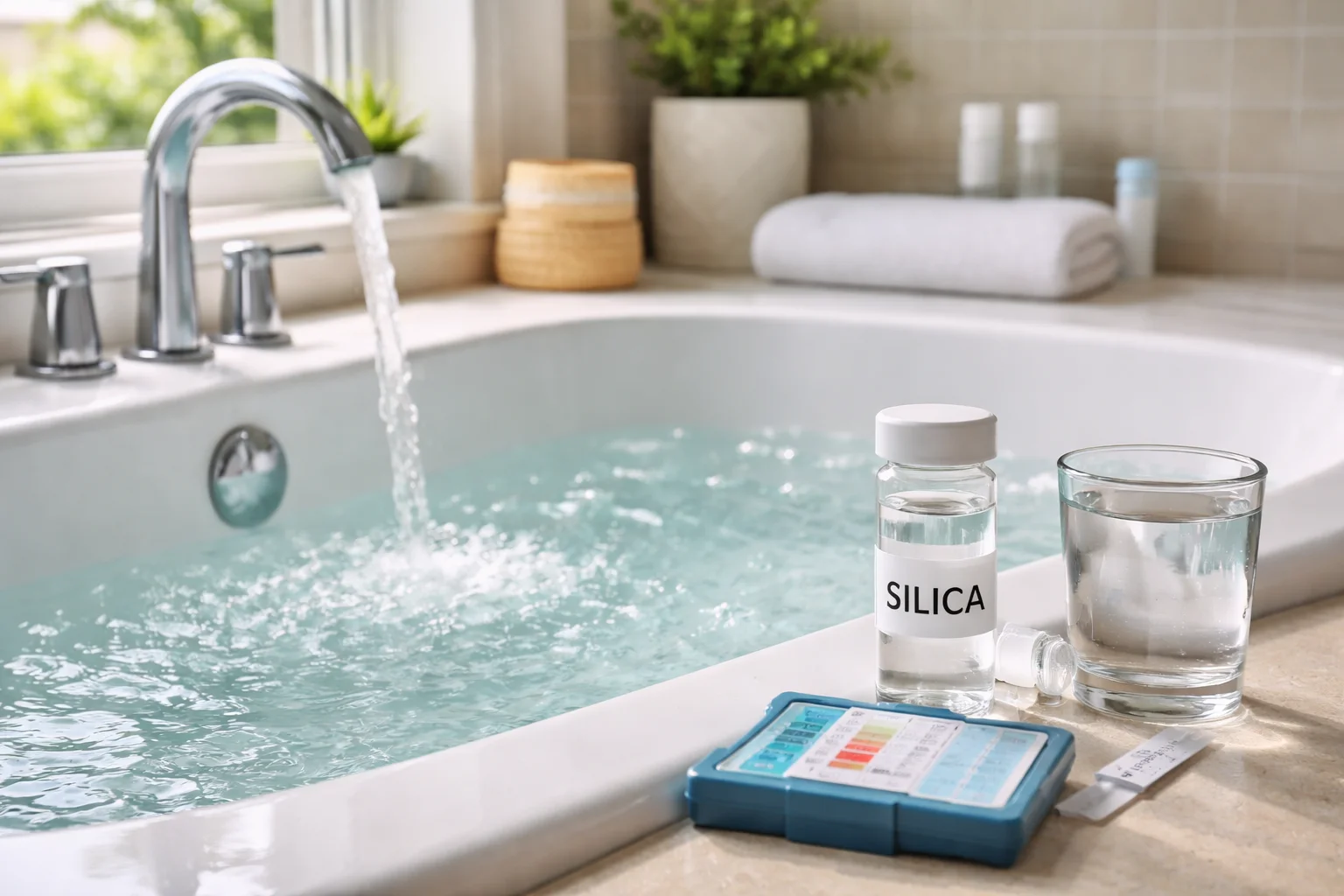
Silica is a natural mineral that can appear in tap water as dissolved silica or as silicates. It doesn’t always change flavor, but it can cause persistent nuisances around the house. When Rockwell homeowners heat water or let it evaporate, silica often leaves behind stubborn deposits that are tougher to remove than normal mineral scale, producing more spotting on glass, buildup on fixtures, and decreased appliance performance where hot water is used.
Because silica frequently stays dissolved and chemically stable, it can be harder to treat with the same systems that address common hardness minerals. Standard water softeners target calcium and magnesium, not dissolved silica, so they don’t always solve the issue. Some silica can also occur as very fine particles that act differently than dissolved silicates, so homeowners in Rockwell may still see deposits even when other aspects of their water feel well managed.
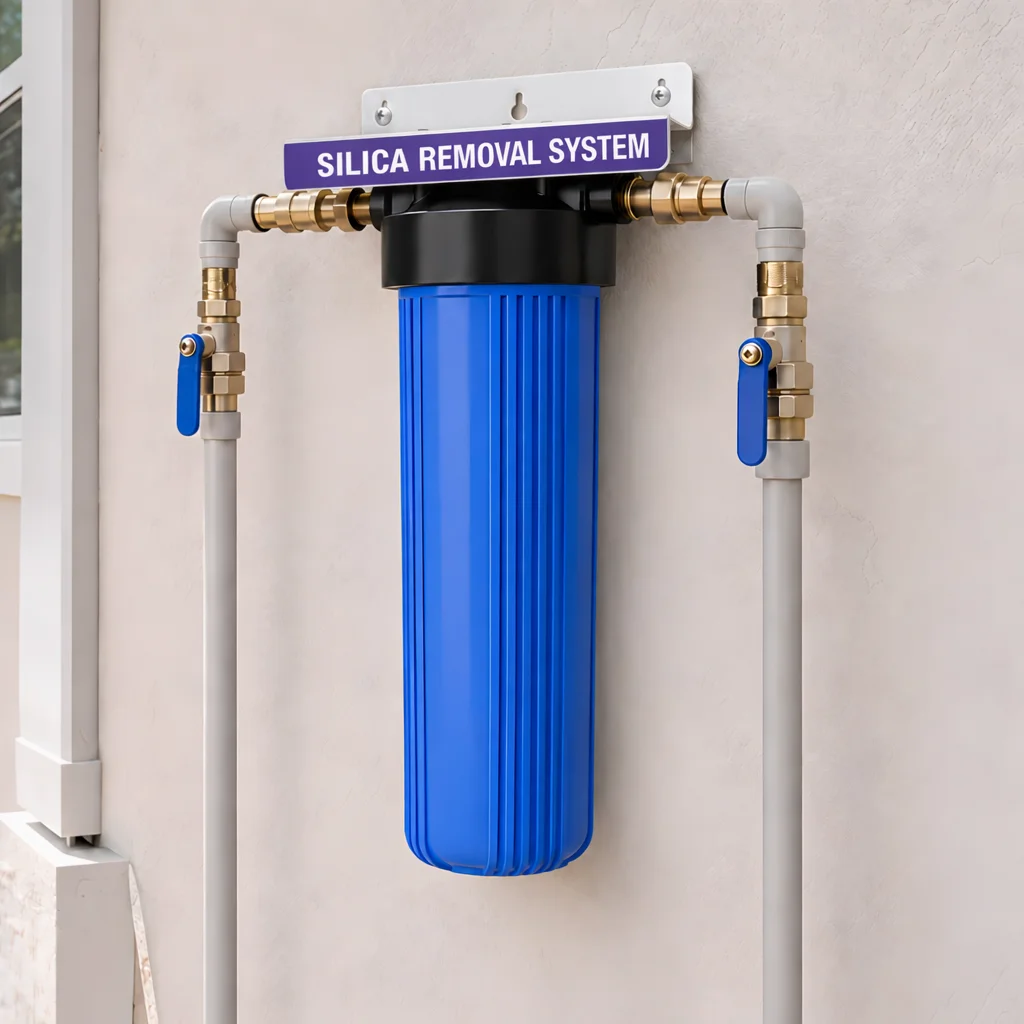
For most houses, the single most effective whole-house choice for reducing silica is a reverse osmosis system. RO uses a semipermeable membrane to remove many dissolved minerals, including silica and silicates, rather than merely trapping larger particles. That makes it a strong match for the dissolved forms that can bypass sediment and carbon filters; when sized and installed correctly for a Rockwell home, it addresses the underlying source of those stubborn deposits.
A whole-house reverse osmosis installation is normally combined with pretreatment to protect the membrane and sustain performance. Sediment and carbon stages reduce fouling and strip substances that can impair the RO, while the membrane handles dissolved silica. If fine particulate silica is present, pretreatment captures that fraction before it reaches the RO. Mr. Pure Water can assess whether silica or silicates are behind your buildup in Rockwell and recommend the right pretreatment and RO configuration for your home.
 321-400-9302
 info@bestwaterheater.com

