 Phone: 850-772-1365
 info@bestwaterheater.com
Phone: 850-772-1365
info@bestwaterheater.com
info@bestwaterheater.com
Phone: 850-772-1365
info@bestwaterheater.com
 Phone: 850-772-1365
info@bestwaterheater.com
Phone: 850-772-1365
info@bestwaterheater.com

Including filter system and high-performance Sodium Chloride (Salt) filter.


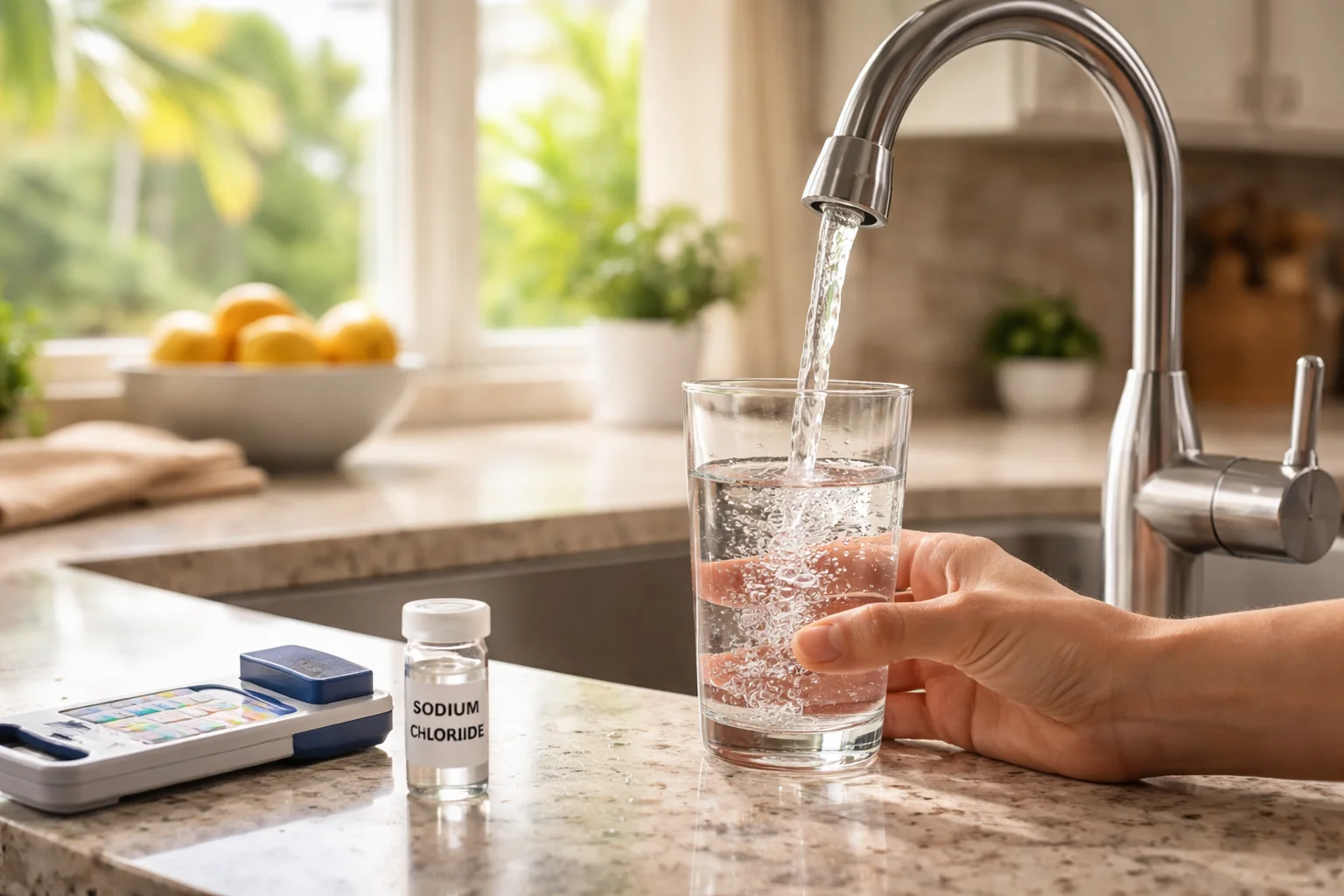
Sodium chloride, often called salt, can end up in household water for several reasons: it may be naturally occurring in source water, influenced by local groundwater, or introduced by certain treatment and regeneration processes. A small amount of mineral content is normal, but higher salt can give water a brackish taste that’s obvious when drinking or cooking. For Chason households watching dietary sodium, that invisible salt can be especially concerning because you can’t see it in the glass.
Elevated salt changes how water performs around the house—you may find coffee, tea, or ice tastes off, and fixtures or glass developing a dull film that’s difficult to remove. Because sodium chloride dissolves completely, it slips past standard sediment traps and boiling won’t remove it. In Chason, the first step is testing so you can learn whether the source is your incoming supply, a softener regeneration issue, or another cause.
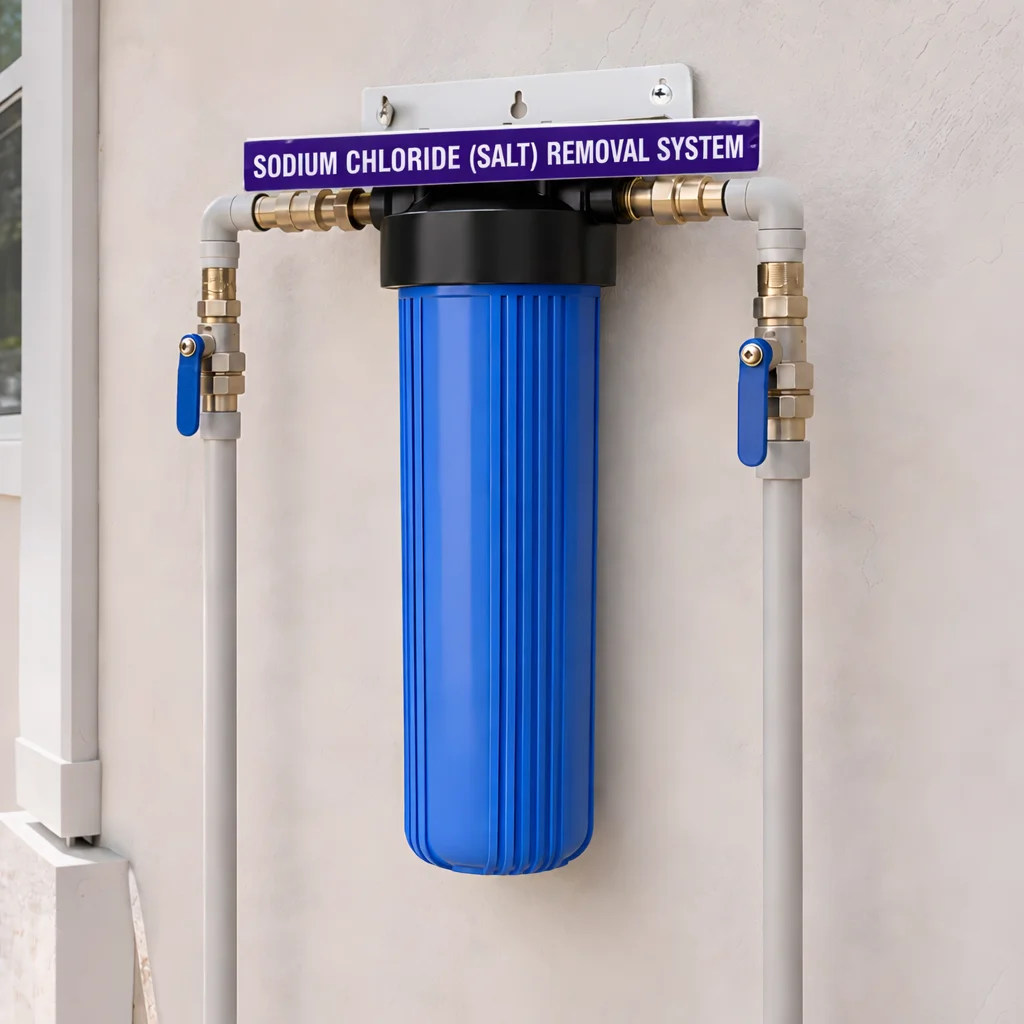
When the goal is to remove dissolved sodium chloride, the most effective single-filter choice is a reverse osmosis system. RO relies on a semi-permeable membrane to separate dissolved salts from water, unlike carbon or sediment filters that mainly address particles, chlorine, and odors. This is the same core approach used for reducing total dissolved solids or desalination, so if salt is your primary worry in a Chason home, selecting the correct RO membrane and system configuration is key.
For whole-house application, reverse osmosis is usually deployed as a dedicated system with prefiltration to protect and prolong membrane life. A pre-sediment filter helps prevent fouling, while carbon prefiltration reduces chlorine that can otherwise damage the membrane. Because RO produces both a purified stream and a reject stream, proper sizing and installation matter to meet everyday water needs in Chason. Mr. Pure Water can test your water, identify the salt source, and design a whole-house RO setup tailored to your home’s usage.
 850-772-1365
 info@bestwaterheater.com

