 Phone: 305-404-8790
 info@bestwaterheater.com
Phone: 305-404-8790
info@bestwaterheater.com
info@bestwaterheater.com
Phone: 305-404-8790
info@bestwaterheater.com
 Phone: 305-404-8790
info@bestwaterheater.com
Phone: 305-404-8790
info@bestwaterheater.com

Including filter system and high-performance Sodium Chloride (Salt) filter.


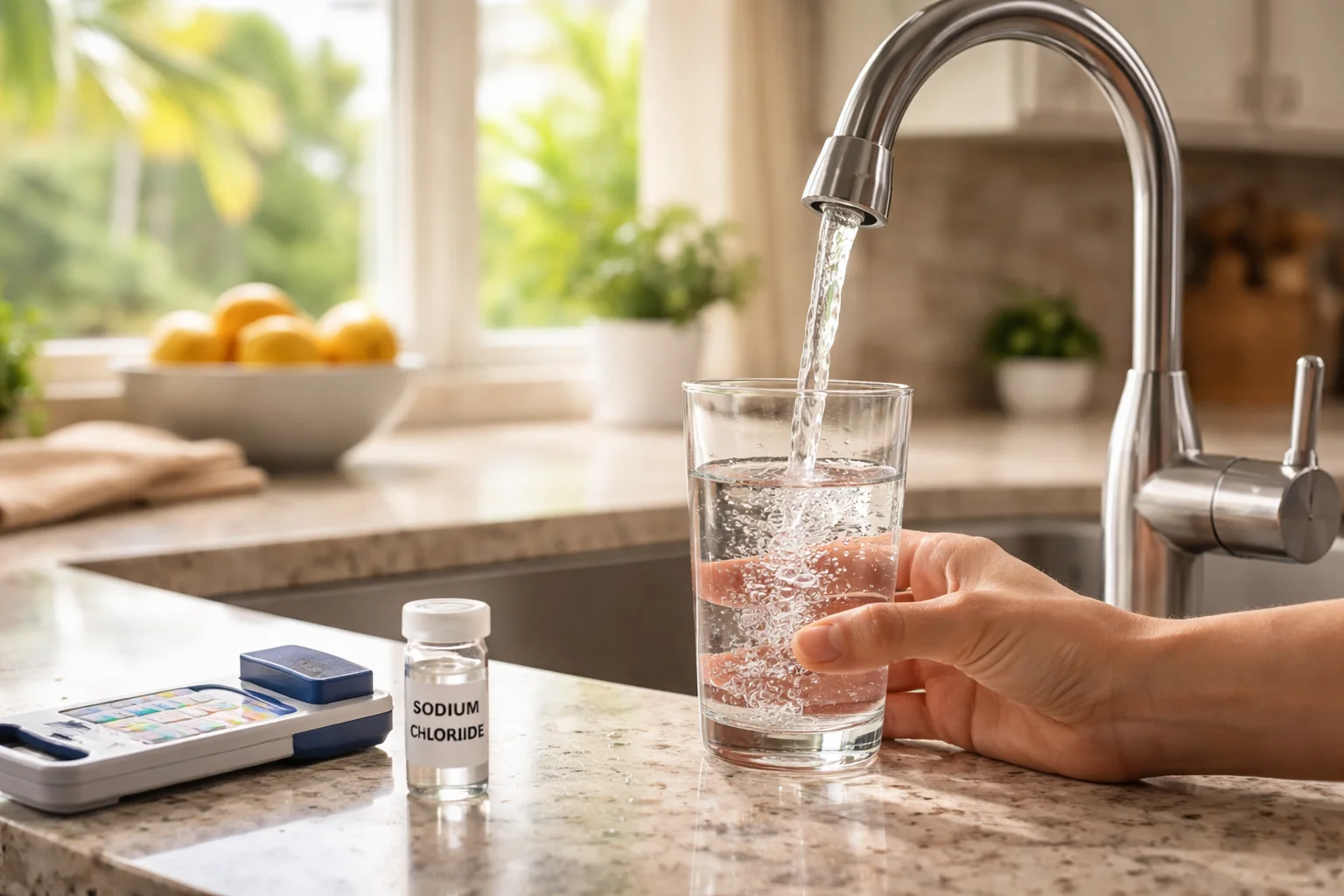
Salt—known simply as sodium chloride—can appear in household water for several reasons: it may be present naturally in source water, come from local groundwater conditions, or be introduced through certain treatment or regeneration processes. A light mineral presence is normal, but when salt levels climb the water can taste brackish and make you wonder about what you’re using to cook or drink. For Marathon homeowners keeping an eye on sodium intake, that invisible salt can be an unwelcome surprise, whether your water comes from the municipal supply or a private well or cistern.
Elevated sodium chloride also changes how water behaves around the house: you may detect an odd taste in coffee, tea, or ice, or notice a film on glass and fixtures that’s stubborn to remove—problems locals in areas like Key Colony Beach or the Sombrero Beach area know can be aggravated by coastal corrosion. Because dissolved salt passes through sediment screens and isn’t removed by boiling, it won’t be captured by ordinary filters. The first practical step is a water test so you can determine if the source is the incoming supply, a water softener regeneration issue, or something else specific to your Marathon property.
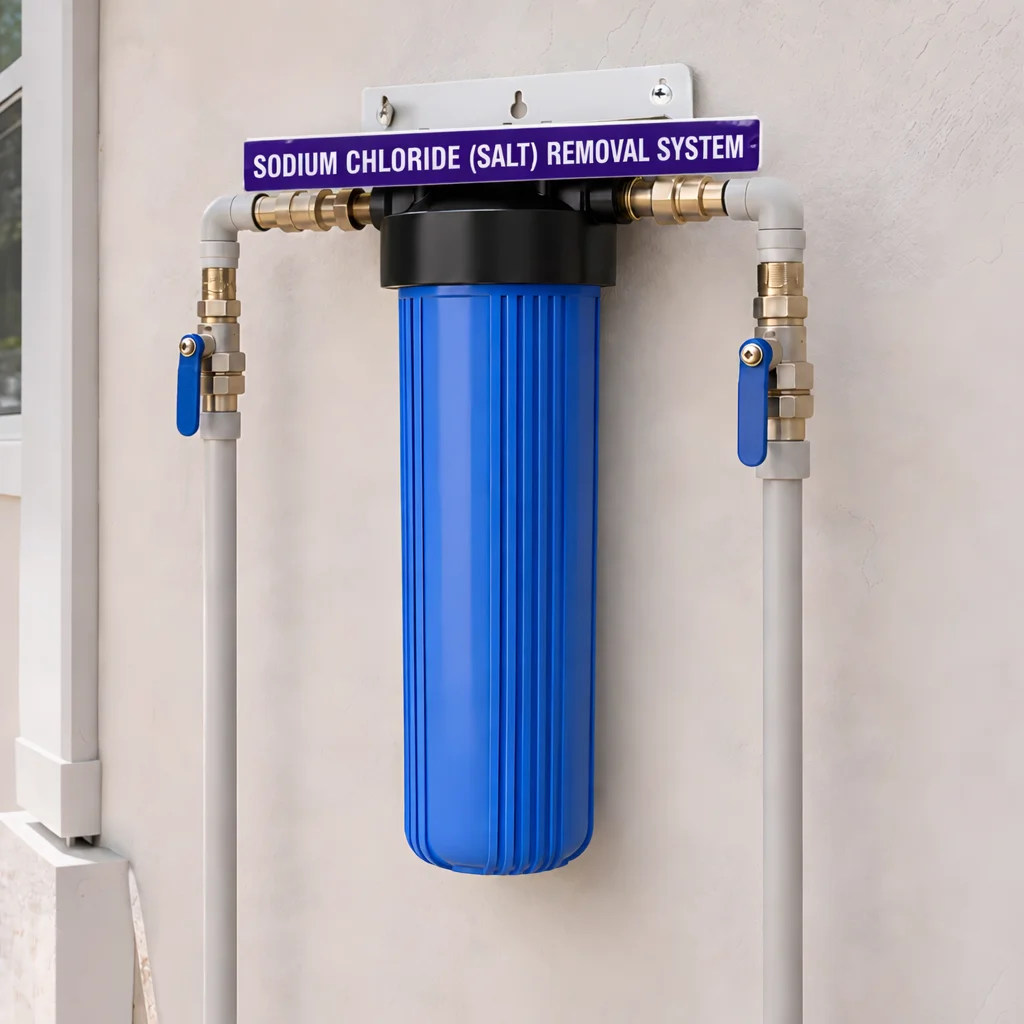
When the goal is to remove dissolved sodium chloride, a reverse osmosis (RO) system is the single most effective filter choice. RO uses a semi-permeable membrane to separate salts from water, a process different from carbon or sediment filters that target particles, chlorine, and odors. This membrane-based approach is the same core technology behind desalination and reducing total dissolved solids, so if salt is your primary concern in Marathon water, pick the right RO membrane and configuration rather than relying on extra carbon stages.
In a whole-house application, RO is usually installed as a dedicated system with prefiltration to protect the membrane and keep performance steady. Sediment prefilters guard against fouling from sand and particles, and carbon prefilters reduce chlorine that can shorten membrane life when present—important considerations for homes in hurricane-exposed, coastal Marathon. Because RO produces both a purified stream and a reject rinse stream, correct sizing and professional installation are key for meeting daily household demand. Mr. Pure Water can test your water, trace the source of sodium chloride, and design a whole-house RO system tailored to your home and usage patterns.
 305-404-8790
 info@bestwaterheater.com

