 Phone: 305-404-8790
 info@bestwaterheater.com
Phone: 305-404-8790
info@bestwaterheater.com
info@bestwaterheater.com
Phone: 305-404-8790
info@bestwaterheater.com
 Phone: 305-404-8790
info@bestwaterheater.com
Phone: 305-404-8790
info@bestwaterheater.com

Including filter system and high-performance Sodium Chloride (Salt) filter.


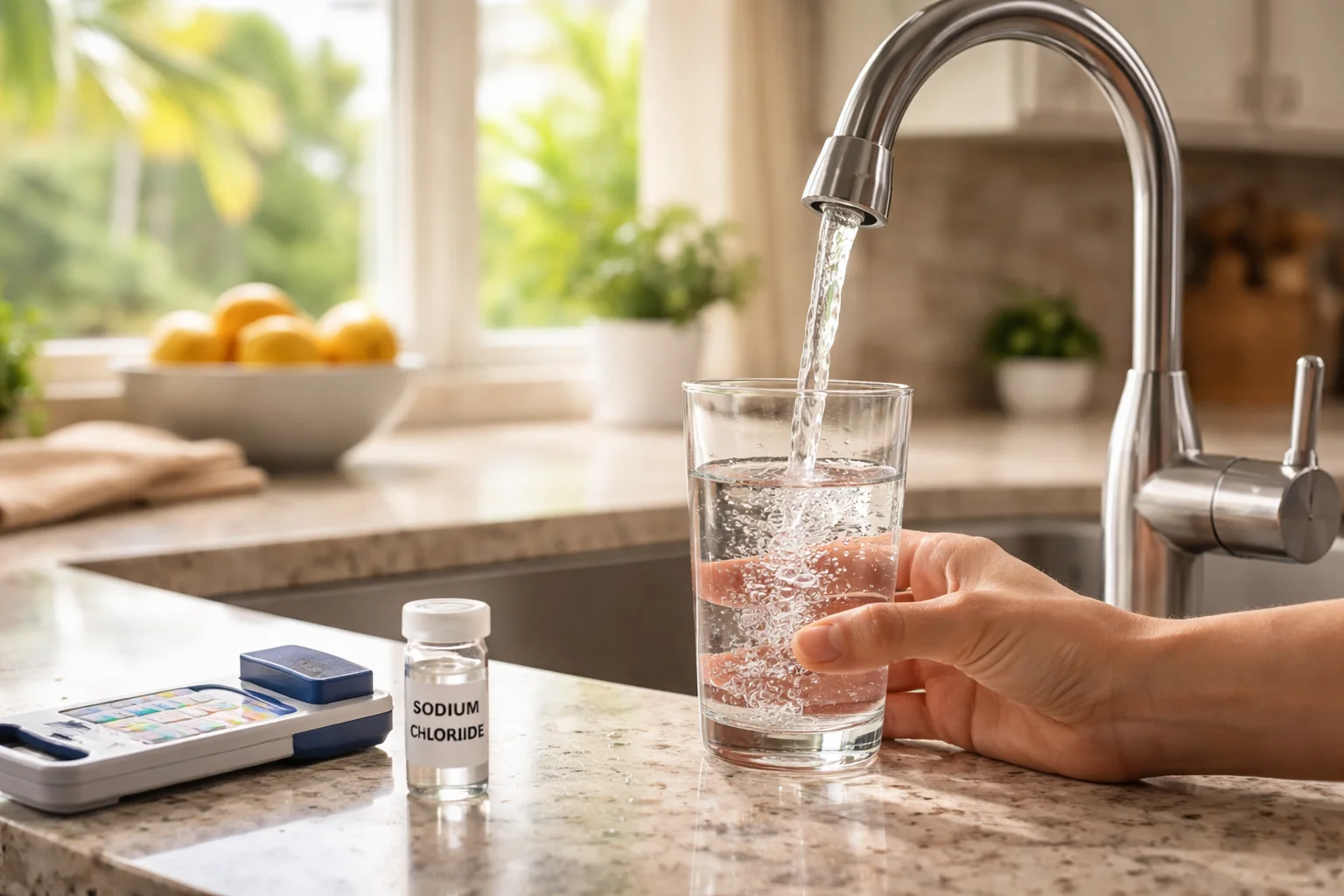
Sodium chloride, often called salt, can appear in household water for several reasons — from natural groundwater chemistry to treatment or regeneration processes. In Miami Beach, where municipal water is typically hard and coastal salt air can speed corrosion of exposed metal, a noticeable briny taste can make you worry about what’s in your tap water. Even small amounts can matter for homeowners limiting sodium intake, because salt is invisible in a glass and can affect drinking and cooking without obvious signs.
Elevated salt changes how water performs around the house: coffee, tea, and ice may taste off, glass and fixtures can show a dull film, and salt won’t be trapped by ordinary sediment filters or removed by boiling. That’s why testing is the smart first move in Miami-Dade County homes — it helps determine whether the source is the incoming supply, a water softener cycle, or another issue unique to properties from South Beach to Normandy Isles.
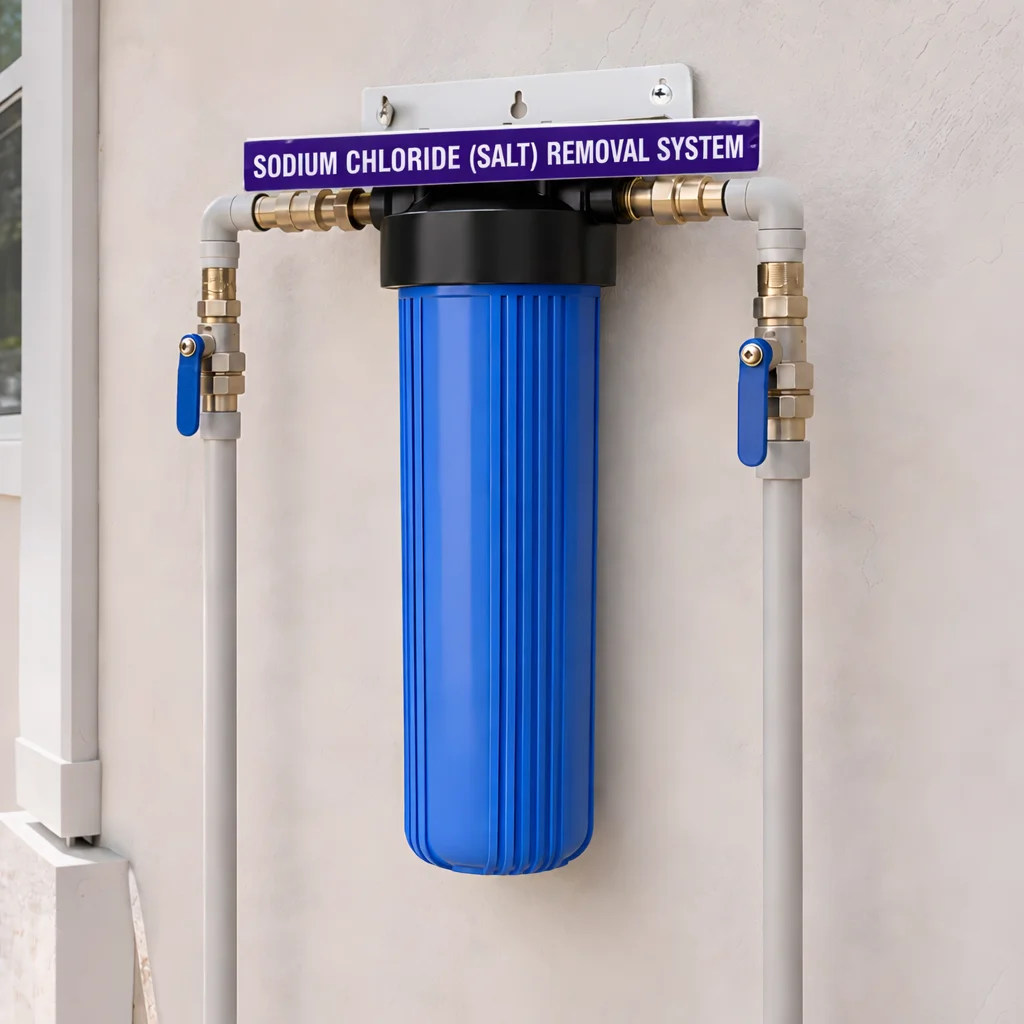
When dissolved sodium chloride is the concern, a reverse osmosis system is the most effective single-filter choice. RO uses a semi-permeable membrane to separate salts from water, unlike carbon or sediment filters that target particles, chlorine, and odors. This is the same basic technology used for reducing total dissolved solids, so when salt is the main problem, selecting the right RO membrane and system configuration matters more than simply adding extra carbon stages.
For whole-house protection in Miami Beach, reverse osmosis is usually set up as a dedicated treatment train with prefiltration to guard the membrane. Sediment prefilters help prevent fouling and carbon prefilters reduce chlorine that can shorten membrane life; proper sizing is key because RO produces both a purified stream and a rinse stream. Mr. Pure Water can test your water, identify salt sources in your plumbing or supply, and design a whole-house RO system tailored to your home’s needs.
 305-404-8790
 info@bestwaterheater.com

