 Phone: 954-208-3500
 info@bestwaterheater.com
Phone: 954-208-3500
info@bestwaterheater.com
info@bestwaterheater.com
Phone: 954-208-3500
info@bestwaterheater.com
 Phone: 954-208-3500
info@bestwaterheater.com
Phone: 954-208-3500
info@bestwaterheater.com

Including filter system and high-performance Sodium Chloride (Salt) filter.


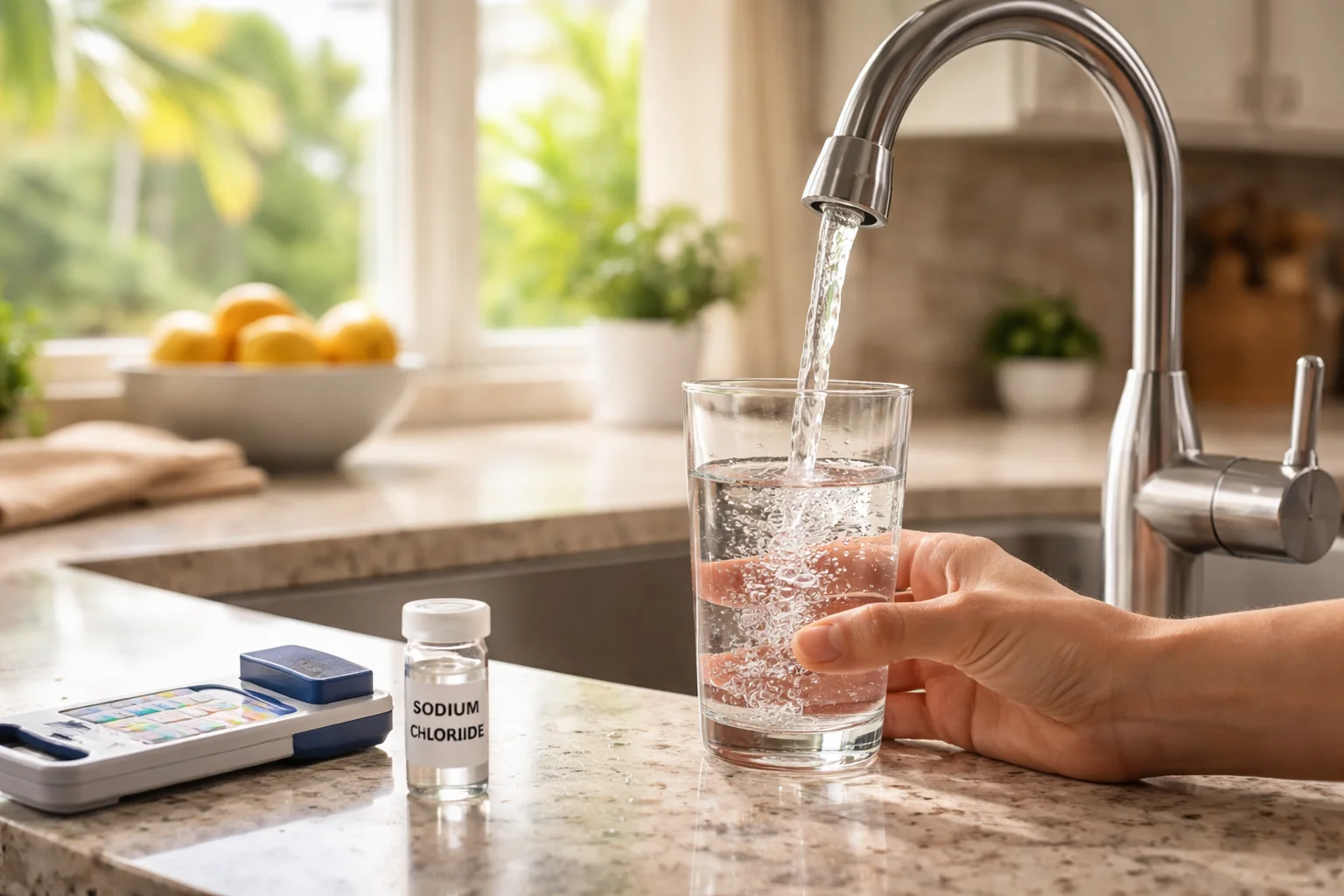
Sodium chloride, often called salt, can appear in home water for several reasons — from natural source water chemistry to changes made during treatment or regeneration processes. In Plantation, where hard water and mineral content are common, a noticeable briny taste can leave you unsure about drinking or cooking with tap water. For households watching their sodium intake, that invisible salt is an added worry because you can’t detect it visually in a glass.
Elevated salt in the water also changes how it performs around the house. You may taste it in coffee, tea, or ice and see a dull film on faucets, shower doors, or appliances that’s tough to remove — a familiar annoyance for Plantation residents dealing with hard water and limescale. Because sodium chloride fully dissolves, it slips past ordinary sediment filters and won’t be driven off by boiling; the smartest first move is a water test to learn whether the source is the municipal supply, a softener setting, or another cause.
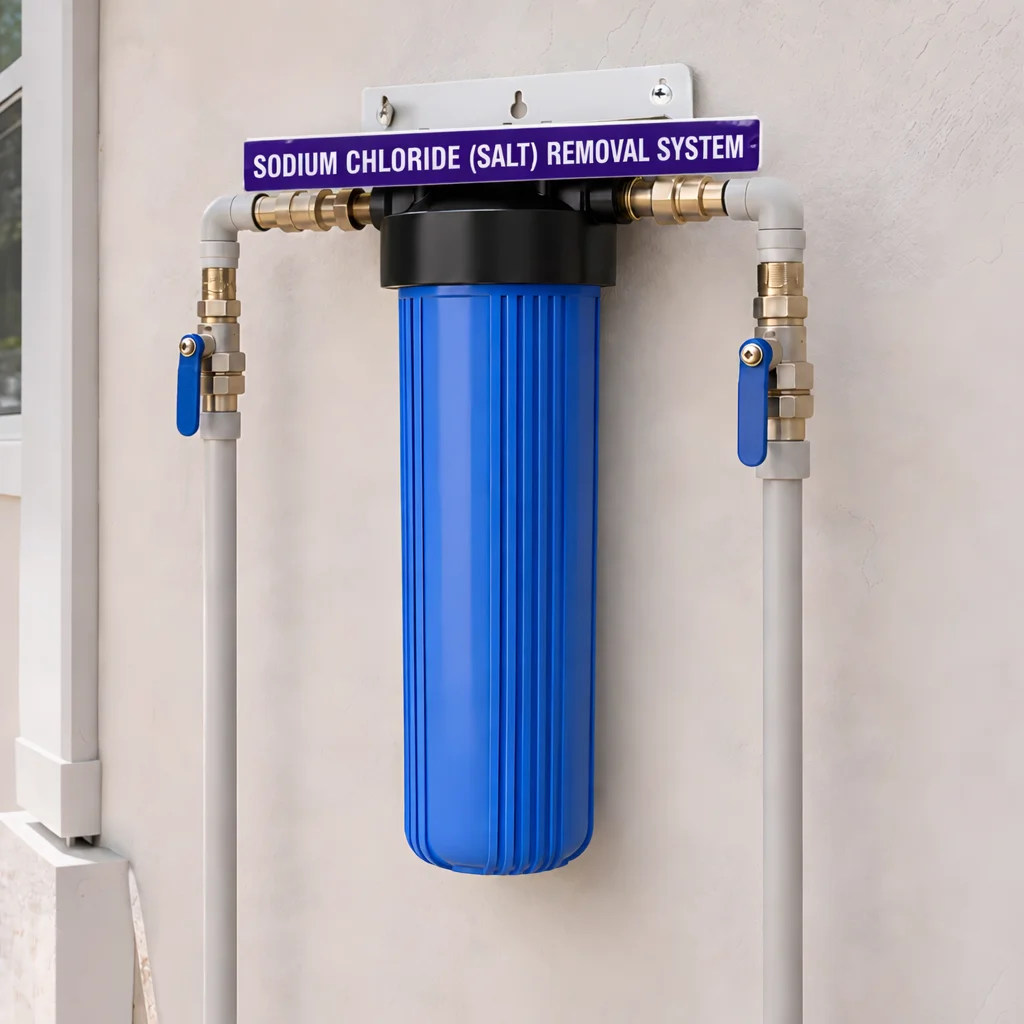
To remove dissolved sodium chloride effectively, the top single-filter choice is reverse osmosis. RO relies on a semi-permeable membrane to separate dissolved salts from water, unlike carbon or sediment filters that target particles, chlorine, and odors. This is the same core technology used for desalination and reducing total dissolved solids, so when salt is your main concern an appropriately selected RO membrane and system configuration matter most — more so than adding extra carbon stages.
For whole-house use, reverse osmosis is installed as a dedicated system with prefiltration to protect the membrane and maintain consistent performance. Sediment prefilters help prevent fouling, and carbon prefiltration can cut chlorine that would otherwise shorten membrane life when present. Because RO creates both a purified stream and a rinse stream, correct sizing and professional installation are key for meeting everyday demand in Plantation homes. Mr. Pure Water can test your water, identify salt sources, and design a whole-house RO system that fits your household’s needs.
 954-208-3500
 info@bestwaterheater.com

