 Phone: 850-772-1365
 info@bestwaterheater.com
Phone: 850-772-1365
info@bestwaterheater.com
info@bestwaterheater.com
Phone: 850-772-1365
info@bestwaterheater.com
 Phone: 850-772-1365
info@bestwaterheater.com
Phone: 850-772-1365
info@bestwaterheater.com

Including filter system and high-performance Sulfur filter.



You’ll often first notice sulfur in your water as a rotten-egg smell—especially from hot taps or after water sits in pipes—and Altha homeowners are no exception. That odor usually comes from hydrogen sulfide gas, sulfur-reducing bacteria, or conditions common to well water. Along with the smell, sulfur can leave an off taste that makes drinking and cooking unpleasant and may cause a faint musty scent or slight tarnishing on fixtures over time.
Sulfur-related problems can also show up as staining or residue around drains, toilets and shower areas; when iron or manganese are present too, discoloration becomes more obvious and tougher to manage. Because the causes vary by property and water source, a proper test is the best way for Altha residents to identify whether sulfur is behind the smell or staining. Once you know the cause, treating every faucet in the house with a whole-house solution is the most reliable way to fix it.
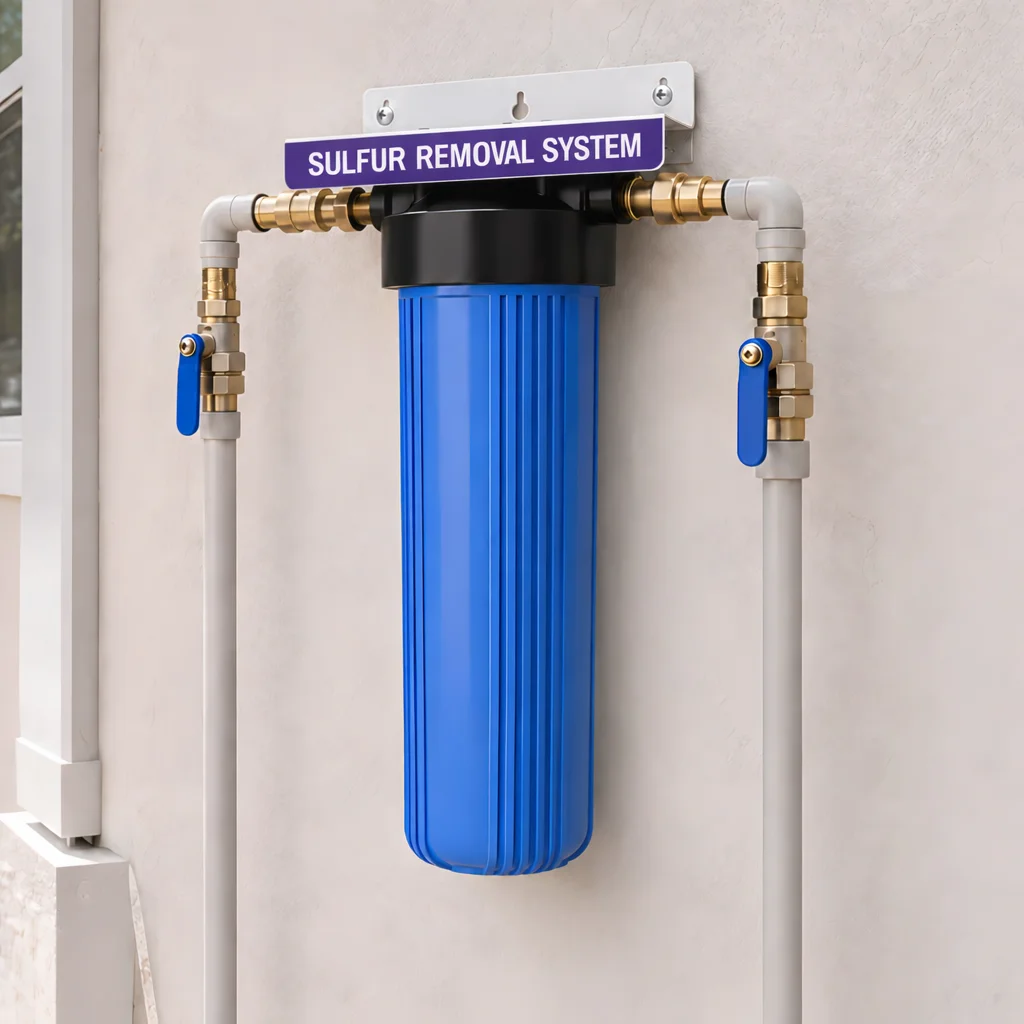
For persistent sulfur odors, a whole-house catalytic carbon filter is often the single most effective option for improving water quality throughout an Altha home. Catalytic carbon is specially made to address challenging taste-and-odor compounds more effectively than standard activated carbon and can reduce hydrogen sulfide-related smells so water smells cleaner at every faucet and in every shower. Installed at the main water entry, it protects bathing, laundry and kitchen use alike.
A catalytic carbon system sized correctly for your household gives the contact time needed for sulfur-related compounds to be adsorbed as water passes through the media. Undersized or quick-contact filters may temporarily mask odors but won’t keep pace with normal family water use. Because sulfur issues can occur with other contaminants, starting with a whole-house catalytic carbon filter is a practical first step for Altha homeowners; Mr. Pure Water can help determine the right size and setup based on your water source and recent test results.
 850-772-1365
 info@bestwaterheater.com

