 Phone: 954-208-3500
 info@bestwaterheater.com
Phone: 954-208-3500
info@bestwaterheater.com
info@bestwaterheater.com
Phone: 954-208-3500
info@bestwaterheater.com
 Phone: 954-208-3500
info@bestwaterheater.com
Phone: 954-208-3500
info@bestwaterheater.com

Including filter system and high-performance Sulfur Bacteria filter.



Sulfur bacteria are naturally occurring microbes that sometimes appear in private wells and other water sources. Harbor Beach homeowners usually notice them as a rotten-egg odor, especially from hot water, and may also find water feels slippery or appears cloudy. Though sulfur bacteria aren’t commonly tied to illness, heavy growth can make water unpleasant, encourage staining, and lead to mineral or biological buildup on fixtures over time. In coastal communities like Harbor Beach, salt-air corrosion can worsen the effects on outdoor plumbing and exposed filtration components.
What people commonly call a sulfur smell is often hydrogen sulfide gas produced where sulfur bacteria thrive. These microbes can consume sulfur compounds and form slimy layers that build up in pipes, toilets, and water heaters, creating hiding places for other nuisance organisms and making cleaning feel ineffective. If the rotten-egg odor is intermittent or stronger after water sits in the system, that pattern often points to growth inside the plumbing rather than an outside source — a concern for Harbor Beach homes with private wells or older piping.
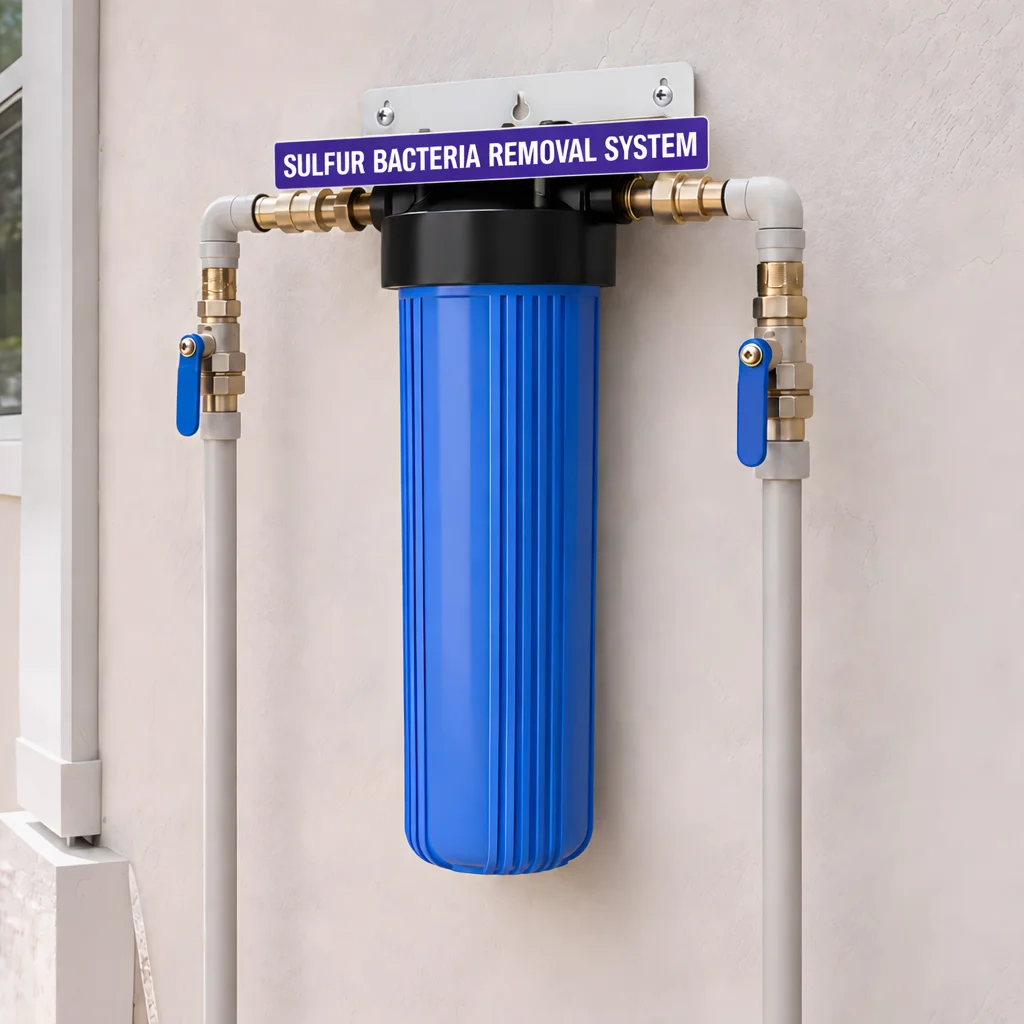
For a single whole-house solution that works well against sulfur bacteria issues, a backwashing catalytic carbon system is the recommended option. Catalytic carbon targets hydrogen sulfide odor more effectively than standard carbon, tackling the smell that sulfur bacteria produce. The backwashing feature is important because it routinely cleans the media bed and flushes trapped material from the tank, helping prevent rapid clogging when nuisance growth or debris are present.
A catalytic carbon whole-house filter treats water where it enters your Harbor Beach home, so you’ll notice improved smell and water quality at showers, sinks, laundry, and outdoor faucets. These systems are commonly used with pre-screening and, if active bacterial growth is found, a disinfection step to address problems in the well or plumbing. Mr. Pure Water can help size the tank and select the right flow rate so odor control matches your household demand, while taking coastal conditions into account to protect outdoor components. The aim is consistently odor-free water without constant maintenance or masking fragrances.
 954-208-3500
 info@bestwaterheater.com

