 Phone: 850-772-1365
 info@bestwaterheater.com
Phone: 850-772-1365
info@bestwaterheater.com
info@bestwaterheater.com
Phone: 850-772-1365
info@bestwaterheater.com
 Phone: 850-772-1365
info@bestwaterheater.com
Phone: 850-772-1365
info@bestwaterheater.com

Including filter system and high-performance Sulfur filter.



If your Betts home has that telltale rotten-egg smell when you run hot water or after pipes sit, sulfur is a likely culprit. That odor often comes from hydrogen sulfide gas, sulfur-reducing bacteria, or conditions common to well water, and it can leave water tasting unpleasant for drinking and cooking. You might also notice a musty scent that appears intermittently or slight tarnishing on faucets and fixtures around the house.
Sulfur problems don’t stop at smell — they can cause buildup and staining around showers, drains and toilets. When sulfur shows up with iron or manganese the discoloration can be more pronounced and tougher to remove. Because these signs vary by property and water source, a water test is the best way for Betts homeowners to identify whether sulfur is the main issue. Once test results are in, a whole-house solution can be sized to treat water at every tap, not just the kitchen.
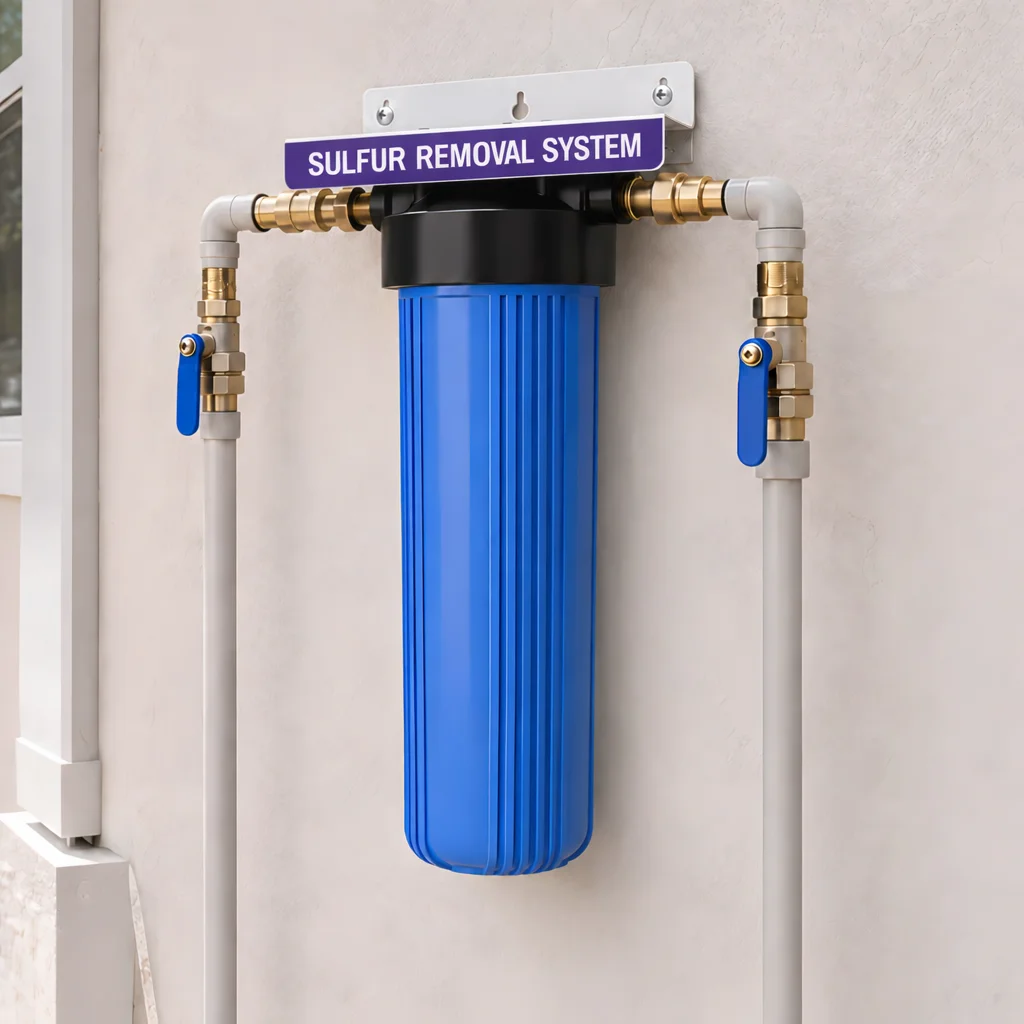
For pronounced sulfur odors, a whole-house catalytic carbon filter is often the single most effective choice to improve water quality throughout a Betts residence. Catalytic carbon is designed to handle difficult taste-and-odor compounds better than standard activated carbon and can reduce hydrogen sulfide-related smells so water coming from showers and faucets smells fresher. Placed where water enters the home, it protects bathing, laundry and all daily water use.
A correctly sized catalytic carbon system gives water enough contact time with the media to adsorb sulfur-related compounds, which is important for keeping up with regular household demand in Betts. Undersized units may temporarily mask odors but won’t perform reliably under full use. Because sulfur concerns can come with other contaminants, starting with a sulfur-focused whole-house carbon filter is a practical first step; Mr. Pure Water can review your water test and recommend the right size and setup for your home.
 850-772-1365
 info@bestwaterheater.com

