 Phone: 954-208-3500
 info@bestwaterheater.com
Phone: 954-208-3500
info@bestwaterheater.com
info@bestwaterheater.com
Phone: 954-208-3500
info@bestwaterheater.com
 Phone: 954-208-3500
info@bestwaterheater.com
Phone: 954-208-3500
info@bestwaterheater.com

Including filter system and high-performance Sulfur filter.



You’ll often first notice sulfur in the water as a rotten-egg smell, especially from hot taps or when water has sat in pipes. That odor is usually tied to hydrogen sulfide gas, sulfur-reducing bacteria, or certain well conditions, and it can leave an unpleasant taste that affects drinking and cooking. In coastal Ocean Vue, where humid subtropical weather and salt air can influence plumbing, homeowners may also spot a musty scent or occasional tarnish on fixtures as clues something’s off.
Sulfur problems don’t stop at smell — they can produce stains and mineral buildup around showers, drains and toilets. When sulfur appears with iron or manganese the discoloration can become more visible and tougher to clean. Because the causes vary by property and source, a proper water test is the best way to determine whether sulfur is the root cause. From there, a whole-house solution can protect every faucet in your Ocean Vue home, not just the kitchen sink.
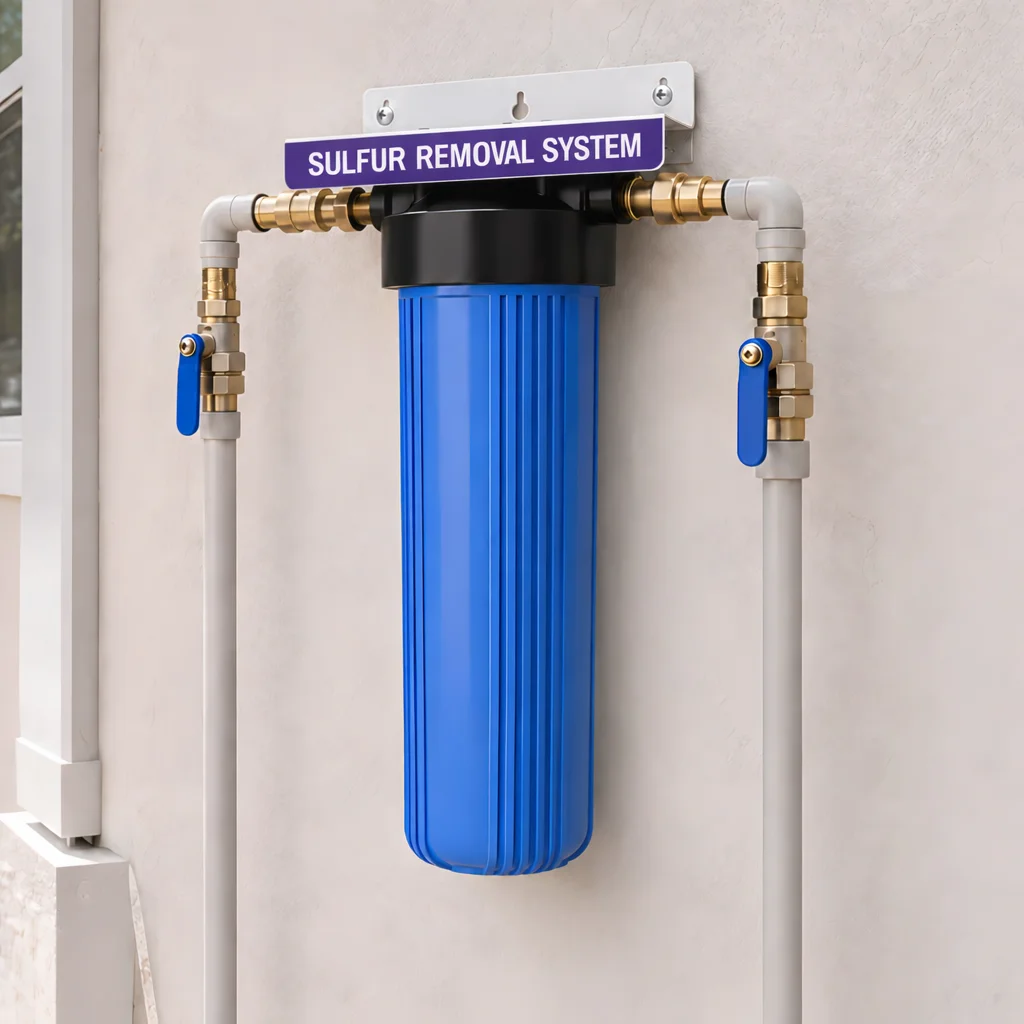
For pronounced sulfur odors, a whole-house catalytic carbon filter is frequently the best single-filter choice to improve water across your home. Catalytic carbon is formulated to tackle stubborn taste-and-odor compounds more effectively than standard activated carbon and can reduce hydrogen sulfide-related smells so water from every tap and shower smells cleaner. Installed at the main water entry, it treats water used for bathing, laundry and everyday chores throughout Ocean Vue residences.
A correctly sized catalytic carbon system allows enough contact time for sulfur compounds to be adsorbed as water travels through the media, which matters in busy households where undersized filters may only briefly mask odors. Sulfur concerns sometimes appear with other contaminants, but beginning with a sulfur-focused whole-house carbon filter is a practical first step to resolve the odors and tastes homeowners notice. Mr. Pure Water can evaluate your Ocean Vue water source, advise on proper sizing, and recommend the right system for local conditions — including coastal considerations like salt-air corrosion and storm-related service impacts.
 954-208-3500
 info@bestwaterheater.com

