 Phone: 772-290-5223
 info@bestwaterheater.com
Phone: 772-290-5223
info@bestwaterheater.com
info@bestwaterheater.com
Phone: 772-290-5223
info@bestwaterheater.com
 Phone: 772-290-5223
info@bestwaterheater.com
Phone: 772-290-5223
info@bestwaterheater.com

Including filter system and high-performance Sulfur filter.



Many Rio homeowners first notice sulfur when a rotten-egg smell appears, often from hot water or water that’s sat in pipes. That odor is frequently caused by hydrogen sulfide gas, sulfur-reducing bacteria, or certain well-water conditions, and it can leave water tasting unpleasant for drinking and cooking. You may also spot occasional tarnishing on fixtures or a musty scent that comes and goes, especially in coastal Florida homes where salt air and corrosion can affect plumbing.
Sulfur problems can also create staining and mineral buildup around drains, toilets, and showers, and those issues become harder to manage when iron or manganese are present too. Because conditions vary across neighborhoods and between municipal and well supplies, testing your Rio water is the surest way to identify whether sulfur is responsible for the smell or discoloration. Once you know the cause, a whole-house solution can protect every tap — not just the kitchen sink.
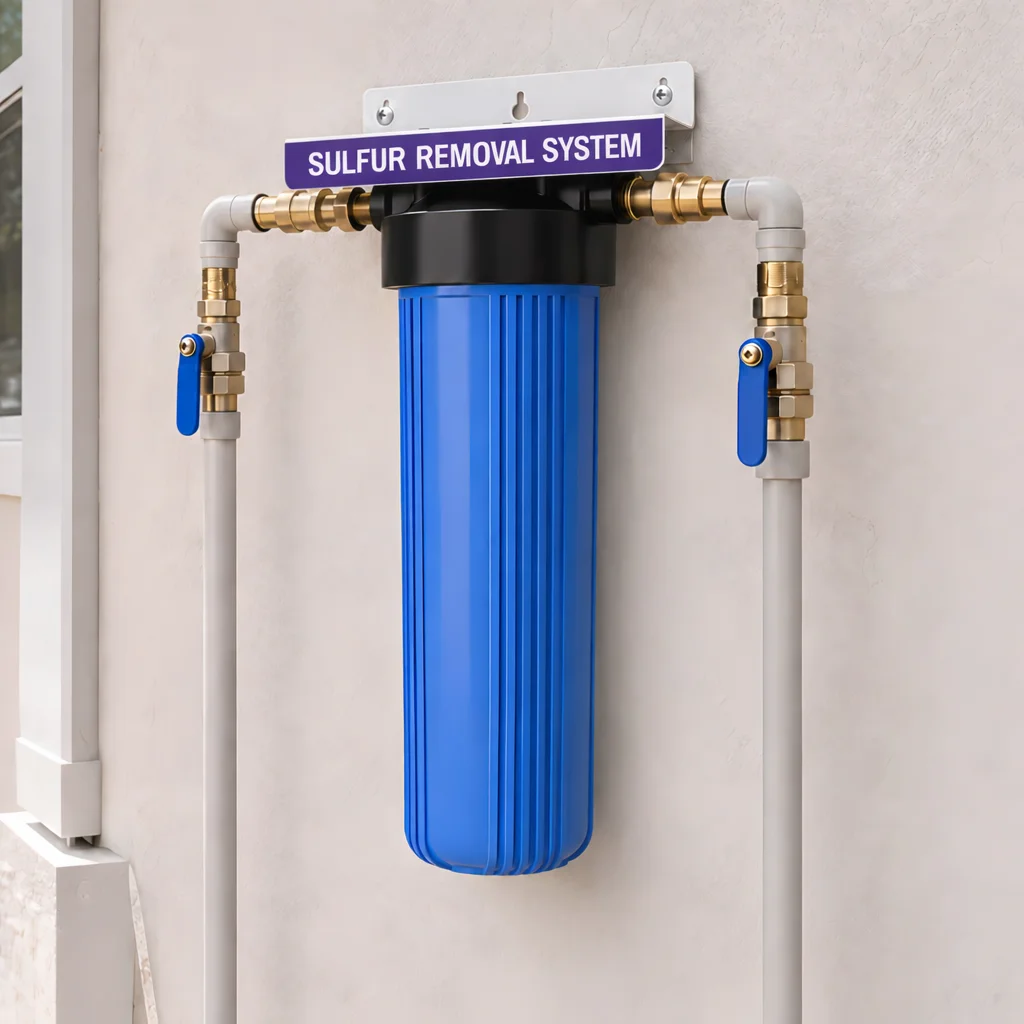
When sulfur odors are strong, the most effective single-filter choice for a whole-house system is catalytic carbon. This media is formulated to tackle tough taste-and-odor compounds more reliably than standard activated carbon, reducing hydrogen sulfide-related smells so water from showers and faucets smells fresher. Installed where water enters your Rio residence, a catalytic carbon filter treats water used for bathing, laundry and everyday chores.
A catalytic carbon system sized for your household gives the water enough contact time with the media to adsorb sulfur-related compounds rather than simply masking odors. Undersized or fast-flow systems may only provide temporary relief, so proper sizing is important in humid subtropical Rio homes where demand and plumbing corrosion can impact performance. If sulfur issues appear with other contaminants, starting with a catalytic carbon whole-house filter is a practical first step; Mr. Pure Water can review your Rio water test and recommend the right fit and size.
 772-290-5223
 info@bestwaterheater.com

