 Phone: 850-772-1365
 info@bestwaterheater.com
Phone: 850-772-1365
info@bestwaterheater.com
info@bestwaterheater.com
Phone: 850-772-1365
info@bestwaterheater.com
 Phone: 850-772-1365
info@bestwaterheater.com
Phone: 850-772-1365
info@bestwaterheater.com

Including filter system and high-performance TBA filter.


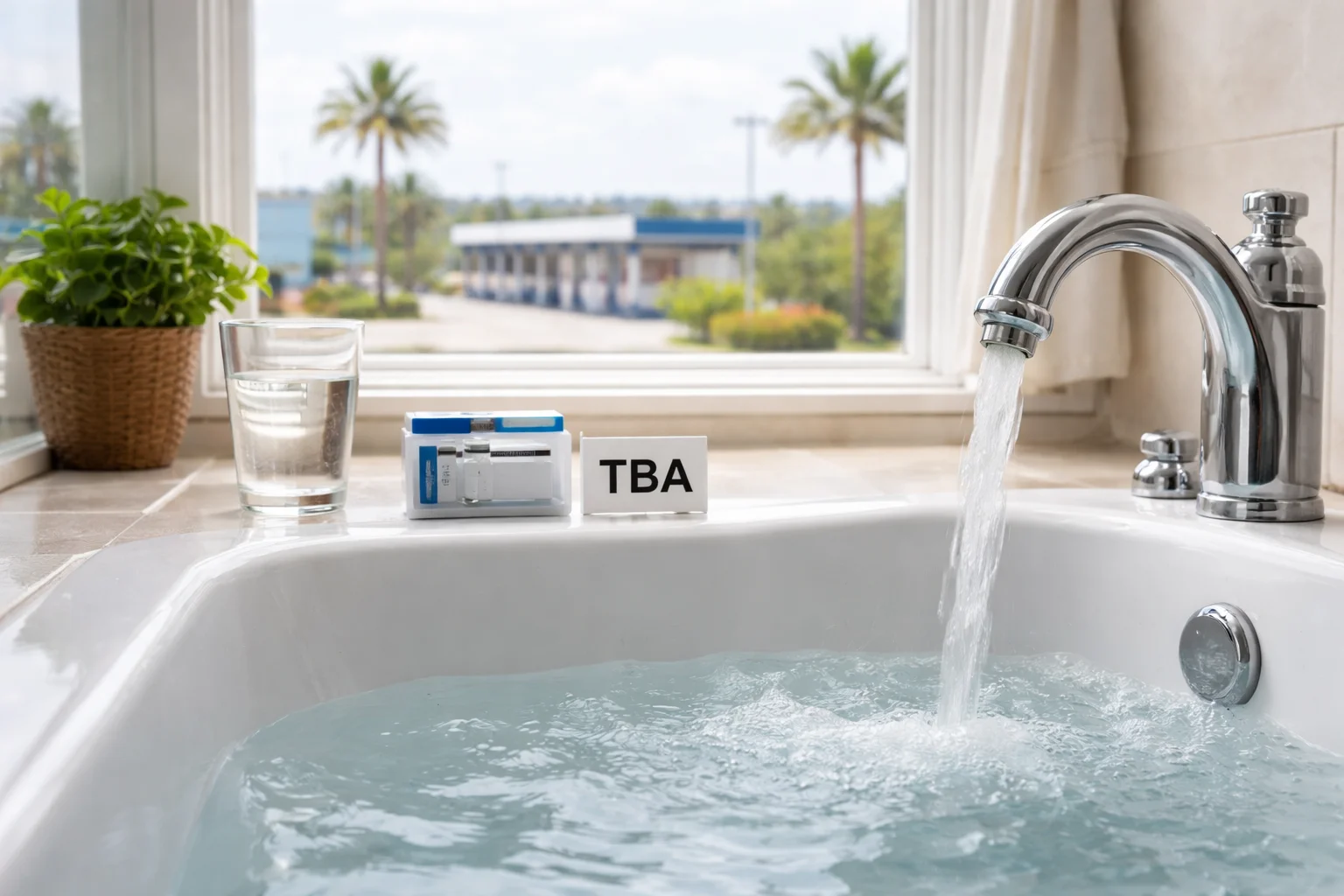
TBA is a volatile organic compound that can enter drinking water when certain industrial or fuel-related chemicals break down. Because it dissolves readily, it can travel with groundwater and linger longer than homeowners expect. At typical concentrations it may not have a noticeable taste or odor, so the only reliable way to know if it’s present is to test your water. If testing in Cantonment indicates elevated TBA, treating the water where it enters your house helps protect every faucet and appliance.
Even clear water can contain trace organics like TBA, which can be a concern over long-term exposure. Common sources include solvents, additives, or byproducts tied to petroleum and chemical handling, and local water supplies and private wells can be affected differently. Municipal treatment and household plumbing aren’t tailored to remove every volatile organic compound, so many Cantonment homeowners choose a whole-house solution to simplify protection for cooking, bathing, and laundry in one central location.
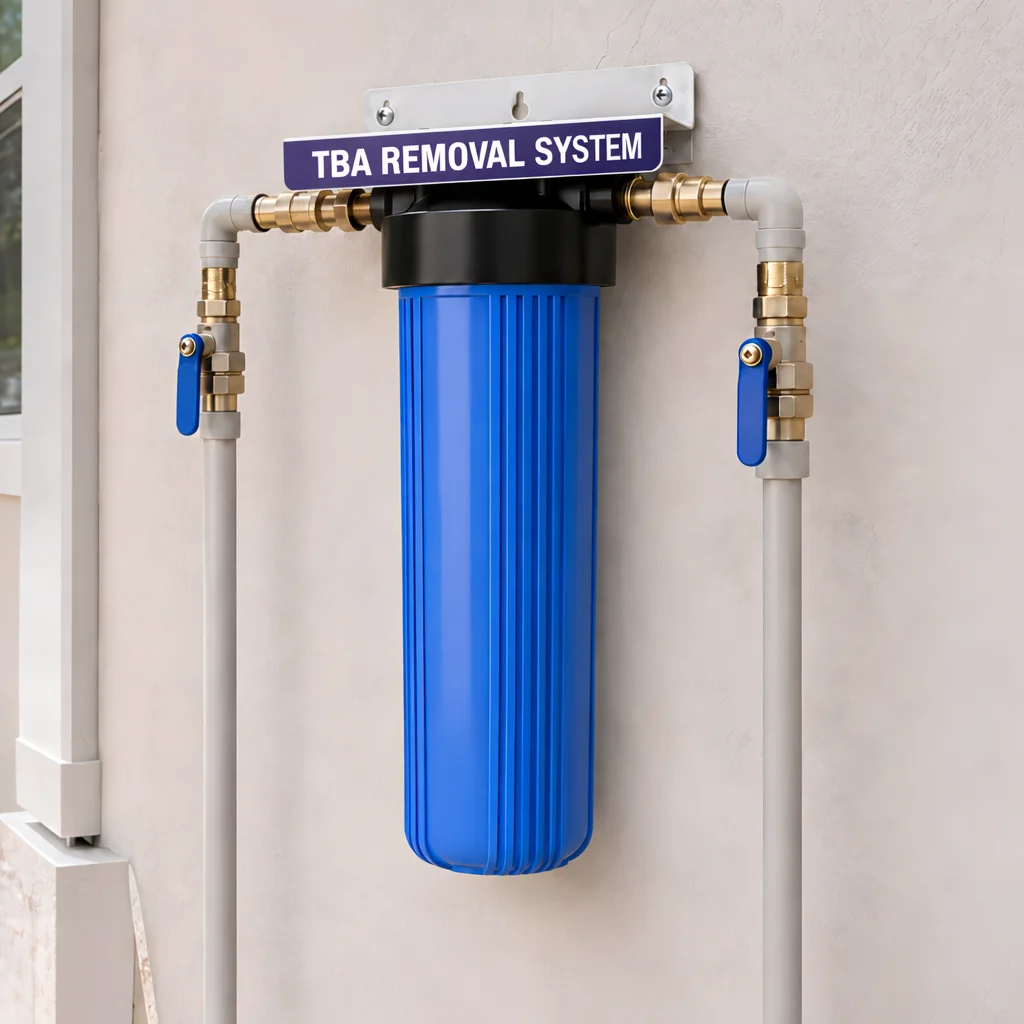
For reducing TBA, a whole-house catalytic activated carbon (GAC) tank is typically the most effective single-filter option. Carbon media adsorbs organic compounds as water flows through, and catalytic carbon is often better at handling more soluble or stubborn VOCs than standard carbon alone. Because removal depends on contact time, selecting the correct tank size and flow rating for your Cantonment home is as important as choosing the right media. When installed at the main water entry, this filter treats both cold and hot water throughout the house.
A well-designed whole-house catalytic carbon system removes VOCs without adding chemicals to your water. Adding a sediment pre-filter helps protect the carbon bed from clogging and keeps flow consistent. Long-term performance depends on sizing the system to your household’s use and replacing media before it’s exhausted. Mr. Pure Water can assess Cantonment homes and recommend a catalytic carbon setup aimed at reducing TBA while improving water quality at every tap.
 850-772-1365
 info@bestwaterheater.com

