 Phone: 772-290-5223
 info@bestwaterheater.com
Phone: 772-290-5223
info@bestwaterheater.com
info@bestwaterheater.com
Phone: 772-290-5223
info@bestwaterheater.com
 Phone: 772-290-5223
info@bestwaterheater.com
Phone: 772-290-5223
info@bestwaterheater.com

Including filter system and high-performance Total Organic Carbon filter.


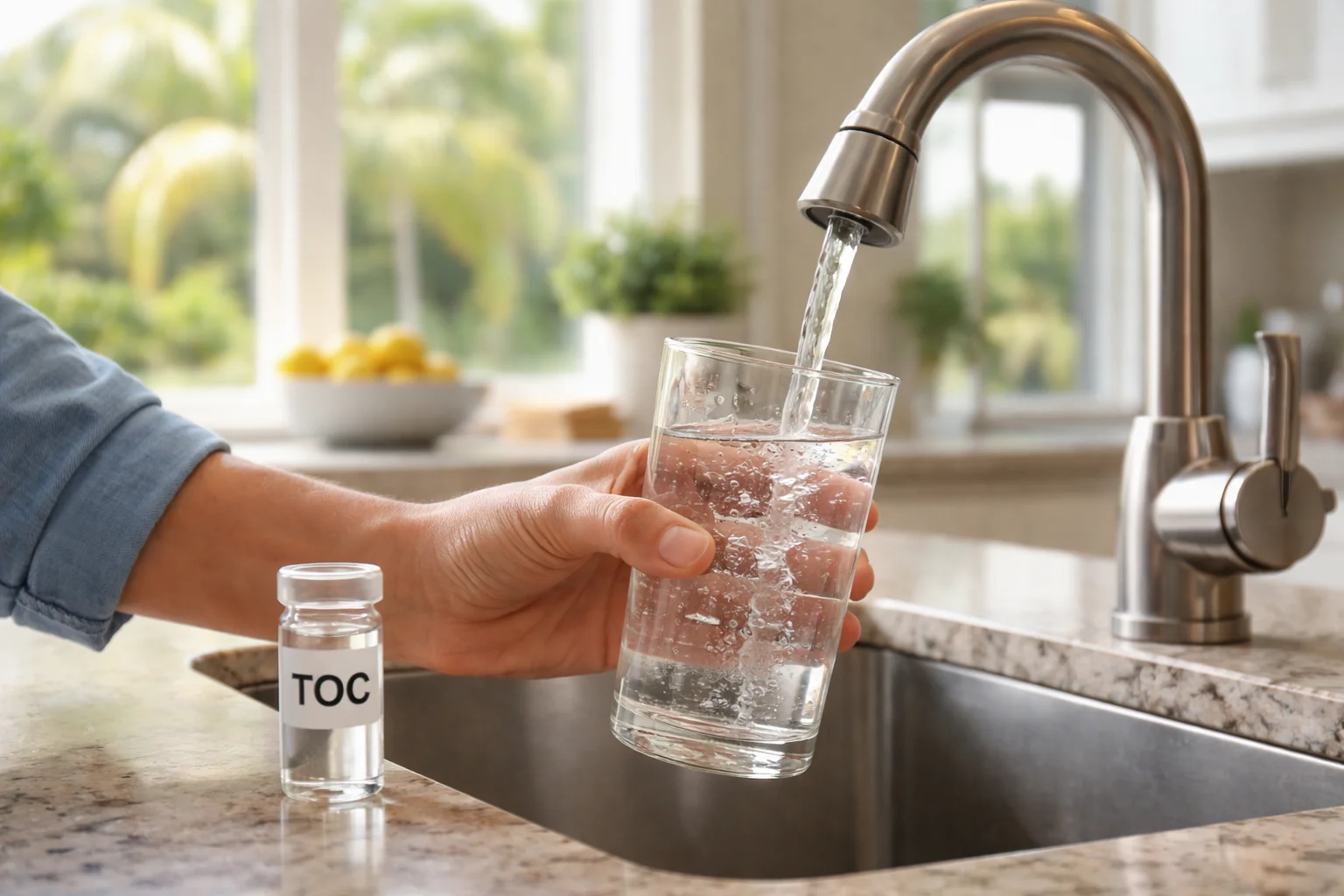
Total organic carbon is a general measure of carbon-based material dissolved in water, coming from things like decaying plant matter, algae, soil runoff, or small amounts of everyday organic compounds that find their way into source water. It doesn’t always cause a strong taste or smell, but higher organic loading can make water harder to treat and may contribute to discoloration, odors, or an off flavor. For homeowners in Blowing Rocks and nearby Martin County neighborhoods, TOC is a useful indicator of the overall organic burden in the supply and how it might affect water quality around the house.
Often called dissolved organic carbon as well, much of what tests as TOC is in solution rather than visible particles. Clear-looking water can still contain these organics, which can react with disinfectants like chlorine and sometimes produce a stronger pool-like smell or taste. In humid subtropical coastal areas like Blowing Rocks, organic material can also encourage slime or biofilm buildup inside plumbing and fixtures where water sits — an issue homeowners on Jupiter Island, Hobe Sound and Stuart may recognize — so many local residents choose whole-house treatment to address organics before they reach taps and appliances.
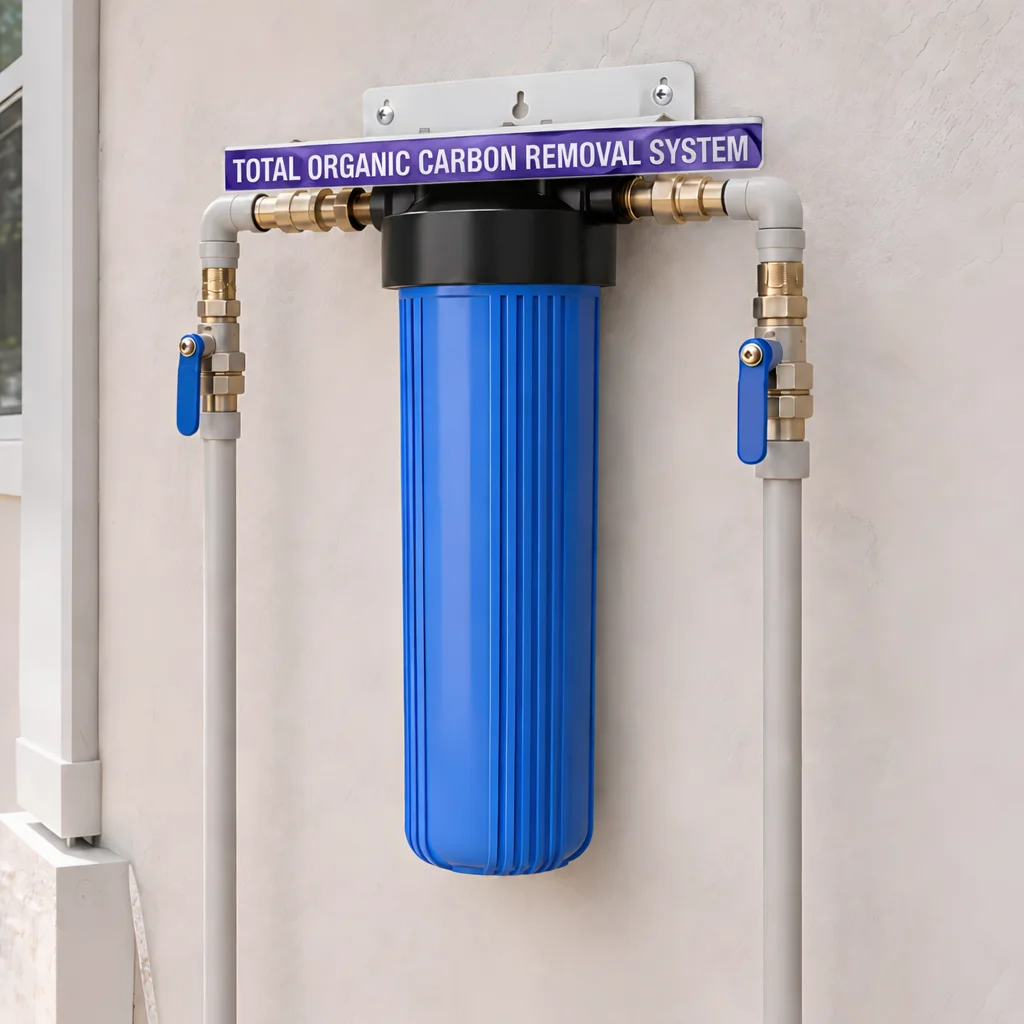
For whole-house reduction of total organic carbon, a high-quality catalytic carbon filter is usually the most effective single-filter solution. Carbon media adsorbs a broad range of organic compounds that contribute to dissolved organic carbon as well as many taste- and odor-causing molecules. Catalytic carbon is designed to be more reactive than standard activated carbon, helping with some tougher organics and giving homes in the Blowing Rocks area a more consistently clean feel from every faucet to the showerhead. Because it treats all incoming water, the benefit is whole-house rather than point-of-use.
The secret to lowering dissolved organic carbon with a single filter is adequate carbon volume and sufficient contact time, not a small cartridge that water zips through. A properly sized whole-house catalytic carbon tank matched to your home’s flow will also help reduce chlorine taste and odor, which can be more noticeable when organics are present. In hard coastal water like Blowing Rocks’—where mineral scale can stress plumbing—placing the system ahead of key fixtures and sizing it for your household demand keeps results steady. Mr. Pure Water can assess your property in Martin County and recommend a catalytic carbon setup tailored to target total organic carbon effectively.
 772-290-5223
 info@bestwaterheater.com

