 Phone: 305-404-8790
 info@bestwaterheater.com
Phone: 305-404-8790
info@bestwaterheater.com
info@bestwaterheater.com
Phone: 305-404-8790
info@bestwaterheater.com
 Phone: 305-404-8790
info@bestwaterheater.com
Phone: 305-404-8790
info@bestwaterheater.com

Including filter system and high-performance Total Organic Carbon filter.


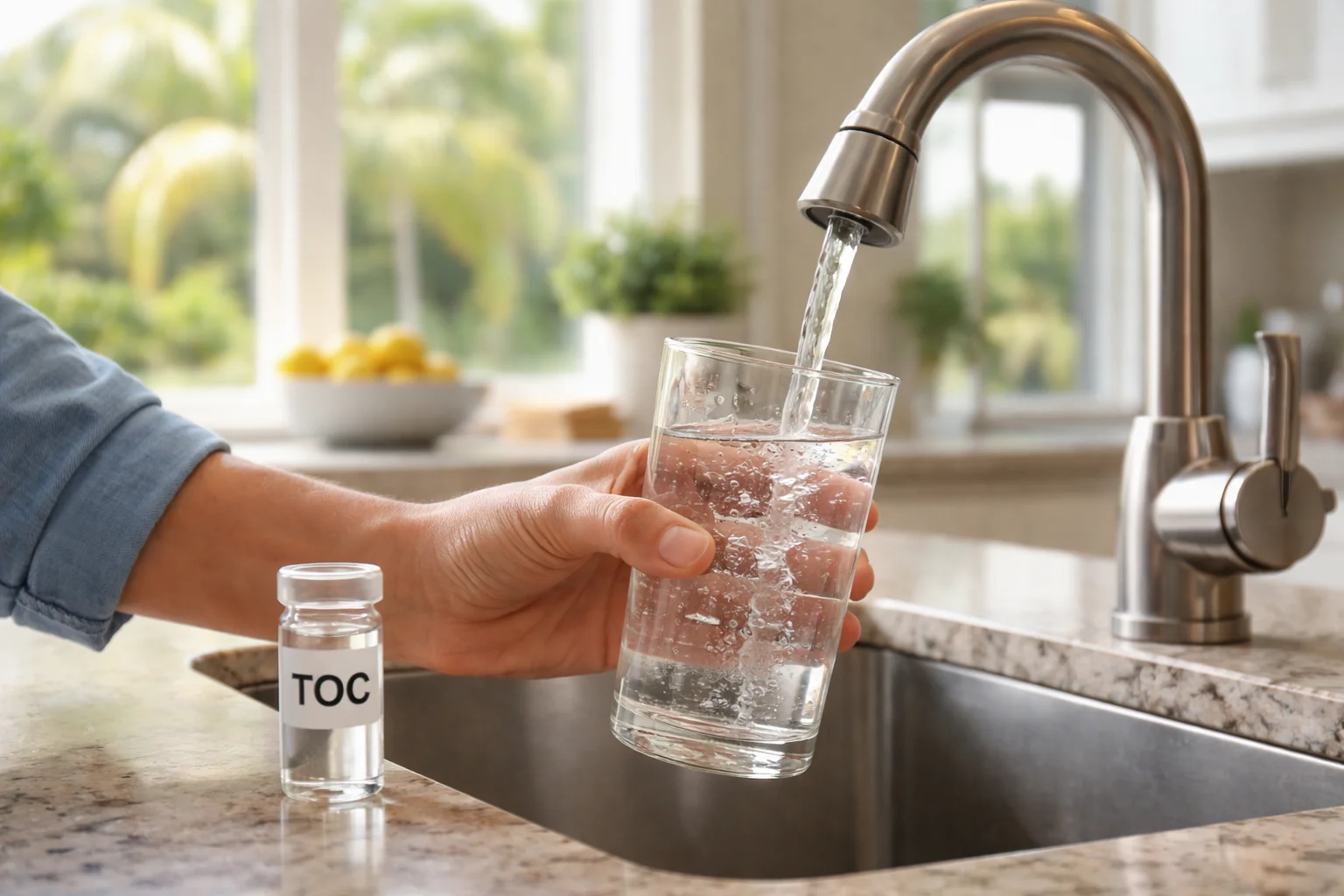
Total organic carbon is a catch‑all term for carbon-based material dissolved in your water. In Islamorada, Village of Islands this can include tiny bits of decaying plant matter, algae, or soil runoff carried by storm-season rains, plus traces of everyday organic compounds that enter source water. While TOC doesn’t always produce a noticeable smell or flavor, higher organic loads make treatment harder and can contribute to color, off-flavors, or persistent taste and odor issues that bother homeowners across the Keys.
You’ll also see total organic carbon called dissolved organic carbon, because much of it is truly dissolved rather than visible particles. Even crystal-clear water can carry these organics, which may react with disinfectants like chlorine to accentuate that pool-like smell some Islamorada residents notice. Organics can also encourage slimy buildup in pipes and fixtures—especially where water sits in coastal, tropical maritime climates—so many homeowners opt for whole-house solutions that treat incoming water before it reaches showers, appliances, and taps.
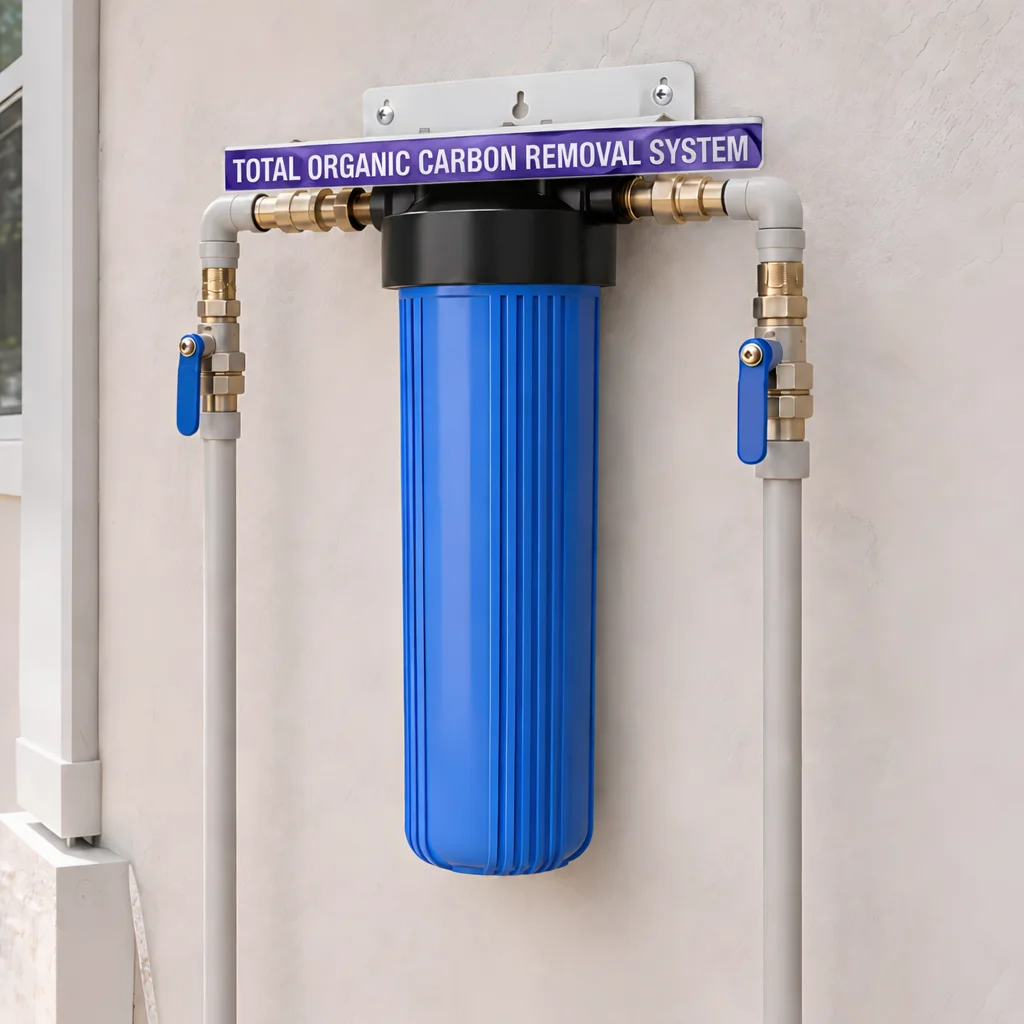
For whole‑house reduction of total organic carbon, a catalytic carbon filter is often the single best choice. Catalytic carbon media adsorbs a broad range of organic molecules that contribute to dissolved organic carbon and is more reactive than standard activated carbon, helping with some of the tougher organics that affect taste and odor. Installed as a whole‑house tank, it treats all incoming water to give Islamorada homes cleaner‑feeling water from every faucet and shower.
Removing dissolved organic carbon with one filter depends on adequate carbon media and sufficient contact time—not a small cartridge that water races through. A properly sized whole‑house catalytic carbon tank matched to your home’s flow rate and moderate water hardness will better reduce TOC and the chlorine taste or odor that can be more noticeable when organics are present. Mr. Pure Water can assess homes across Monroe County and recommend a catalytic carbon whole‑house system placed ahead of key fixtures to protect plumbing in neighborhoods like Upper Matecumbe Key, Windley Key, and Plantation Key.
 305-404-8790
 info@bestwaterheater.com

