 Phone: 954-208-3500
 info@bestwaterheater.com
Phone: 954-208-3500
info@bestwaterheater.com
info@bestwaterheater.com
Phone: 954-208-3500
info@bestwaterheater.com
 Phone: 954-208-3500
info@bestwaterheater.com
Phone: 954-208-3500
info@bestwaterheater.com

Including filter system and high-performance Total Organic Carbon filter.


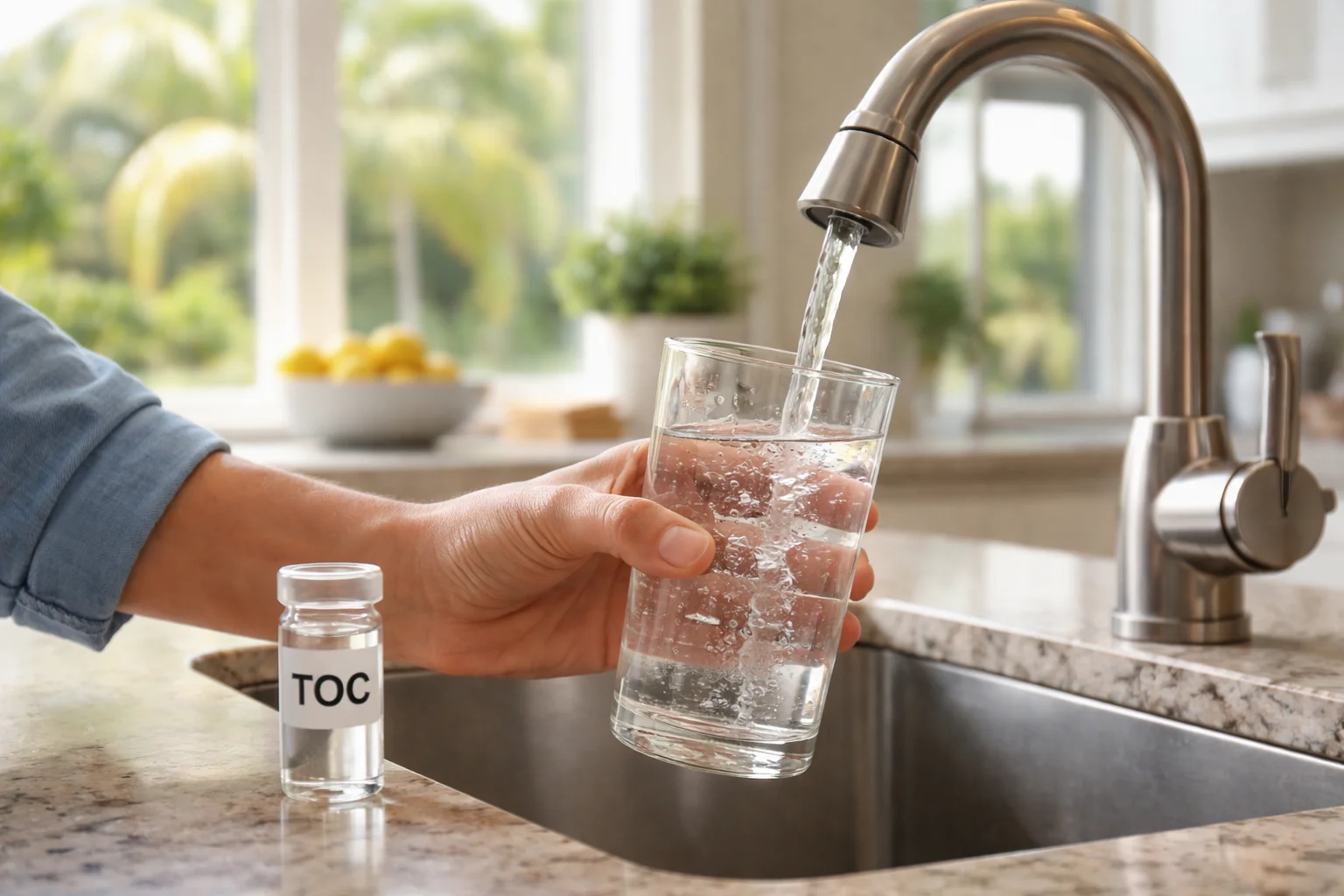
Total organic carbon is a catch-all measurement for carbon-based substances dissolved in water. In Plantation, these organics can originate from natural sources like decaying plant material, algal runoff, or soil carried into supply streams, as well as trace amounts of everyday organic compounds. On its own it might not be strongly odorous or visible, but higher organic loading can make water harder to treat and sometimes lead to color, off-flavors, or subtle odor issues that affect how your tap water tastes and looks. For homeowners it’s a helpful gauge of the overall organic content in the supply.
You’ll often see total organic carbon referred to as dissolved organic carbon, since much of it is dissolved rather than suspended particles. Even when water appears clear in Plantation homes—from neighborhoods like Jacaranda or Plantation Acres—these dissolved organics can be present and can react with disinfectants such as chlorine, occasionally producing stronger pool-like tastes or smells. Organic material can also encourage slime and biofilm in plumbing and fixtures, a concern in South Florida’s warm climate where water can sit and encourage growth. That’s why many local homeowners choose whole-house solutions to address organics before they reach every faucet and appliance.
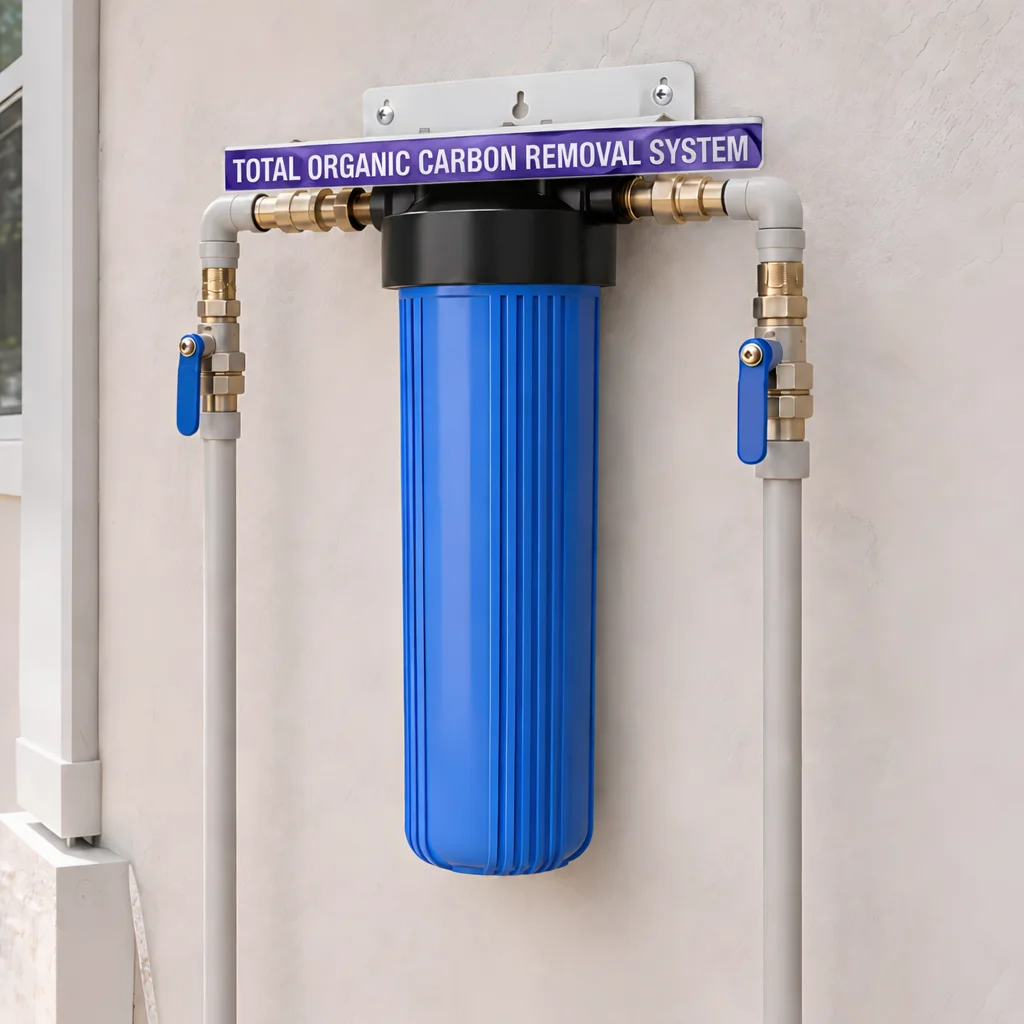
For whole-house reduction of total organic carbon, a catalytic carbon filter is frequently the best single-filter choice. Carbon media adsorbs a broad array of organic compounds that contribute to dissolved organic carbon and many taste- and odor-causing molecules. Catalytic carbon is formulated to be more reactive than standard activated carbon, improving removal of some stubborn organics and giving your whole home a cleaner feel—from kitchen taps to showerheads—especially important in Broward County homes with hard water and common limescale concerns.
The effectiveness of a single catalytic carbon filter depends on having enough media and sufficient contact time—not a small cartridge that water zips through. A correctly sized whole-house catalytic carbon tank can also cut chlorine taste and odor, which may be more noticeable when organics are present. To maintain consistent results in Plantation residences, the system should be sized for your household flow rate and positioned to protect plumbing and appliances from the start of the water line. Mr. Pure Water can help you select and install a whole-house catalytic carbon setup tailored to your home and water use patterns.
 954-208-3500
 info@bestwaterheater.com

