 Phone: 772-290-5223
 info@bestwaterheater.com
Phone: 772-290-5223
info@bestwaterheater.com
info@bestwaterheater.com
Phone: 772-290-5223
info@bestwaterheater.com
 Phone: 772-290-5223
info@bestwaterheater.com
Phone: 772-290-5223
info@bestwaterheater.com

Including filter system and high-performance Total Organic Carbon filter.



Total organic carbon is a general measure of carbon-based material dissolved in water. In Stuart this organic load can originate from natural sources like decaying plant material, algae, or soil runoff, as well as tiny amounts of everyday organic compounds that enter source water. By itself it may not always produce a noticeable smell or taste, but elevated concentrations can make treatment more difficult and contribute to color, odor, or an off flavor. For homeowners, TOC is a helpful indicator of overall organic content in the supply and what you might expect at the tap.
You may also see total organic carbon called dissolved organic carbon, since much of what testing finds is dissolved rather than visible. Even when Stuart’s water appears clear, these organics can be present and can react with disinfectants like chlorine, sometimes producing a stronger pool-like odor or taste. Organics can also encourage slimy buildup inside plumbing and fixtures where water sits — a concern in our humid subtropical climate — which is why many local homeowners choose whole-house treatments to reduce organics before they reach every faucet and shower.
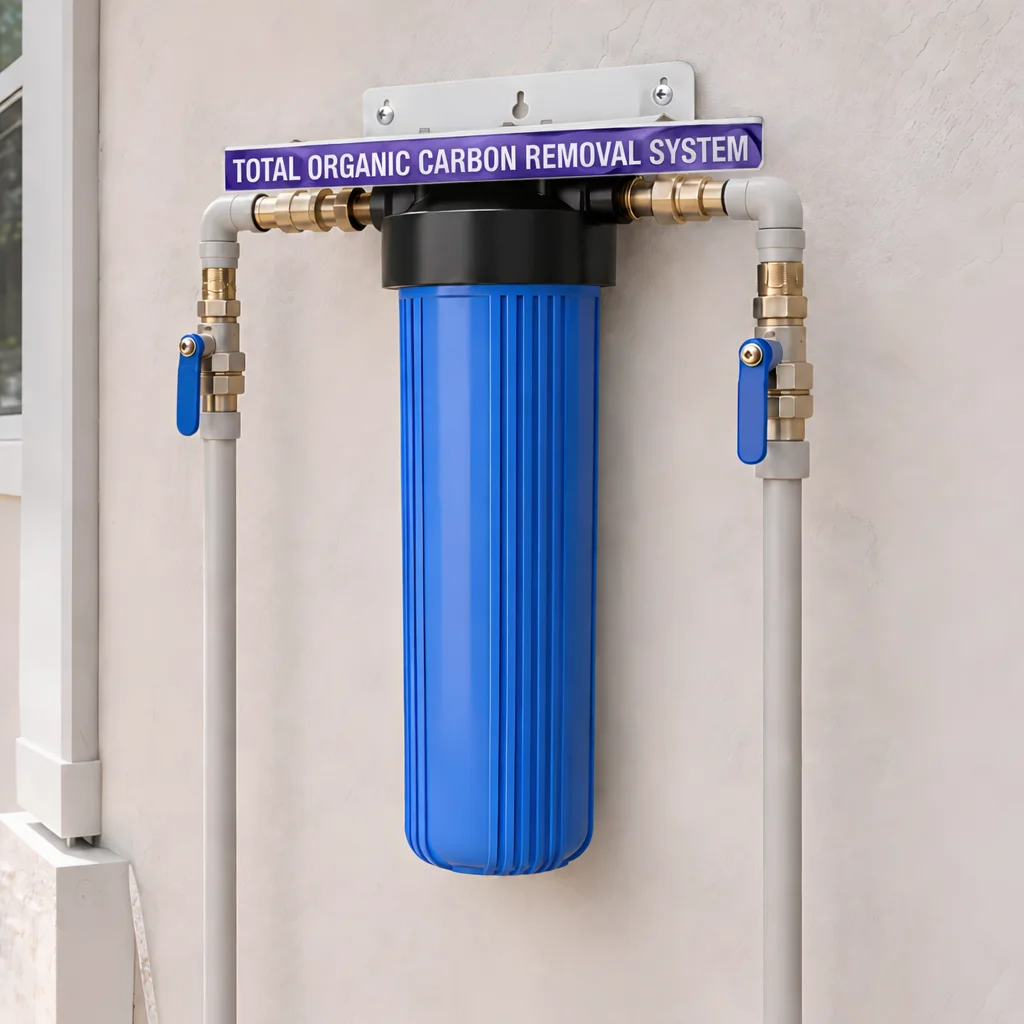
For whole-house reduction of total organic carbon, a catalytic carbon filter is often the single most effective filter choice. Carbon media adsorbs many organic compounds that contribute to dissolved organic carbon as well as the molecules that cause taste and odor. Catalytic carbon is designed to be more reactive than typical activated carbon, improving removal of certain stubborn organics so your water and showers feel consistently cleaner. Installed as a whole-house tank, this approach protects all plumbing fixtures throughout your Stuart home rather than treating only one point.
Lowering dissolved organic carbon with one filter depends on using ample carbon media and providing sufficient contact time instead of a small fast-flow cartridge. A properly sized whole-house catalytic carbon tank can also reduce chlorine taste and smell, which may be more noticeable when organics are present in hard Stuart-area water that tends to leave mineral scale. The system should be matched to your home’s flow rate and installed before the fixtures you most want to protect; Mr. Pure Water can help design and size a catalytic carbon whole-house setup tailored to homes across Martin County.
 772-290-5223
 info@bestwaterheater.com

