 Phone: 561-300-5075
 info@bestwaterheater.com
Phone: 561-300-5075
info@bestwaterheater.com
info@bestwaterheater.com
Phone: 561-300-5075
info@bestwaterheater.com
 Phone: 561-300-5075
info@bestwaterheater.com
Phone: 561-300-5075
info@bestwaterheater.com

Including filter system and high-performance Uranium filter.


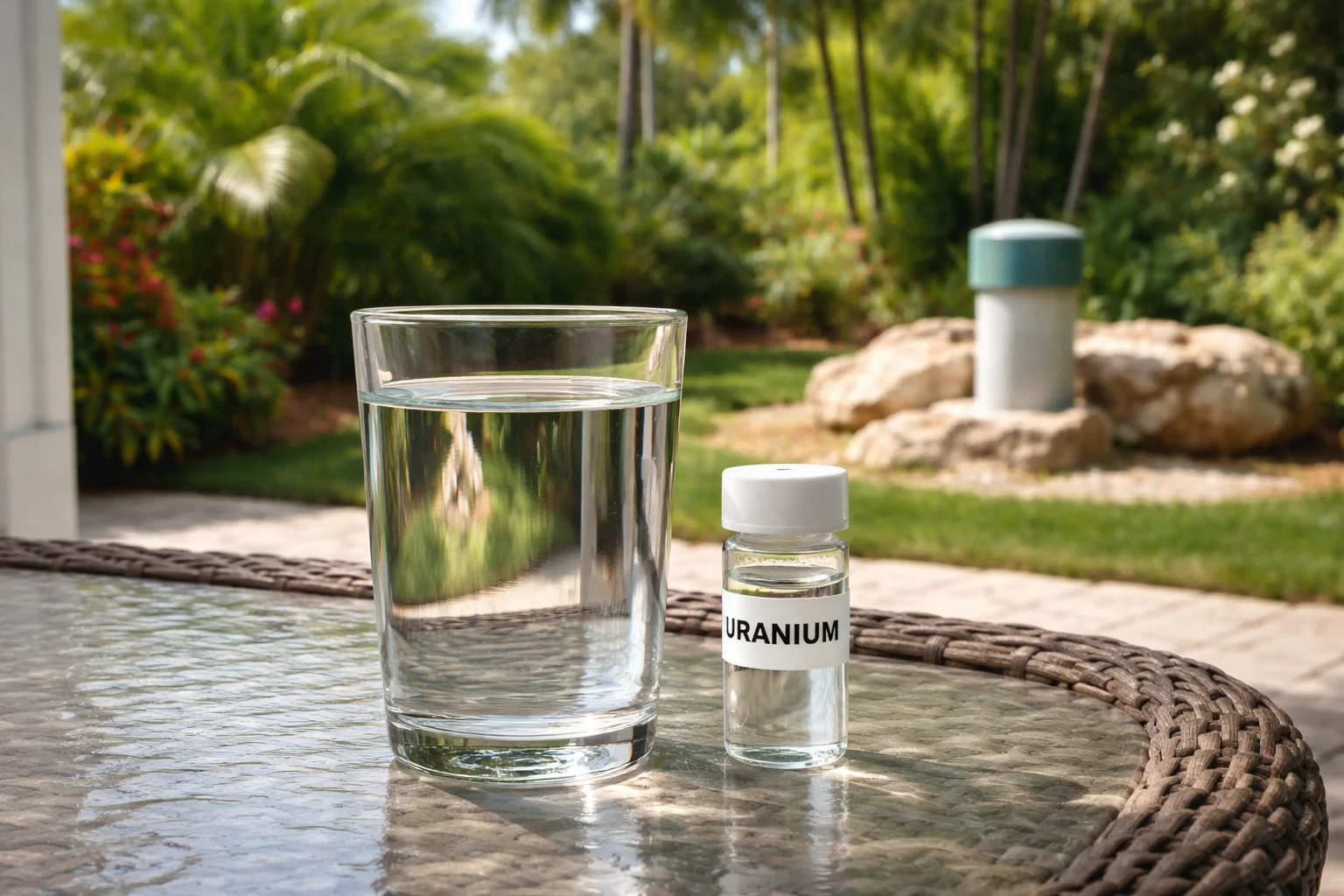
Uranium can enter household water after dissolving from certain rocks and soils into groundwater or surface sources. It usually has no taste, smell, or color, so testing is the only reliable way to know if it’s present in your Lake Harbor supply. Test reports may list it simply as uranium or separate results by isotope, and a clear sampling plan helps you decide the right next steps for protecting your family’s water.
You might see uranium reported as Uranium-234, Uranium-235, or Uranium-238 — naturally occurring isotopes that labs often break out in results. The chemistry can look technical, but the homeowner’s priority is simple: reduce whatever dissolved uranium is entering your property. A whole-house system treats every tap in Lake Harbor, whether you’re cooking, bathing, or doing laundry, instead of leaving treatment to a single-point device.
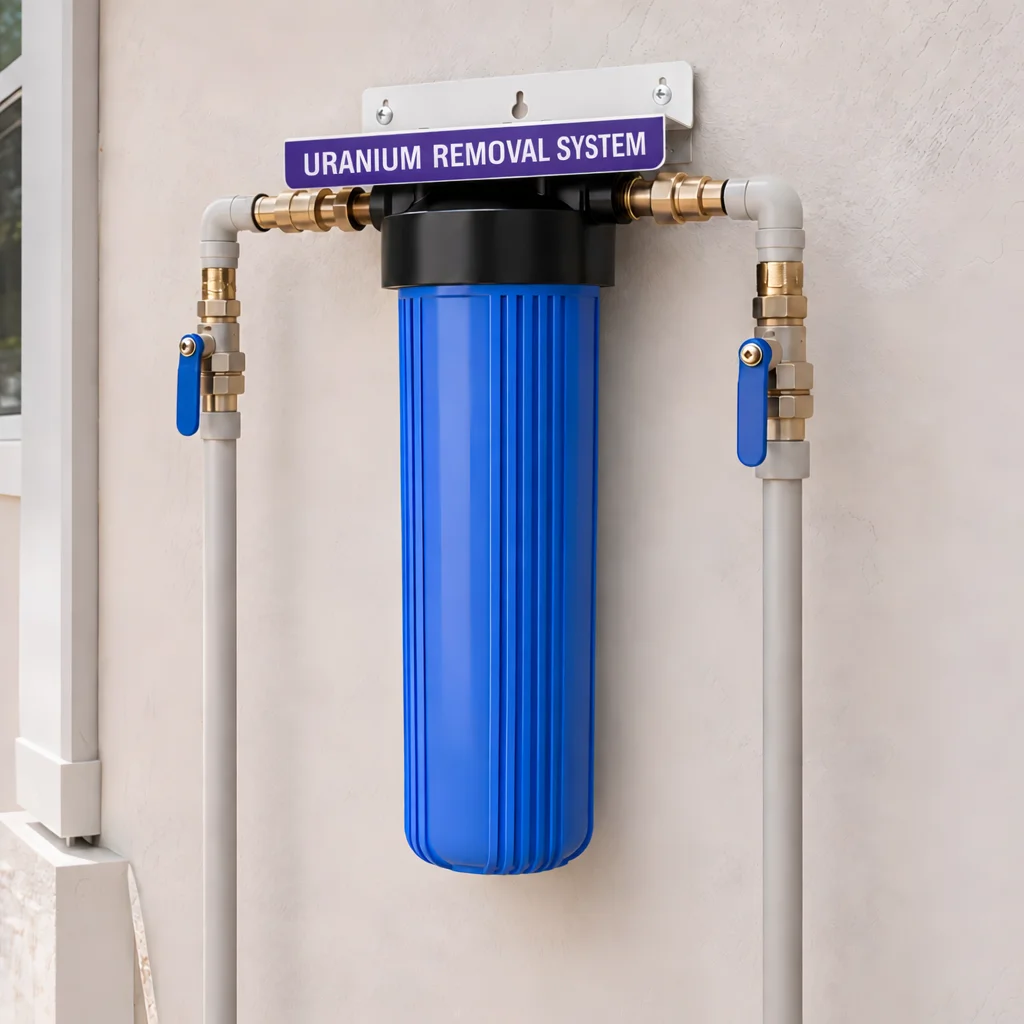
For whole-house uranium removal, the most effective single-filter choice is an ion exchange system (sometimes described as an anion exchange or nitrate-selective resin depending on chemistry). These systems work by exchanging ions on a resin bed to capture dissolved uranium species and are sized to treat all incoming water so every faucet is covered. Ion exchange is commonly selected when uranium is present in dissolved form rather than as particulate matter.
Because Lake Harbor-area sources can include surface water and canals with variable organics, the right resin and system design depend on your water’s pH, alkalinity, and competing ions. A correctly configured ion exchange setup includes the resin tank plus regeneration or media-replacement components so performance stays consistent. Mr. Pure Water can review your Lake Harbor water test and recommend an ion exchange whole-house configuration to lower uranium throughout your home.
 561-300-5075
 info@bestwaterheater.com

