 Phone: 321-400-9302
 info@bestwaterheater.com
Phone: 321-400-9302
info@bestwaterheater.com
info@bestwaterheater.com
Phone: 321-400-9302
info@bestwaterheater.com
 Phone: 321-400-9302
info@bestwaterheater.com
Phone: 321-400-9302
info@bestwaterheater.com

Including filter system and high-performance Uranium filter.


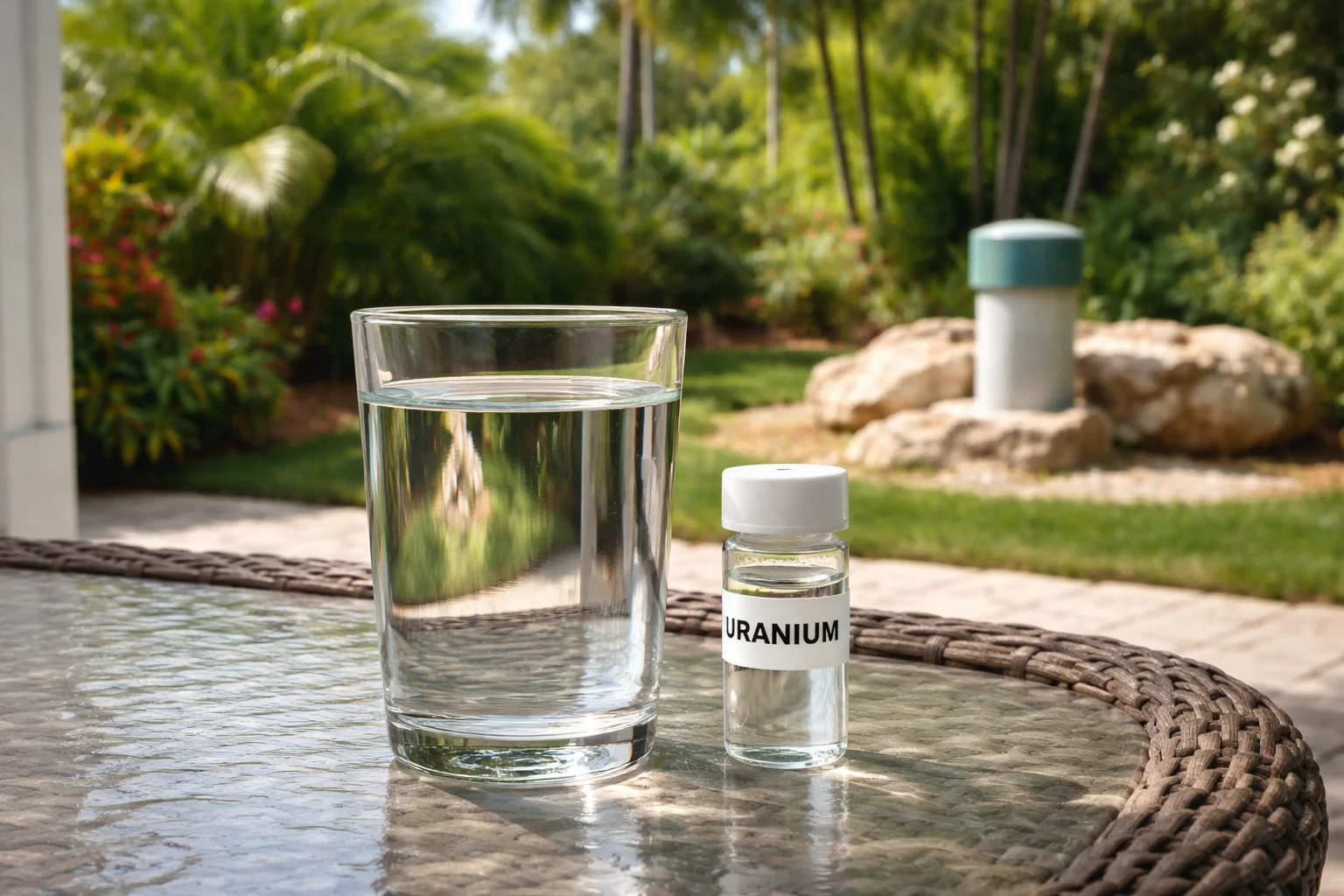
Uranium can enter household water when it dissolves from certain rock and soil into groundwater or well sources. It’s not detectable by taste, smell, or sight, so accurate water testing is the only reliable way to know if uranium is present. Test reports may list it simply as uranium or break it down by isotope—homeowners in Rockledge and the wider Brevard County area should rely on lab results rather than guesses.
Common isotopes you may see on a report include Uranium-234, Uranium-235, and Uranium-238, which are natural forms that labs measure. Rather than getting bogged down in technical details, most households benefit from focusing on preventing dissolved uranium from entering plumbing. A whole-house system treats every faucet — helpful for cooking, bathing, laundry and other household uses across Rockledge neighborhoods like Viera East or Suntree.
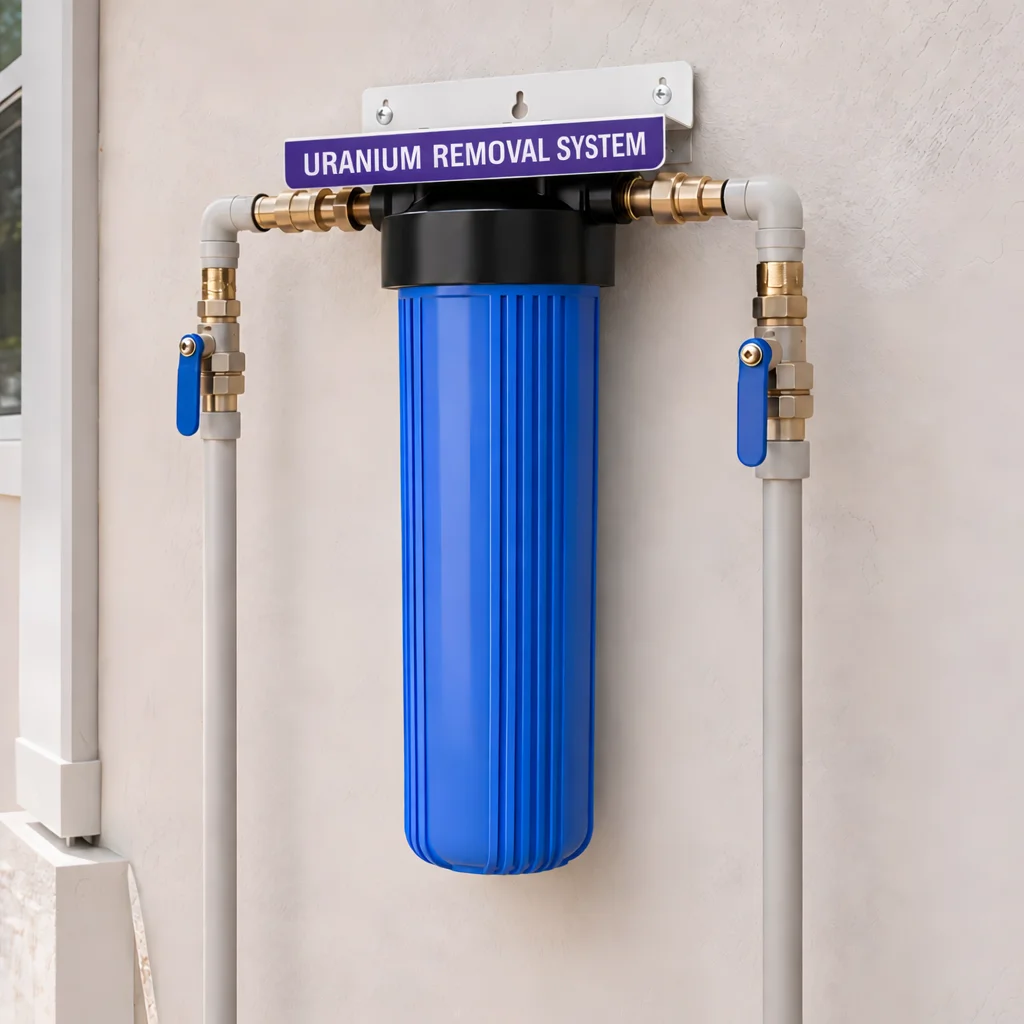
For whole-home uranium reduction, the single-filter solution most often recommended is an ion exchange system (sometimes described as anion exchange or nitrate-selective resin depending on local water chemistry). These systems exchange charged ions on a resin to capture dissolved uranium species and are sized to treat all incoming water so you don’t depend on just an under-sink device for the whole house. Ion exchange is commonly chosen when uranium is present in dissolved form rather than as particulate matter.
Because ion exchange performance depends on factors like pH, alkalinity and competing ions — and because municipal and well water around central Brevard is commonly hard — choosing the correct resin and system layout matters. A well-designed installation includes the resin tank plus the necessary equipment for regeneration or media replacement so the system remains effective. Mr. Pure Water can review your Rockledge water report and recommend an ion exchange whole-house setup tailored to lowering uranium throughout your home for consistent protection.
 321-400-9302
 info@bestwaterheater.com

